facebook-pixel ...

We specialize in the installation and service of top-quality fences and gates, including automation, for commercial premises.

Address

(206) 848-9565

18648 72nd Ave S, Kent, WA 98032

Expert Solutions
Hog Wire Fence Installation in Seattle, WA

Open View. Real Structure. Built to Last in the Pacific Northwest.

Hog wire fencing looks effortless. Getting it to stay that way — panels tight, framing true, hardware that doesn't rust through in two Seattle winters — takes more than stapling wire to a post. At Inline Security Fence, we build hog wire fences the way they should be built: hot-dipped galvanized panels, properly sized cedar framing, and posts set by our own crew, not a subcontractor hired for the week.

logo

    Testimonials

    What Our Clients Say

    Real Feedback from Seattle–Tacoma Property Owners

    IMG_9273

    What Makes Hog Wire Fencing the Right Choice for Seattle Properties

    Style That Opens Up a Yard. Strength That Holds the Line.

    Hog wire fencing does something most fence styles can’t: it defines your property line without closing it in. The open wire panels preserve sightlines to the mountains, the tree line, your garden — whatever you’re trying to keep in view — while the wood frame gives the whole structure presence and weight.

    It’s become one of the most requested residential styles across Seattle, Bellevue, Kirkland, and the Eastside, and for good reason. Done right, it’s one of the most striking fences on any block. Done wrong — cheap wire, undersized cedar, hardware that wasn’t galvanized — it’s a headache inside of two years.

    We’ve been building hog wire fences in the Seattle area since 2016. We know what holds up and what doesn’t, and we build accordingly every time.

    The Details Other Contractors Cut Corners On

    What Separates a Hog Wire Fence That Lasts From One That Doesn't

    Most hog wire fences fail for the same few reasons. Not because the style is flawed — because the execution was. Here’s what we do differently, and why it matters.
    IMG_0827
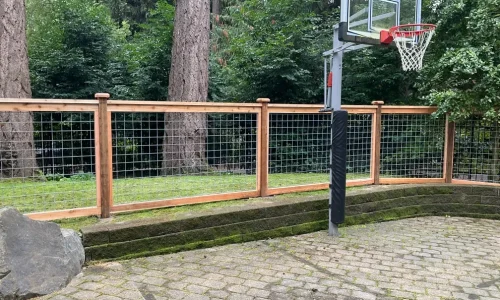
    Hot-Dipped Galvanized Panels, Not Electro-Galvanized

    The wire is the whole point of this fence. Electro-galvanized panels look fine in a showroom and start showing rust within a year or two in Seattle's climate. Hot-dipped galvanized panels — the ones we use — have a substantially thicker zinc coating that stands up to the constant moisture, salt air from the Sound, and the kind of prolonged damp that defines our winters. It's not a small difference in the long run.
    DSC_7012 (1)
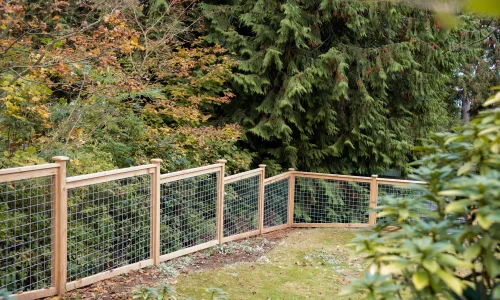
    Cedar Framing Sized to Do the Job

    The cedar frame isn't just decorative — it's holding the wire taut and carrying the structural load between posts. Undersized framing bows under tension, especially as the wood cycles through wet and dry seasons. We size our framing members to match the panel span and the height of the fence. It costs a bit more upfront. It's the reason our fences still look tight after five years.

    DSC_7004
    Posts Set to Depth in Concrete

    Every post gets set in concrete, to depth, on the first day. Not tamped gravel, not a shallow set that shifts in the first hard freeze. This is how you build a fence that stays plumb in the Pacific Northwest, and it's non-negotiable on every job we take.

    1
    Hardware That Won't Bleed Rust Through Your Cedar

    Screws, brackets, staples — all stainless or hot-dipped galvanized. Cheap hardware leaves rust streaks through the wood within a season. We don't use it, because we're the ones who back the fence with a three-year warranty.

    3

    Is Hog Wire Fencing Right for Your Property?

    We'll Give You a Straight Answer Before You Commit to Anything

    Hog wire is a strong choice for most residential lots. But it’s not right for every situation, and we’ll tell you if it isn’t.

    If complete visual privacy is the goal, hog wire isn’t the answer — the open panels work both ways. If your property backs up to a busy road or a commercial lot, a solid cedar or horizontal fence panel might serve you better. If you have dogs that are determined escape artists, the wire gauge and spacing matters more than you’d think, and we’ll spec it accordingly rather than defaulting to whatever’s on the truck.

    Come to us with what you’re trying to accomplish. We’ll tell you whether hog wire gets you there, and if a different style or combination would serve you better, we’ll say so.

    Our gallery

    Finished Projects

    Horizontal Fences We've Built Across Seattle

    Every project below was built by our in-house crew, no subcontractors, no outsourced labor. Same team, same standard, every job.

    Our Process

    What Happens When You Call Inline Security Fence

    On Site Consultation

    Step 1:

    On-Site Consultation

    We walk your property with you. We look at the grade, check for roots and utilities along the fence line, talk through your goals — privacy, pet containment, curb appeal, a combination — and figure out whether hog wire is the right call and how it should be configured for your specific lot.

    A Real Quote

    Step 2:

    A Real Quote

    You get a written estimate that breaks out materials and labor with no hidden line items. If there’s anything uncertain — an unusual grade condition, a neighbor situation that needs coordination — we flag it and tell you the range before we start, not after.

    Installation by Our Crew

    Step 3:

    Installation by Our Crew

    The team that quoted your job builds it. They’re on our payroll, trained in-house, and have built hundreds of fences together. There’s no handoff to a subcontractor the night before install day.

    Final Walkthrough

    Step 4:

    Final Walkthrough

    We don’t leave until you’ve walked every foot of the fence with us and signed off. Anything that doesn’t meet the standard gets fixed before we pack up. The finished fence carries our 3-year craftsmanship warranty.

    IMG 0827
    DSC 7004
    FAQ

    Frequently Asked Questions

    What exactly is a hog wire fence, and why is it popular in Seattle?

    A hog wire fence combines a wood frame — typically cedar — with welded wire mesh panels stretched between the frame members and posts. The wire panels keep the structure open and airy while the cedar framing gives it clean lines and visual weight. It's popular in Seattle because it works well with Pacific Northwest landscaping, preserves views of the surrounding environment, and fits naturally into the design aesthetic of modern homes across the region. Done with quality materials and proper installation, it's also genuinely durable.

    What gauge wire do you use, and does it matter?

    Yes, it matters significantly — especially if pets are involved. Standard residential hog wire is typically 4-gauge or 6-gauge welded wire. 4-gauge is heavier and more rigid; 6-gauge is more economical but deflects more under lateral pressure. For most residential applications, 4-gauge hot-dipped galvanized welded wire panels are the right call. Lighter-gauge wire sags between posts over time and is easier for a determined dog to push through or under. We'll tell you what we're spec'ing and why, not just hand you whatever's cheapest.

    What's the difference between hot-dipped and electro-galvanized wire?

    Hot-dipped galvanizing involves submerging the wire in molten zinc, which creates a thick, bonded coating all the way through. Electro-galvanizing applies zinc through an electrical process, resulting in a much thinner coating. In a dry climate, both hold up reasonably well. In Seattle's wet climate — nine months of rain, coastal moisture, freeze-thaw cycles — electro-galvanized wire starts showing rust within one to two years. Hot-dipped panels last decades. We only use hot-dipped galvanized wire on every hog wire fence we build.

    Can hog wire fencing contain dogs?

    It depends on the dog and how the fence is configured. Standard hog wire panels have rectangular openings — typically 2"x4" or 4"x4" — which most dogs cannot squeeze through. For dogs that dig, we can add a concrete footing or buried wire apron along the base. For dogs that jump, height matters more than the wire style. Tell us about your dog — breed, size, behavioral tendencies — and we'll spec the fence to actually contain them rather than building something that looks good and fails in a month.

    Do I need a permit for a hog wire fence in Seattle or King County?

    Generally, fences under 6 feet don't require a permit in Seattle residential zones, but it varies by municipality. Kent, Bellevue, Renton, and Kirkland each have their own codes around setbacks, height limits, and what requires a permit. We know the local requirements across the areas we serve and will flag anything that needs a permit before we break ground. The last thing you want is a stop-work order mid-build.

    How do I maintain a hog wire fence in the Pacific Northwest?

    The cedar framing needs the same care as any wood fence — clean it annually, apply a penetrating oil or sealant every two to three years, and inspect the base of your posts each spring where moisture tends to collect first. The wire panels themselves require almost no maintenance if they're hot-dipped galvanized — just an occasional check for any mechanical damage. We'll walk you through a maintenance plan specific to your fence's orientation and exposure at the final walkthrough.

    Can you build a hog wire fence on a sloped lot?

    Yes. Sloped lots are common in Seattle and across the Eastside, and hog wire handles slope well. The typical approach is stepped framing — the panels drop in increments that follow the grade — which keeps the horizontal lines of the frame clean and the wire taut. We'll look at your specific grade and recommend the approach that makes structural and visual sense for your property.

    How long does hog wire fence installation take?

    Most residential hog wire fence installations are completed in 1-3 days, depending on total length, slope, and gate complexity. You'll get a firm timeline in your written quote. We mean it — our reputation in this area is built on showing up when we say we will and finishing when we say we will.

    What's the cost of a hog wire fence compared to a solid cedar privacy fence?

    Hog wire fencing is typically comparable to or slightly less expensive than a solid cedar fence of the same height, depending on wire gauge, post spacing, and the amount of custom gate work involved. The wire panels are less material-intensive than solid cedar boards, but a well-built hog wire fence with proper framing and hardware isn't a budget option — it's a quality one. We'll give you an honest breakdown in your quote so you can compare it accurately against other bids.

    Construction Advices

    Built Different

    Why the People Who Build It Matter as Much as the Materials

    You can call three fence companies and get three quotes for a hog wire fence using the same materials. The quotes might be close. The results won’t be.

    The difference isn’t the cedar or the wire gauge — it’s the crew. A team that’s built hundreds of hog wire fences together knows how to tension wire panels so they don’t sag in six months. They know which cedar stock to reject at the yard. They know how to handle a corner post on a slope without the frame racking under load.

    At Inline Security Fence, that’s the crew we send to every job. Not whoever was available this week, not a subcontracted team working four sites at once — our people, on your fence, building it like the warranty comes out of their pocket. Because it does.

    Inline Security Fence Team - Commercial & Residential Fence Experts In Seattle
    Building Fence
    0
    Interiors Design
    0
    Start with a quick form

    Call Us. We'll Pick Up.

    One conversation is all it takes to get a straight answer on cost, timeline, and whether hog wire is the right fence for your property. We come to you, walk the site, and tell you exactly what we'd build and what it would cost — no mystery pricing, no pressure.

    Address:

    18648 72nd Ave S, Kent, WA 98032

      By providing your number, you consent to receive text messages from Inline Security Fence related to marketing and promoting offers. To unsubscribe, simply reply "STOP."