Why Corrosion Protection Matters for Wrought Iron Fences
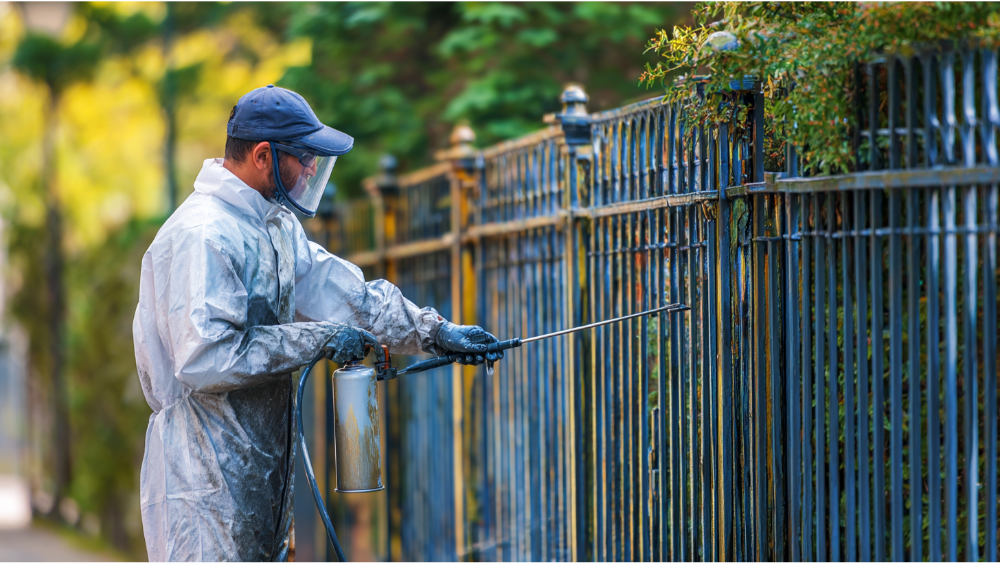
Understanding what coatings protect wrought iron fences from corrosion is essential for anyone looking to extend the life of their fence. Without the right protective layer, rust will quickly form on any exposed metal surface, especially when the fence is installed outdoors. An iron fence is constantly exposed to moisture, oxygen, and environmental stress, which leads to rust and corrosion over time.
A wrought iron fence is designed for strength and aesthetic appeal, but even strong metal will fail without proper corrosion protection. Once rust begins, it spreads across the metal fence and weakens its structural integrity. This is why selecting the right powder coating, paint system, or galvanized finish is critical for long-term protection and rust prevention.
What Causes Wrought Iron Fences to Rust and Deteriorate?
Moisture and Humidity Exposure
Rust begins forming when a metal fence is exposed to moisture. High humidity accelerates rust formation, especially on a wrought iron fence lacking a proper protective coating. When water sits on the metal surface, corrosion begins to develop and spreads across the iron fence.
Oxygen and the Oxidation Process
Rust forms when oxygen reacts with bare metal. This process weakens wrought iron and creates visible rust spots. Once rust starts, it continues spreading across the metal surface unless stopped by corrosion protection systems.
Environmental Accelerators
Harsh climates, high humidity, and sun exposure all contribute to rust formation. A metal fence in coastal or industrial areas will experience faster deterioration due to salt and pollutants. Without powder coating or paint, rust will form quickly and compromise durability.
Weak Points in Fence Structure
The most vulnerable areas of a wrought iron fence include welds, joints, and scratches. These areas often expose bare metal where rust begins. If loose or old paint exists, corrosion can develop underneath the surface and spread unnoticed.
The Science Behind Corrosion Protection Coatings
Barrier Protection vs. Sacrificial Protection
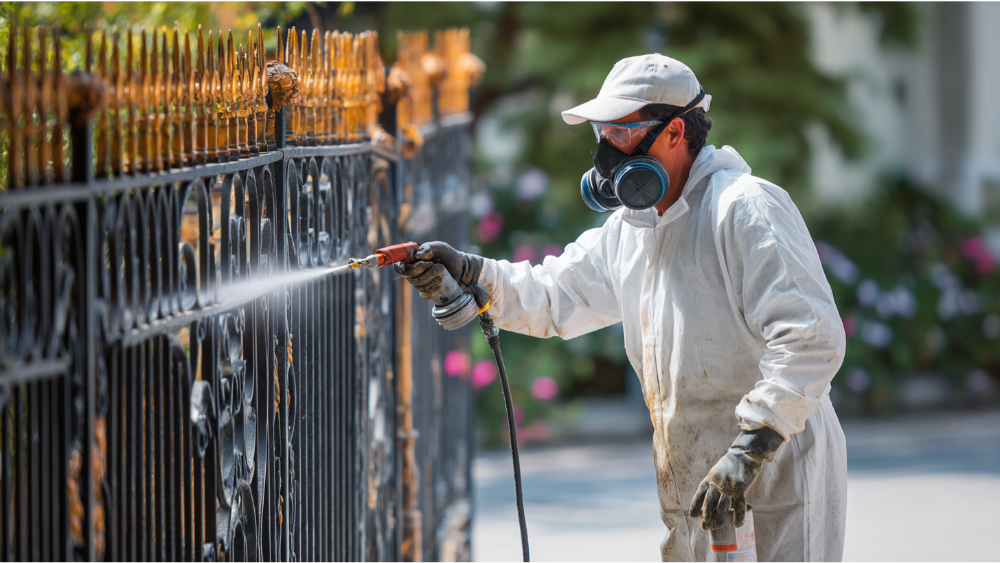
A protective coating works by sealing the metal surface from moisture and oxygen. Powder coating creates a protective shell that blocks rust formation. Zinc coating using molten zinc provides sacrificial protection that slows corrosion across the iron fence system.
Why Multi-Layer Systems Perform Best
Multi-layer systems combine primer, paint, and powder coating to create a durable barrier. These systems help stop rust at multiple levels, ensuring long-lasting protection. When properly applied, they significantly improve corrosion resistance and extend fence lifespan.
Best Coatings That Protect Wrought Iron Fences from Corrosion
Hot-Dip Galvanizing
Hot-dip galvanizing uses molten zinc to coat the metal fence. This zinc coating bonds firmly to the metal surface and provides strong rust protection. Even if scratches occur, the zinc continues to protect the underlying metal.
Hot-dip galvanizing is a heavy-duty option used for harsh environments where rust is a major concern. It offers strong corrosion protection and helps prevent long-term rust formation on wrought iron fences.
Zinc-Rich Primers
Zinc-rich primers help prevent rust on exposed bare metal areas. These primers are often used after rust removal with a wire brush to slow corrosion and stop existing rust from spreading. They are effective for rust inhibition but work best when combined with paint or powder coating.
Epoxy Primer and Polyurethane Topcoat System
This system uses epoxy paint as a base layer and polyurethane paint as a top layer. The epoxy layer bonds firmly to the metal surface and prevents moisture from reaching the underlying metal. The topcoat provides UV protection and improves aesthetic appeal.
This paint system is commonly used on iron fences because it offers strong corrosion resistance and a smooth finish. It helps prevent rust and keeps the fence looking new for longer periods.
Powder Coating
Powder coating is one of the most effective protective coatings for a wrought iron fence. Dry powder is applied electrostatically and baked into a smooth finish that forms a protective barrier.
Powder coating resists corrosion and helps stop rust from forming on the metal surface. It is widely used because it provides long-lasting protection and reduces maintenance needs. However, if the coating is damaged, rust can form underneath and spread.
Duplex Systems
Duplex systems combine hot-dip galvanizing with powder coating. This combination provides maximum durability and strong rust protection. The zinc coating protects the metal while powder coating improves appearance and adds UV protection.
This system is ideal for iron fence installations in harsh climates where corrosion resistance is critical.
Traditional Oil-Based Anti-Rust Paint
Oil-based paint systems were once the most common method of rust protection. Linseed oil and mineral spirits were often used in older paint jobs to slow corrosion. While these systems can still provide basic protection, they are not as effective as modern powder coating or zinc coating systems.
Oil-based paint may develop brush marks and start peeling over time, exposing bare metal and allowing rust to return.
Surface Preparation – The Step That Determines Coating Success
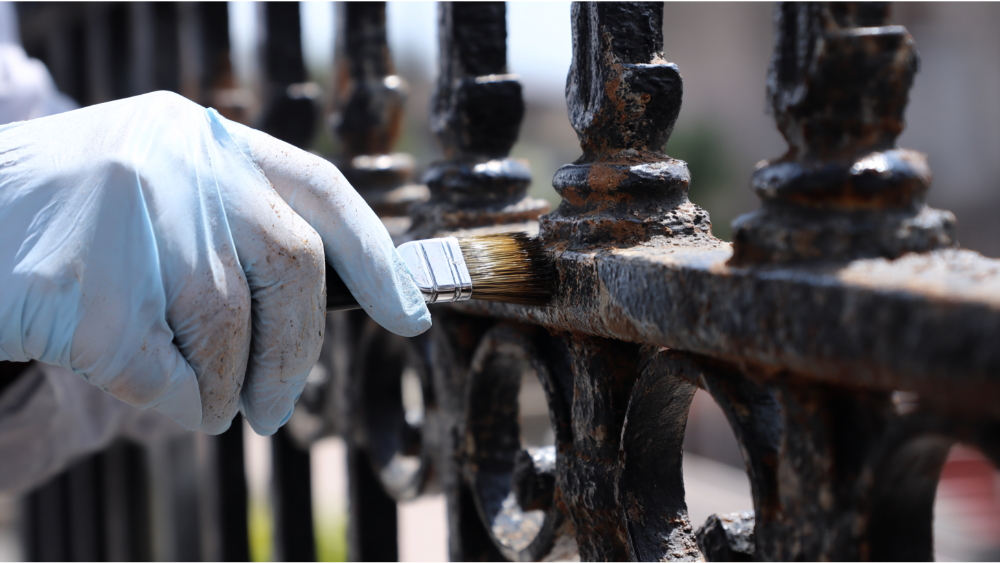
Proper preparation is essential for corrosion protection. If rust is not fully removed from the metal surface, any protective coating will fail. Removing existing rust ensures strong adhesion and long-lasting performance.
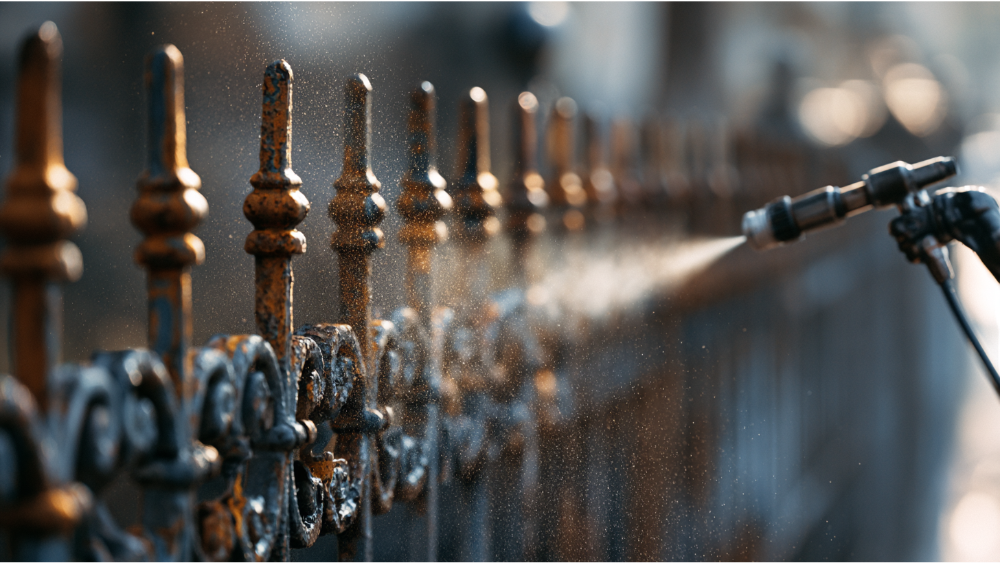
A wire brush is often used to remove rust spots before applying paint or powder coating. Sandblasting ensures a uniform surface and removes loose paint and corrosion from the entire fence.
Degreasing removes oils and contaminants from the metal fence. This ensures that paint or powder coating bonds correctly. Without this step, corrosion will return quickly.
Weld areas are highly prone to rust. These areas must be carefully coated with primer and paint to ensure full coverage and prevent future corrosion.
Powder Coating vs. Galvanizing – Which Is Better for Wrought Iron?
Hot-dip galvanizing provides strong internal rust protection, while powder coating offers a smooth finish and additional barrier protection. Both systems help prevent corrosion and improve corrosion resistance.
Powder coating improves the fence’s appearance with a smooth finish and enhances aesthetic appeal for decorative metal fence designs.
Powder-coated surfaces require inspection for chips or scratches. If damage occurs, touch-up paint should be applied quickly to stop rust from spreading.
Although powder coating and galvanizing may cost more initially, they provide long-lasting protection and reduce maintenance needs over time. This makes them a better investment for long-term corrosion protection.
How Climate Impacts Fence Coating Performance
Coastal environments expose metal fence systems to salt, which accelerates corrosion. Powder coating combined with zinc coating is recommended in these environments.
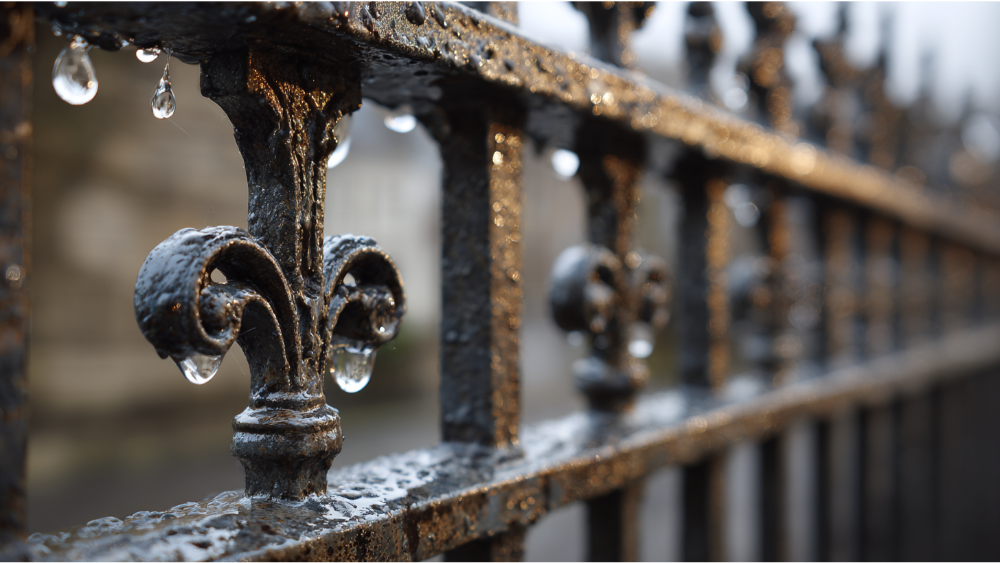
Cold climates cause freeze-thaw cycles that can crack coatings and expose bare metal. High humidity also accelerates corrosion by keeping surfaces damp for longer periods.
Urban and industrial environments increase exposure to pollutants, which weaken coatings and increase rust formation over time.
Maintenance Tips to Extend Coating Lifespan
Routine cleaning helps remove dirt and contaminants that contribute to corrosion. Any exposed bare metal should be repaired immediately to prevent rust from spreading.
Small rust areas can often be repaired with touch-up paint, but widespread corrosion may require full recoating of the iron fence.
Regular seasonal inspections help identify early corrosion and prevent long-term damage to the metal surface.
Signs Your Fence Coating Is Failing
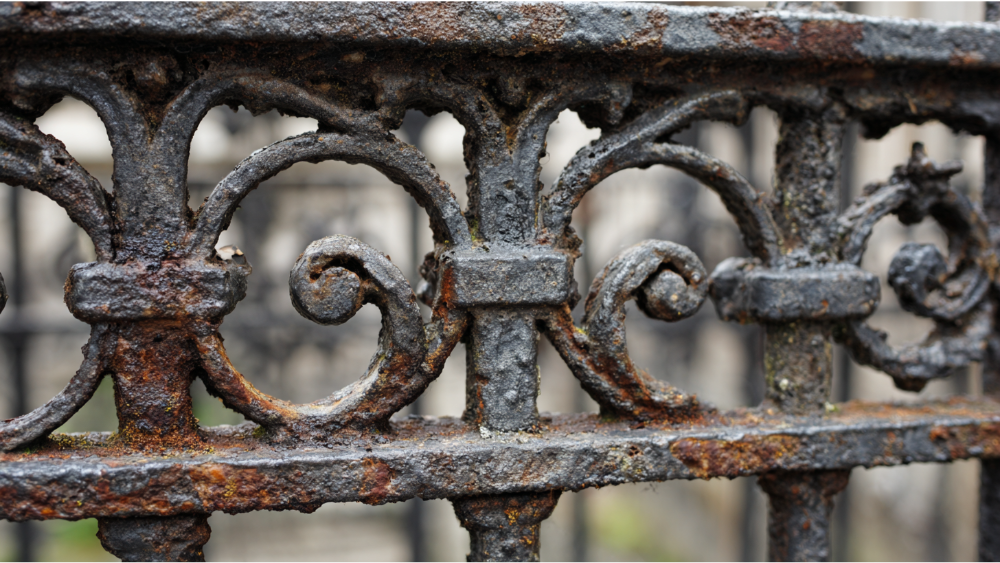
Common signs include rust spots, peeling paint, bubbling surfaces, and exposed bare metal. When rust appears, it indicates the protective layer has failed and corrosion has begun spreading.
Cost Comparison of Different Protective Coatings
Oil-based paint systems are the cheapest but require frequent maintenance. Powder coating and galvanizing cost more upfront but provide stronger corrosion protection and reduce long-term rust issues. Over time, better coatings reduce maintenance costs and help preserve structural integrity.
Choosing the Right Coating System for Your Property

Residential properties often use powder coating for aesthetic appeal and corrosion protection. Commercial properties rely on galvanizing and heavy-duty coating systems for long-lasting performance. Coastal and industrial environments require maximum durability systems to stop corrosion before it spreads across the metal fence.
Why Professional Installation Matters for Corrosion Protection
Professional application ensures proper paint adhesion, correct powder coating thickness, and full coverage of bare metal areas. Without proper preparation, rust will develop quickly and compromise the entire fence system.
Frequently Asked Questions
Can I use regular house paint on my wrought iron fence?
Regular house paint is not recommended for wrought iron fences because it lacks rust-inhibiting properties and does not bond well to metal surfaces. Using the right paint, such as direct to metal (DTM) paint or specialized rust-preventive coatings, makes all the difference in protecting your fence from corrosion.
How many coats of paint should I apply to protect my wrought iron fence?
Applying multiple thin coats is essential for durable protection. Typically, two thin coats of a rust-inhibiting paint over a suitable primer provide a long-lasting barrier against moisture and rust concerns.
What is the difference between powder coating and liquid paint for wrought iron?
Powder coating is a dry, baked-on finish that offers superior durability and resistance to UV rays, chipping, and corrosion. Liquid paint, including water based coatings and oil-based enamels, can be applied in various methods and can provide excellent protection when applied properly but may require more frequent maintenance.
How often should I maintain or repaint my wrought iron fence?
Maintenance depends on environmental exposure, but regular inspections and touch-ups every few years will extend the life of painted surfaces. Promptly addressing chips or scratches with the right paint prevents rust from spreading.
Are there environmentally friendly options for protecting wrought iron fences?
Yes, options such as water based coatings and powder coating are more environmentally friendly because they contain fewer volatile organic compounds (VOCs) and produce less hazardous waste compared to traditional oil-based paints.
Why is surface preparation important before painting a wrought iron fence?
Proper surface preparation ensures the paint or coating forms a thin layer that bonds firmly to the metal, preventing peeling and rust formation. Skipping this labor intensive step can lead to premature corrosion and coating failure.
Conclusion
Protecting wrought iron fences from corrosion requires selecting the right coatings and applying them properly. Whether you choose powder coating, hot-dip galvanizing, or specialized rust-inhibiting paints, each method creates a long lasting barrier that shields outdoor iron from moisture, oxygen, and UV rays. Applying thin coats of the right paint, such as direct to metal (DTM) formulas, and maintaining painted surfaces regularly can make all the difference in extending the life and beauty of your fence. Employing various methods tailored to your environment and fence condition, combined with professional painters’ expertise, ensures your wrought iron fence remains firmly bonded and corrosion-free for years to come.