Key Takeaway
Cedar fence pickets grades, sizes, and how to spot quality come down to five factors: confirmed species (Western Red Cedar, not a substitute), a named grade such as Clear, STK, or #2, actual thickness of 5/8 or 3/4 inch verified by tape measure, tight sound knots within grade limits, and dry lumber handled correctly before installation. Nominal sizing labels like 1×6 overstate real dimensions, so always check the actual width and thickness on the tag or invoice. Kiln-dried boards move less after installation and support a straighter, longer-lasting fence line.
What Makes a Cedar Fence Picket Top-Quality
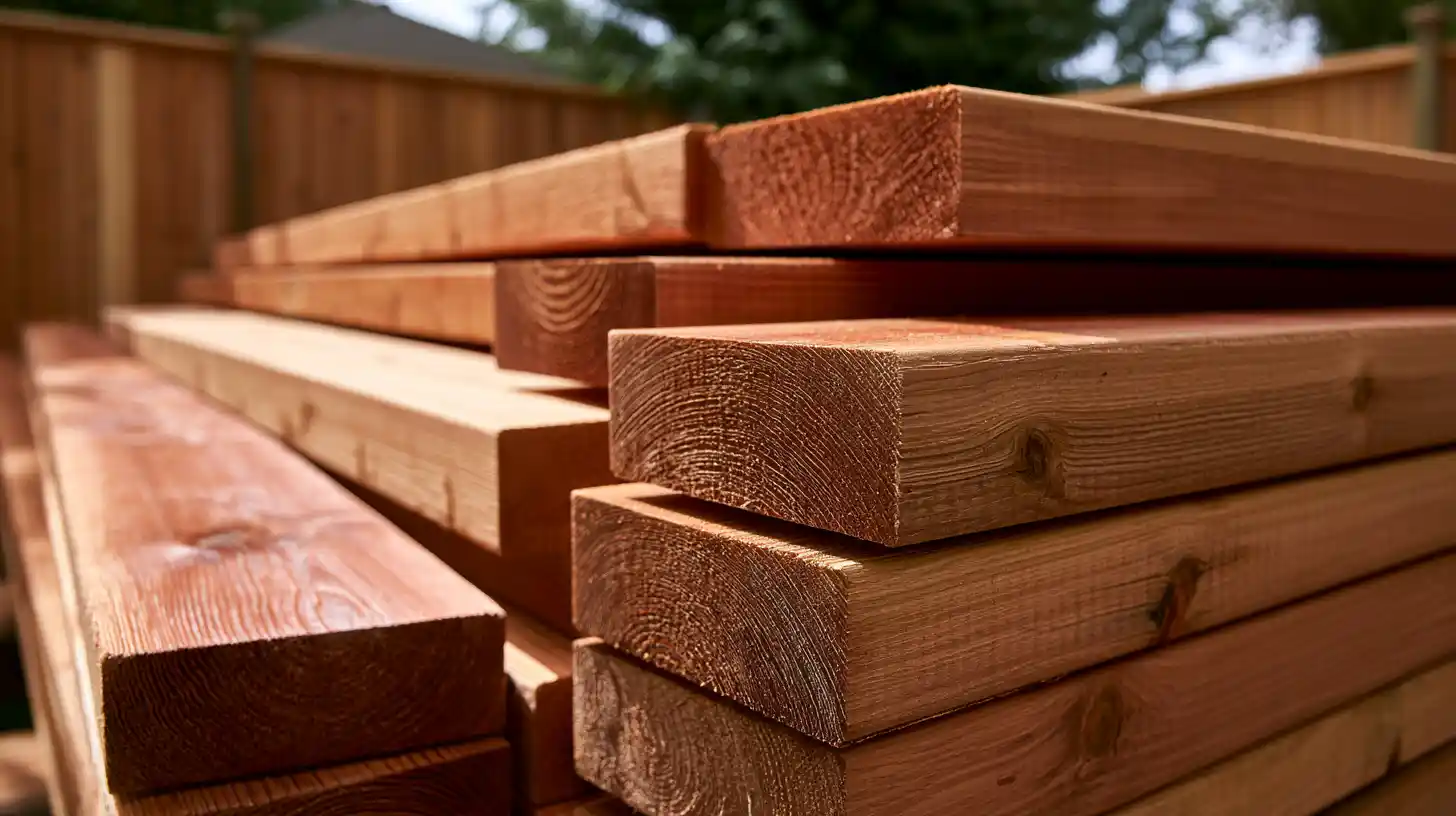
A top-quality cedar fence picket is defined by five things: a named species (like Western Red Cedar), a recognized cedar grade, adequate actual thickness, sound tight knots with minimal defects, and correct handling before it goes up. The word “cedar” on its own is not a specification. If you’re comparing quotes, reviewing a material list, or shopping lumber for your project, that single word tells you almost nothing about what you’re getting. The details behind it decide whether your fence looks clean in year one and holds its shape after that.
Why Cedar Picket Quality Matters Before Installation
Cedar earns its reputation because its heartwood carries natural oils that resist decay and insects, and it stays dimensionally stable, so it resists warping, twisting, and shrinking better than many softwoods. Well-maintained cedar also weathers to a silver-gray patina many owners want, which supports the longevity of the fence. But weak boards, vague grade language, or poor handling show up later as gaps, warping, open holes, staining, and an uneven line. Top-quality fencing starts before a post goes in the ground, on both commercial and residential jobs. Good fence materials chosen early are what protect that finished look, and a beautiful run depends on that early care.
Cedar Pickets vs. Cedar Fence Boards: A Quick Terminology Note
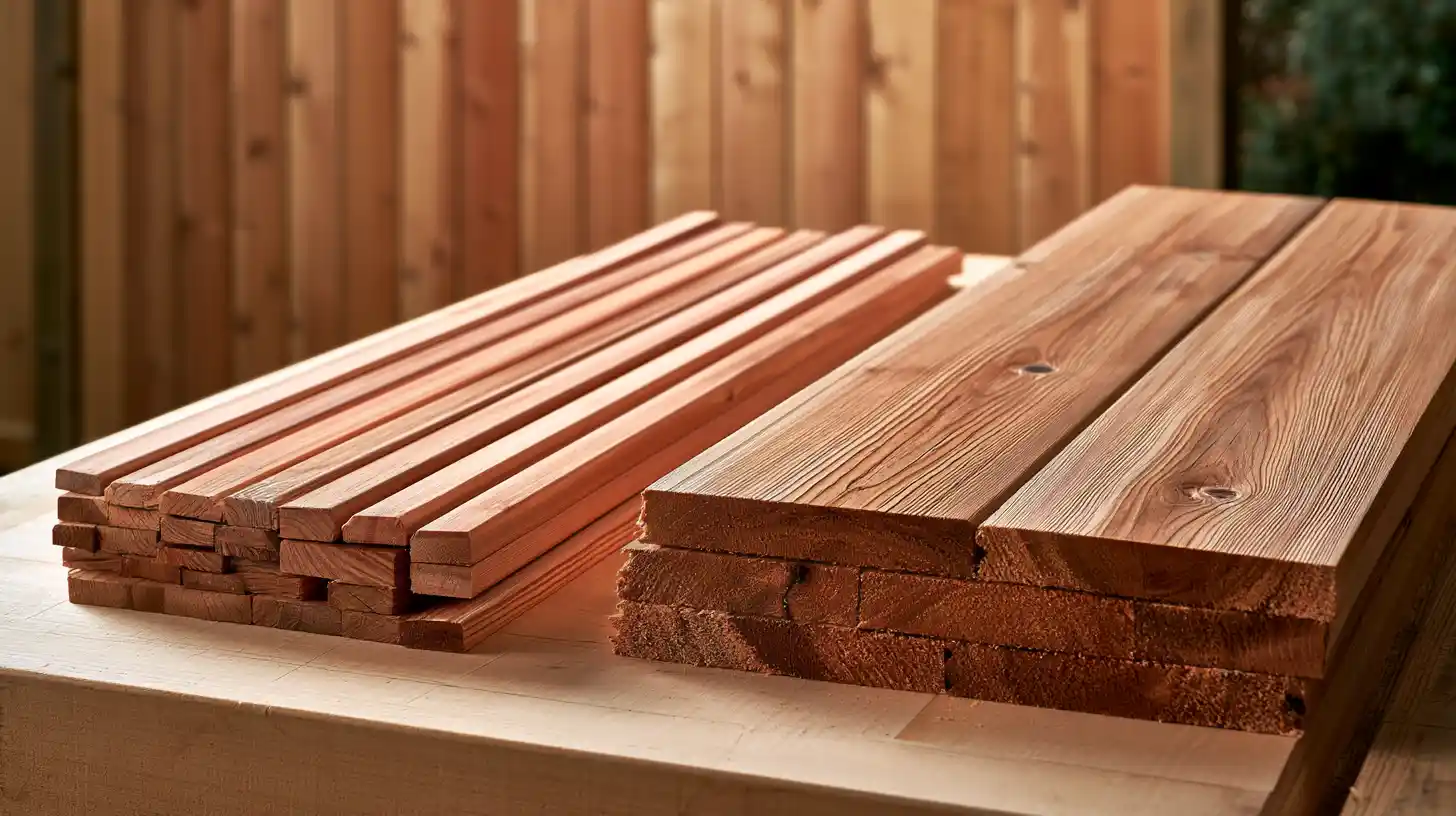
In official grading rules, “pickets” and “fence boards” can be separate product categories with different standards. Most buyers use “picket” to mean the vertical boards in a privacy or decorative fence, sorted by nominal thickness, width, and length. That casual blur can hide which grade standard is actually being applied to your order, so it’s worth knowing the terms don’t always line up. The difference between the trade label and the graded board is easy to miss.
Cedar Fence Pickets Grades, Sizes, and How to Spot Quality by Cedar Grade in Western Red Cedar
The shorthand you’ll hear from suppliers and contractors usually runs Clear, STK (Select Tight Knot), #1, and #2. Clear cedar is virtually knot-free, holds a uniform look as it weathers, and offers the longest service life. The #1 or better grade has fewer and smaller knots and allows minor color variation (often sold as “#1 & Better”). A knotty #2 permits more knots and blemishes. Tight, sound knots always signal higher quality than loose or cracked ones. Clear cedar usually carries a higher price because more of each tree is set aside for it.
Official Western Red Cedar fence-board grades (NLGA) use different names: Select Fencing, Quality Fencing, and Rustic Fencing. Grade is judged from the best face, so the reverse side may show more. These grading standards don’t map perfectly to retail shorthand, and rules update over time, so verify what’s actually specified. If a supplier shows a photo of the run, compare it against the named grade on the invoice.
| Grade term you may hear | What it usually means | What to verify |
|---|---|---|
| Clear cedar | Near knot-free, uniform appearance | Species and actual size, not just “clear” |
| STK / #1 | Small, tight knots; minimal defects | Knot condition and named grade on invoice |
| #2 / Rustic | More knots, holes, and color variation | Whether it suits a visible run |
What Is the Difference Between #1 and #2 Cedar Pickets?
The #1 or better grade should show fewer, smaller, and tighter knots for a cleaner face. #2 is still usable but allows more visible characteristics, including larger knots and occasional knot holes. NLGA No. 2 pickets, for example, permit knots around 1 inch. Pre-stained or painted cedar often signals #2 grade, since a coating hides variation. A treated board sold on the general market may also mask what lies underneath. Never accept “cedar” on a bid without a grade named next to it. That one word can cover a wide quality gap, and it can also cover a wide price gap.
Common Cedar Picket Sizes and Actual Measurements
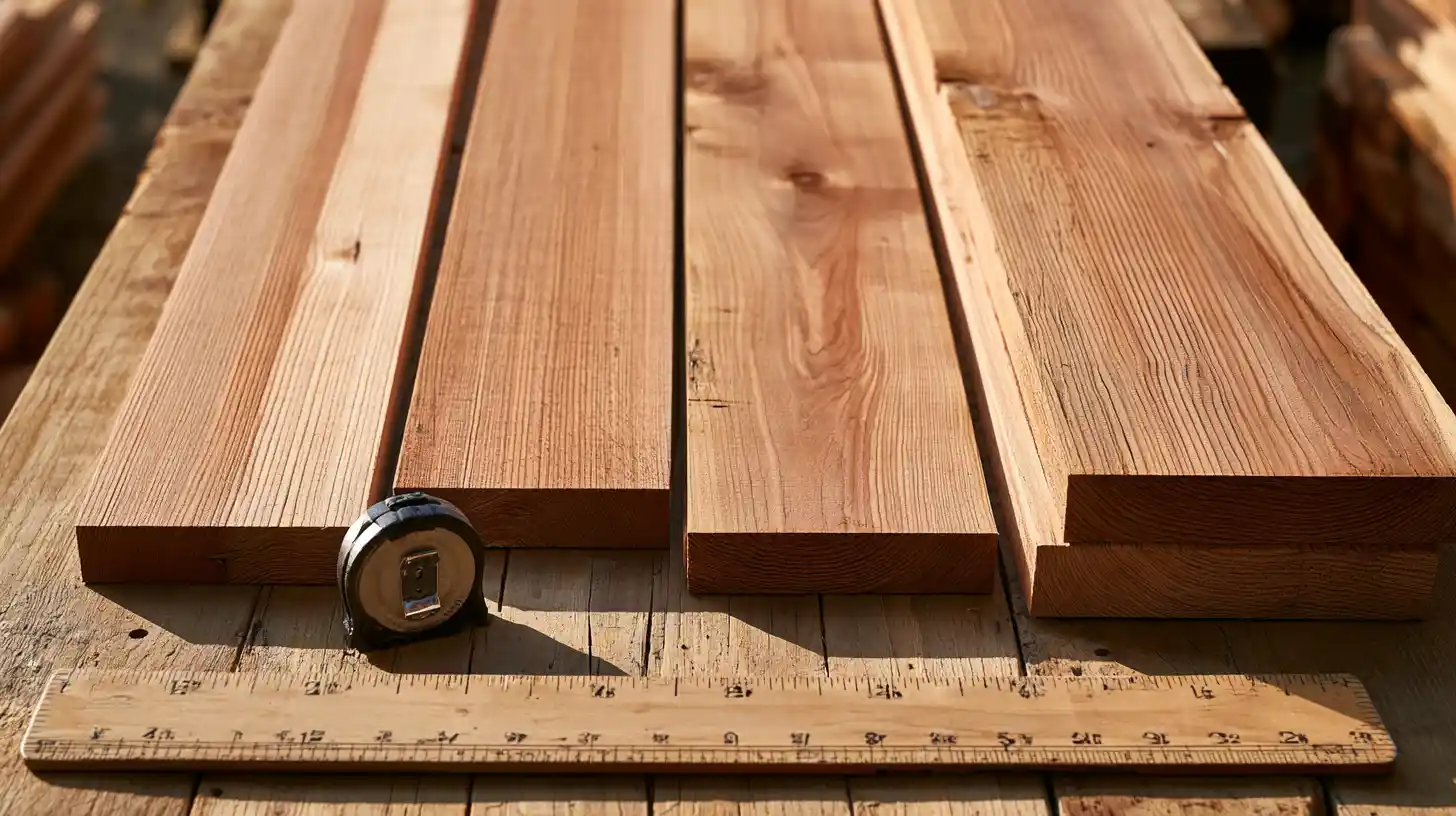
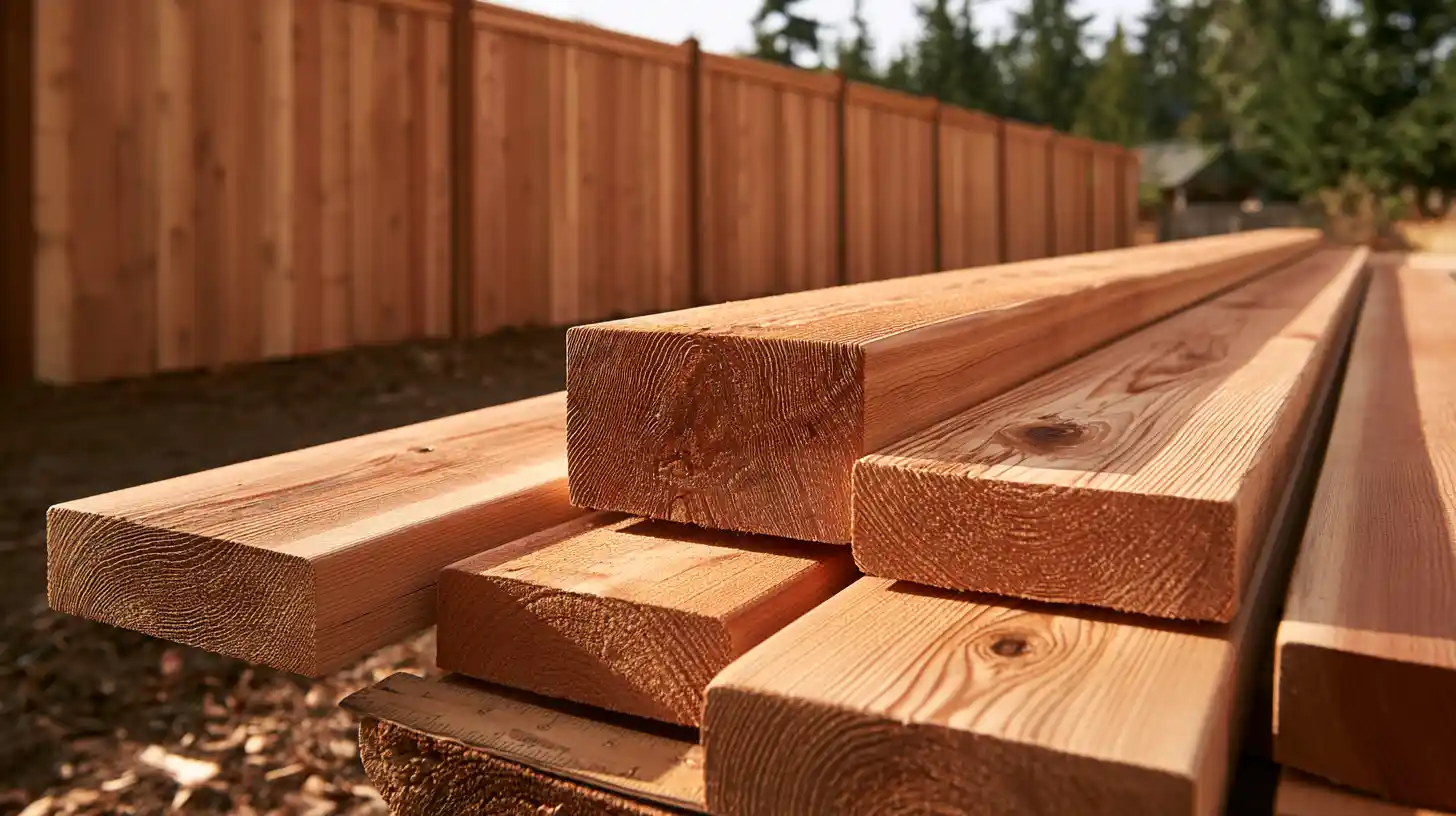
Nominal size is a label, not a measurement. A dry dressed 1×4 board is 3/4 inch by 3-1/2 inches, and a 1×6 board is 3/4 inch by 5-1/2 inches. Many retail fence pickets are thinner than that, commonly 5/8 inch or 3/4 inch thick, so the nominal name can overstate what you actually receive. Width and length both matter as much as thickness when you plan coverage.
| Nominal | Standard dressed actual (width x thickness) | Common picket note |
|---|---|---|
| 1×4 | 3/4″ x 3-1/2″ | Better dimensional stability |
| 1×6 | 3/4″ x 5-1/2″ | Maximum coverage per board |
Privacy pickets are commonly 6 feet, with 4-foot and 8-foot also available. Verify actual thickness, width, and length on the tag or invoice, or run a tape measure across the delivered bundle. The width you were quoted and the width you receive should match. Don’t trust the nominal label alone.
How to Spot Quality Cedar Pickets: A Field Inspection Checklist
- Species named and confirmed as Western Red Cedar, not a substitute like “Chinese Cedar,” which is actually a fir and less durable.
- Grade named on the paperwork.
- Actual dimensions stated, including width, not just nominal.
- Boards mostly straight with consistent thickness.
- Knots sound and tight, not loose or cracked.
- No excessive wane along the edges.
- No large knots or open knot holes beyond what the grade allows.
- No severe splits or shake.
- No signs of mold, dirt, or prolonged wet storage.
- Surface texture matches the intended finish and the exposed face.
Moisture Content: Green, S-DRY, and Kiln-Dried Cedar
You’ll see three marks. S-GRN means surfaced green, S-DRY means surfaced dry, and KD means kiln-dried. Under PS 20-25, dry lumber under nominal 5 inches is a maximum of 19% moisture, and green is above 19%; KD indicates a max of 19% unless a lower certified rule applies. Kiln-dried cedar moves less after installation than green material, which supports longevity. Cedar shrinks more tangentially than radially, so wetter boards can open gaps as they dry, and the result can look worse across a long line. No moisture condition eliminates movement entirely.
Surface Texture and Fasteners Are Part of Quality
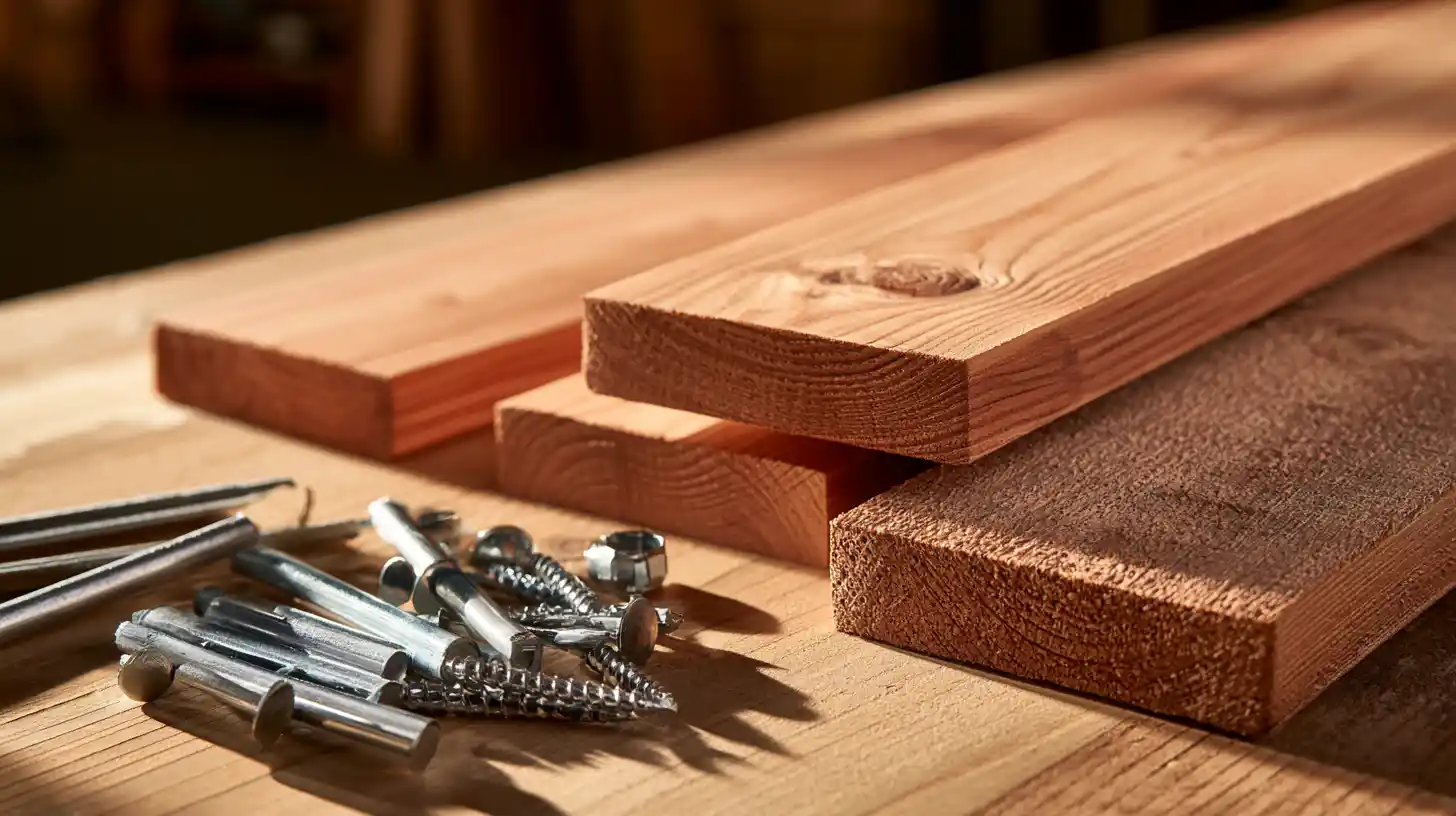
Texture affects appearance and finish. S4S is smooth on all four sides. S1S2E has one smooth face and two smooth edges, letting you expose either the rough or the smooth side of the wood in light or shadow. Textured cedar holds coatings differently than smooth, which needs a 50 to 60 grit scuff sand before finishing. Use hot-dipped galvanized, aluminum, or stainless fasteners (No. 304 for general use, No. 316 for seacoast exposure); the wrong fastener rusts and streaks the wood. When possible, finish all six sides of the board before it is installed.
What to Ask Before Approving a Cedar Fence Estimate
- What cedar species is being used?
- What cedar grade is specified, and is it suitable for the exposed run?
- Are the boards rough-sawn, S4S, or S1S2E?
- What are the actual dimensions, including width?
- Is the lumber green, S-DRY, or KD?
- Which face is being exposed toward the neighbor or the street?
- How will the posts be set and spaced on center?
- What fasteners will be used, whether the run is decorative or plain?
- What happens if the delivered material doesn’t match the quote or the price agreed?
The material named in the estimate should match what shows up and what gets installed. Clear communication on that point is where quality holds or slips. A straight comment from your point of contact beats a vague answer, and the right person on the crew should be able to walk you through each choice. Aesthetic goals and practical limits both belong in that conversation.
Frequently Asked Questions
What is the difference between #1 and #2 cedar pickets?
What are the different grades of cedar fencing?
What is the best grade of cedar?
How thick should cedar fence pickets be?
Get Your Cedar Fence Done Right From the Start
Top-quality cedar fencing depends on planning, communication, and craftsmanship, not material selection alone. That is the short story behind every clean line we build. Family-owned and trusted since 2016, Inline Security Fence serves residential and commercial clients across the greater Seattle-Tacoma area, and every customer gets the same attention to detail this article describes. If you want the fence materials, the price, and the installation details handled clearly from the start of your project, Send A Request or Get Started Today. Contact us at (206) 848-9565.