Key Takeaway
PVC vs. vinyl fencing is not actually a difference worth debating: in the fencing industry, both terms refer to the same rigid polyvinyl chloride material. What truly matters is the fence’s formulation, wall thickness, and installation quality. A well-made vinyl/PVC fence lasts 20 to 30 years, while economy products with recycled fillers can fail in 10 to 15.
For fencing, PVC and vinyl are usually the same thing. “Vinyl fence” almost always means a rigid polyvinyl chloride (PVC) fence, so the label on a quote matters far less than the fence’s construction, formulation, and installation. If you’re a property owner or homeowner comparing bids or questioning a contractor’s terminology, that’s the short answer. The longer answer helps you evaluate the fence itself. And if your real goal is site security, the conversation moves past material names entirely, which we’ll get to below.
PVC vs Vinyl Fencing: Is There Actually a Difference?
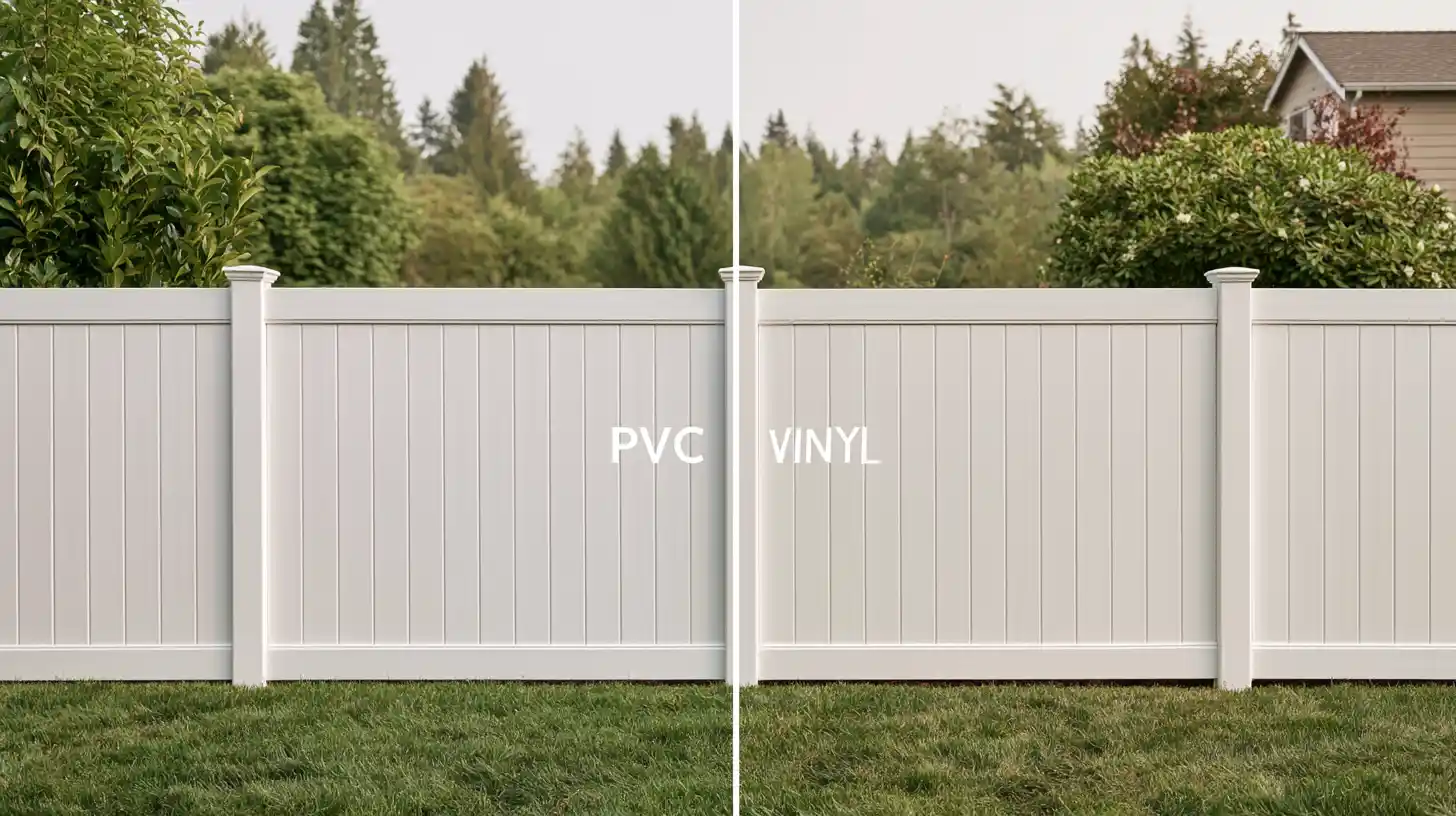
PVC stands for polyvinyl chloride, a rigid plastic. “Vinyl” is the consumer-facing word for the same material. When a supplier says “vinyl fence” and another says “PVC fence,” they’re almost always describing the same rigid PVC system. The vinyl fence panels, posts, and rails are identical in substance whichever term appears on the paperwork.
The confusion comes from other product categories. In flooring, tarps, and upholstery, “vinyl” can refer to a broader family of plastic formulations, some flexible, some rigid. That’s why the two words sometimes feel like they mean different things. In fencing, they don’t. The pickets, posts, and rails you see are made from rigid PVC profiles regardless of which term the seller prefers. So when you compare a “vinyl” quote against a “PVC” quote, you’re comparing the same base fence material and, usually, the same kind of vinyl fence. Across the fencing industry, PVC and vinyl fencing are treated as one and the same.
What Fence Material Is a Vinyl/PVC Fence Actually Made Of?
PVC resin on its own isn’t a finished fence. Before it becomes a post or picket, the raw resin is compounded with additives that give it its outdoor performance. According to the Vinyl Institute, these include impact modifiers, stabilizers, pigments, and UV modifiers, tuned by manufacturers to the product’s intended use. Unlike construction materials that rely on wood fibers, PVC profiles are extruded plastic through and through.
Titanium dioxide is one of the important ones. It protects color and surface integrity against direct sunlight, and quality outdoor formulations typically contain at least around 2% for reliable UV performance and color stability. Those compounded pellets are then extruded into rigid exterior profiles that form the posts, rails, and panels of the finished vinyl fence.
Because PVC doesn’t absorb moisture, it doesn’t rot, warp, or rust the way wood or steel components can. That moisture resistance is the main reason a vinyl fence holds up outdoors with so little upkeep and stays durable season after season. One thing to be clear about: vinyl/PVC is a plastic made from chloride-based resin, not a fireproof material, and it shouldn’t be described that way.
What the Fencing Standards Say (ASTM F964 and F1999)
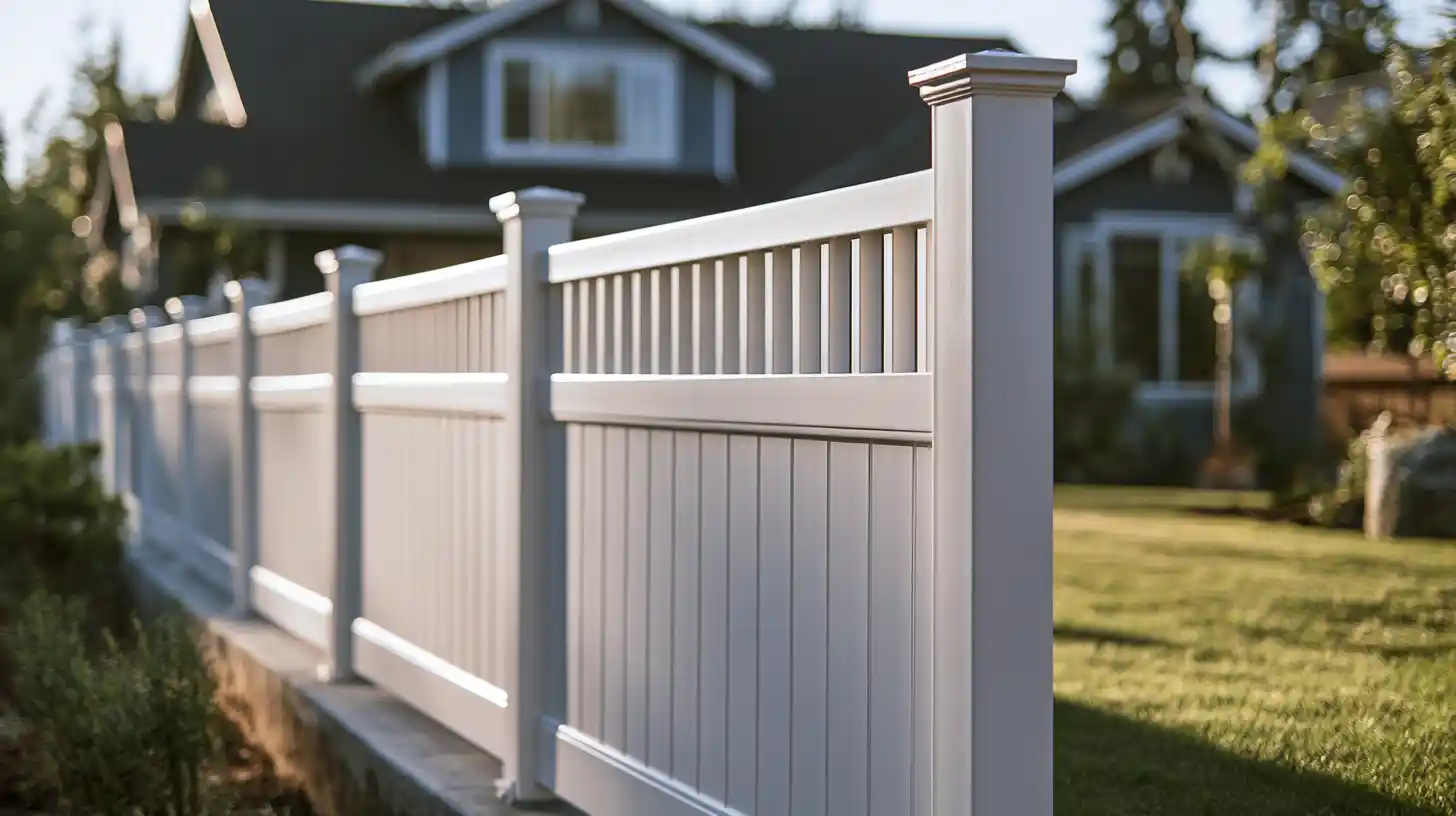
Two standards ground this whole topic, and most comparison articles skip them. ASTM F964-13(2024) covers rigid PVC exterior profiles used in agricultural, commercial, and residential fencing and railing. It sets requirements for material and physical properties, dimensional tolerances, extrusion quality, and weatherability. ASTM F1999-14(2024) covers installation of rigid PVC fence systems in areas where maximum frost penetration doesn’t exceed 30 inches, and it directs installers to follow manufacturer instructions.
Here’s the caveat that matters for commercial readers: ASTM F964 does not address loadbearing, windload, or guardrail loading for the complete assembly. A profile can meet the material standard and still not be engineered for a given structural or security demand. In practice, good installation means posts set roughly one-third of their length into the ground, usually anchored in concrete footings, with expansion gaps of about 1/4 inch per 8-foot panel to allow the panels room for temperature movement. In regions with hard freeze thaw cycles, that concrete anchoring and drainage detail keeps posts from shifting.
What Separates a Top-Quality Vinyl Fence From a Weak One? Wall Thickness and More
Two vinyl fences can look identical in a showroom and behave very differently after a few winters. The difference is in the specification, not the label.
- Profile design and wall thickness. Thicker walls and well-designed panels resist bowing and hard impact. The added rigidity and weight of a premium profile help it hold its shape. Ask for the manufacturer’s specifications on wall thickness rather than trusting a generic number.
- Virgin versus recycled material. Economy retail PVC is often thinner and blends recycled plastic fillers, which can yellow and crack in 10 to 15 years.
- UV and weathering formulation. Adequate titanium dioxide content is what keeps color stable in sunlight and keeps the panels durable.
- Post, rail, and reinforcement. Load-bearing points and gate posts often need internal aluminum or steel reinforcement.
- Gate framing and hardware. Gates take the most abuse and fail first when they’re under-built.
- Installation quality. Even the best profile fails if posts aren’t set correctly for the site.
Economy basic PVC costs less at the start, but a premium product that is well formulated holds up better against high winds and severe weather over its life. Rigid panels with the right wall thickness flex less and stay put when high winds hit. Material costs you see up front rarely tell you which one you’re getting, and the lowest cost isn’t always the lowest cost over 20 years.
How Long Does a Vinyl/PVC Fence Last?
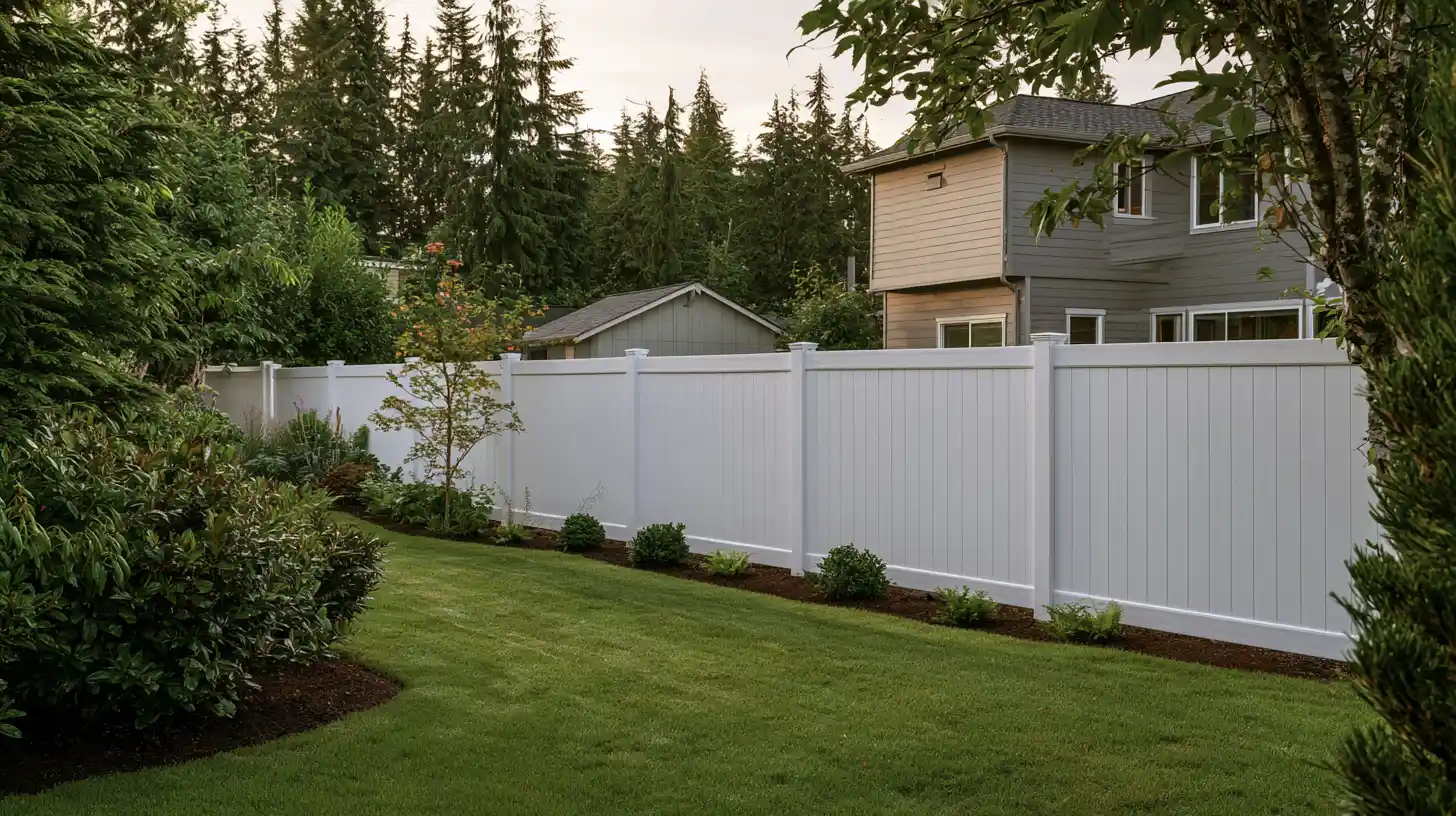
A well-made, well-installed vinyl/PVC fence typically lasts 20 to 30 years with proper care. Because the material doesn’t absorb moisture, it doesn’t rot, warp, or rust the way wood and steel components do, so the failure modes that shorten a wood fence’s life largely don’t apply. That durability is a big part of why homeowners choose it over natural wood.
The exception is economy product. Thinner panels blended with recycled plastic fillers and weak UV formulation can yellow and turn brittle in 10 to 15 years. Longevity tracks directly back to formulation and installation, which is why the specification questions above matter more than any lifespan promise on a brochure.
Is Vinyl Fencing Low Maintenance and Easy to Maintain?
Yes, though it’s fair to frame that low maintenance as general product behavior rather than a guarantee. A vinyl fence doesn’t need sealing, staining, or painting the way a wood fence does. It’s an easy material to maintain, and that alone eliminates the recurring upkeep most homeowners dread with wood fences.
It isn’t zero maintenance. Vinyl collects dirt and mildew like any outdoor surface, so a rinse or an annual power wash to remove dirt keeps the panels looking clean. Compared with a wood fence that needs re-staining every few years, that’s a light routine and a genuinely low maintenance choice.
Vinyl vs Wood, Composite, and Other Fence Material Types
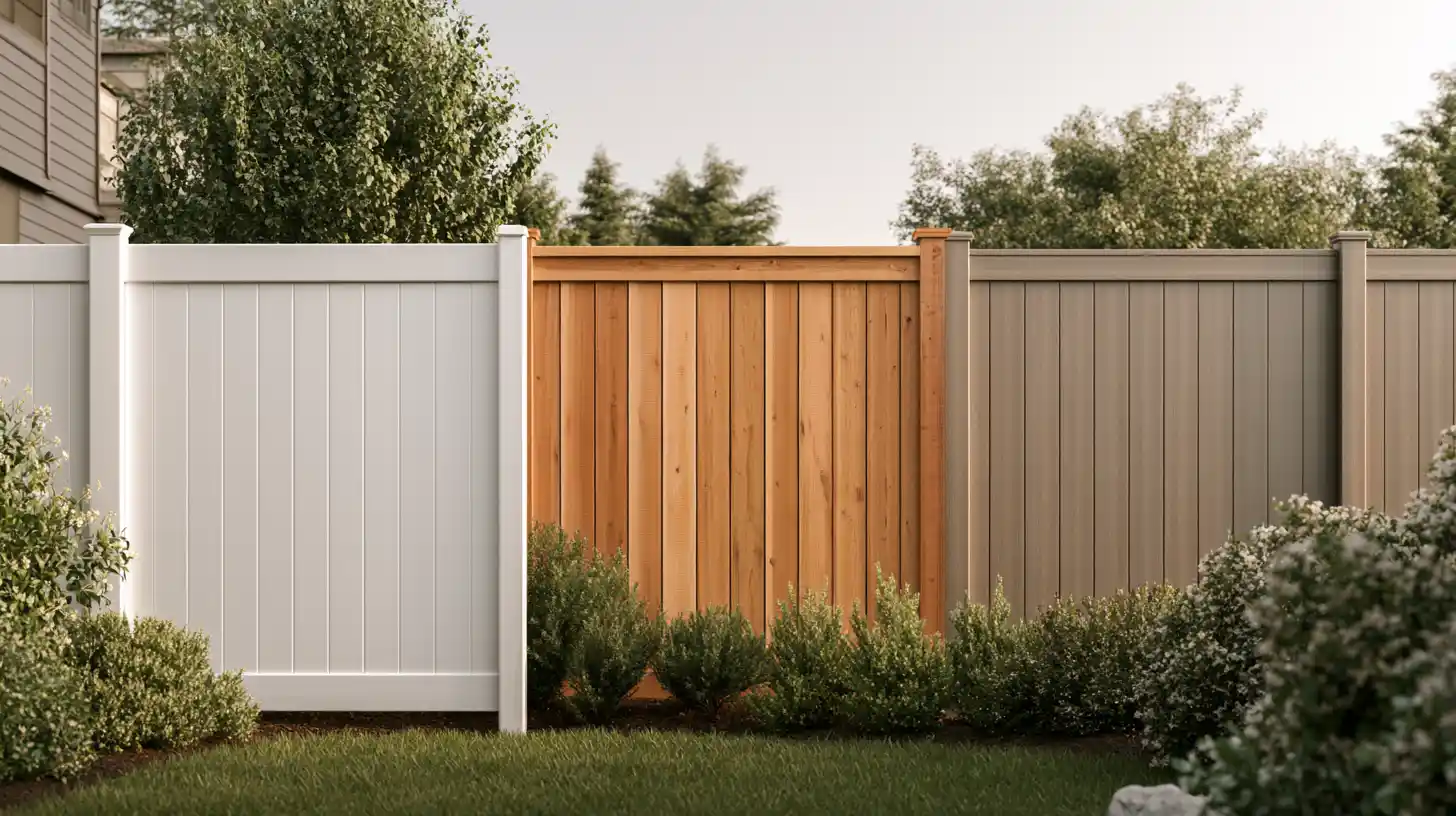
Wood fences give you a natural wood look, but wood needs staining or sealing and can rot, warp, or splinter over time. Composite fencing blends wood fibers with plastic for a middle ground, offering some of the warmth of natural wood with more durability. Aluminum and ornamental iron serve different needs where openness or strength matter more than privacy.
Vinyl panels are lighter and easier to handle than wood, which simplifies construction and repairs. When weighing vinyl vs wood, the honest answer is that each of these different types fits a different priority, and deeper head-to-head comparisons deserve their own discussion rather than crowding this one.
When Vinyl/Composite Fencing Is the Right Choice
Vinyl and composite fencing fit well when appearance and low maintenance matter more than security. Common good fits:
- Residential privacy fencing.
- Clean property screening.
- Low-maintenance perimeter definition.
- Certain commercial screening or curb-appeal applications.
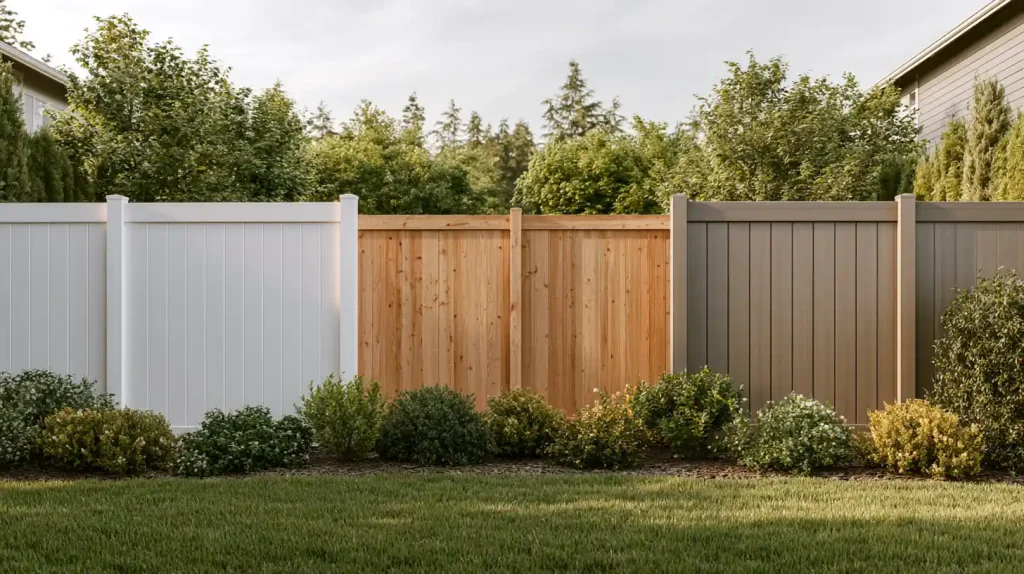
Vinyl comes in various styles and colors to match a landscape, which makes it an affordable way to lift curb appeal without frequent upkeep. For pool areas, vinyl is only appropriate when the complete barrier and gate meet applicable requirements, and those vary by jurisdiction. Installation often requires a municipal permit, and local codes, permits, and HOA rules differ from place to place, so confirm what applies to your property before work begins.
When PVC/Vinyl May Not Be the Right Primary Solution
A vinyl fence defines a boundary and provides privacy. It is not automatically a security solution. For high-security commercial sites, heavy impact exposure, vehicle access points, or perimeters that need visibility, climb resistance, and intrusion delay, other systems usually fit better, especially where heat and weather extremes push a picket harder.
That’s where Commercial Chain Link, Ornamental Iron, High Security fencing, custom fabrication, and gate automation come in. Automated vehicular gates carry their own standards, including ASTM F2200-24 and UL 325, and they’re a distinct safety and design conversation. Perimeter security, as CISA frames it, works best as a layered, risk-based design rather than a single fence line doing all the work.
What to Ask Before You Approve a Vinyl/PVC Fence Quote
A few direct questions separate a solid quote from a vague one, and good contractors welcome them:
- Is this a rigid PVC/vinyl fence system?
- Is the material virgin or recycled?
- What is the wall thickness on the posts and panels?
- What standard or manufacturer specification does it meet?
- What profiles, posts, rails, and gate hardware are included?
- Are the gates reinforced appropriately?
- How is it installed for local soil, frost, drainage, and high winds?
- What warranty covers the work and the materials?
- Who handles code, pool-barrier, HOA, or permit requirements?
- Is this fence intended for privacy, screening, access control, or security?
The Bottom Line: Ask About the System, Not the Label
In most fencing conversations, there’s no meaningful difference between PVC and vinyl. They’re the same material under two names. The better question is whether the system is top-quality, properly specified, and professionally installed for your site, because that’s what determines whether it lasts 20 to 30 years or leaves you replacing panels early. Family-owned and trusted since 2016, Inline Security Fence handles both residential and commercial work with a warranty on work and materials.
Talk to a Trusted Fencing Partner
We handle installation and service for residential and commercial clients across the greater Seattle-Tacoma area. Our commercial estimators, Jason and the team, match the fence system to the site rather than sell a material label, so you’re never stuck with the wrong product. Get Started Today or Send A Request, or contact us at (206) 848-9565.