Key Takeaway
Concertina, razor, and barbed wire legality depends entirely on local zoning, building codes, and property type, not federal law. In most jurisdictions, barbed wire is permitted on commercial and industrial properties while razor wire and concertina coils face stricter restrictions and are banned in residential areas. These materials work best as one layer in a perimeter system alongside surveillance, lighting, and access control, not as standalone solutions.
There is no single national rule that says whether you can put concertina, razor, or barbed wire on your fence. Legality comes down to local zoning, building and fire code, the type of property, fence height, and where the wire sits. In most places, these materials are heavily restricted or banned in residential areas and allowed on commercial and industrial sites under specific conditions. They also work best as one layer of a perimeter, not as a fix on their own. If you manage a commercial property, run a site, or make security decisions, this guide gives you a straight framework for both questions: what’s legal and what actually works. This is general information, not legal advice. Confirm the specifics with your local authority before you install anything.
What’s the Difference Between Barbed Wire, Razor Wire, and Concertina Wire?
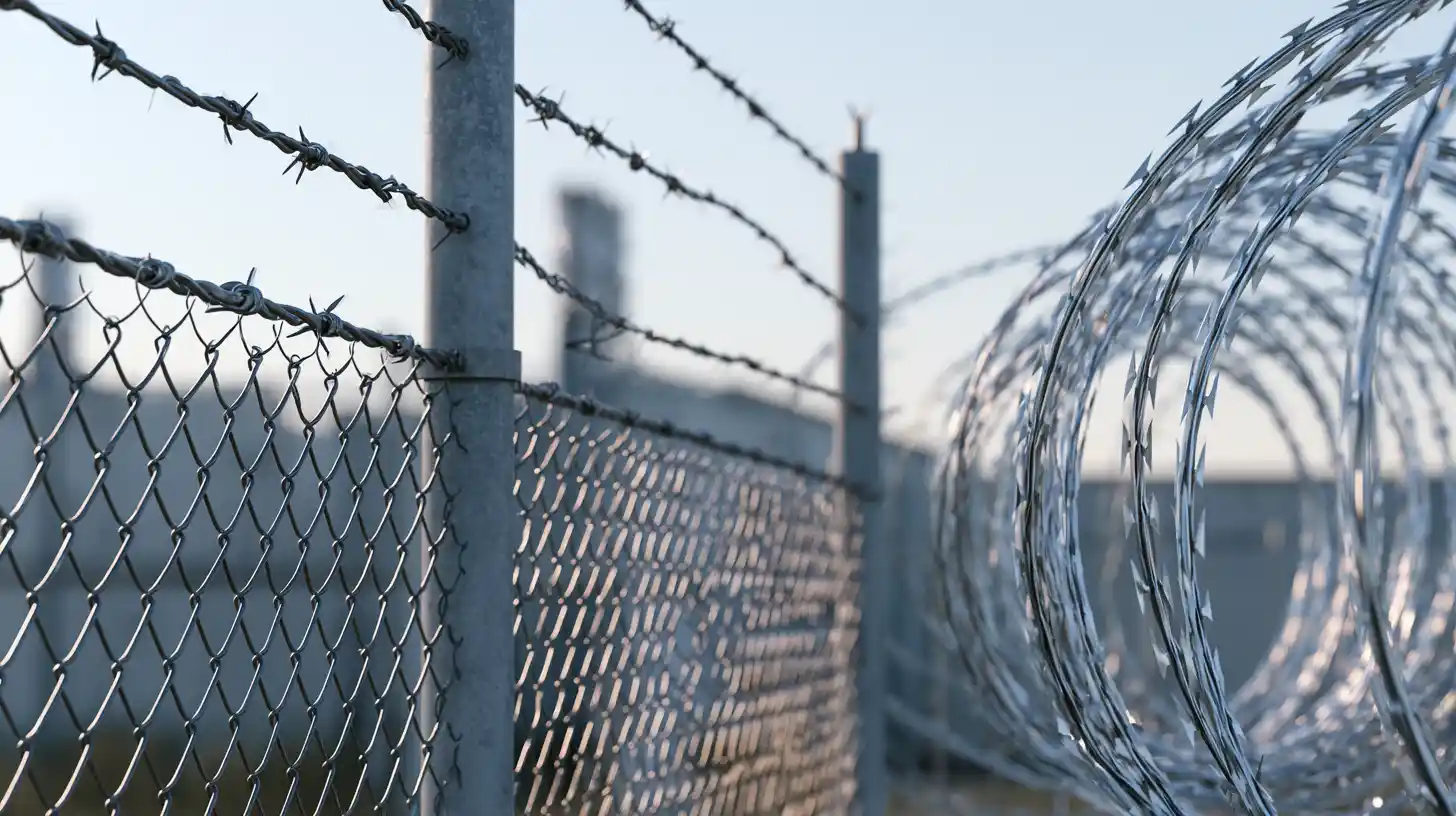
These three terms get used interchangeably, but codes and permits treat them differently, so the distinction matters.
- Barbed wire: Two steel line wires twisted together with pointed barbs crimped at regular intervals. It’s a moderate visible deterrent and the standard choice for containing animals such as livestock and for top guards.
- Razor wire (barbed tape): Sharp metal tape formed to slice and snag anyone trying to cross it. “Razor wire” is the common lay term for barbed tape, and it delivers a higher level of security than barbed wire because its sharp blades are longer and closer together.
- Concertina wire: A coiled configuration of razor or barbed tape that expands and contracts like an accordion. Once the coil is wound and stretched into place, it forms a three-dimensional tangled mass that prevents an intruder from placing a foot or hand to climb. These razor coils are the densest of the three.
Concertina is usually the coiled form of razor tape, and razor coils are what most people picture on high security perimeters. When you talk to a zoning office or fire code official, use the right term, because a rule that allows barbed wire may prohibit razor wire or concertina coils outright. The design traces back to trench barricades used in the First World War, and it remains widely deployed today.
Is Razor or Barbed Wire Legal? Check Your Local Authority First
Legality varies by local ordinance and property type. There is no federal private-property rule, and local regulations dictate how these wires can be installed and used. Barbed and razor wire are almost universally prohibited in residential areas, while commercial areas, industrial sites, and critical-infrastructure sites can usually install them under height and placement rules.
Before you commit, check with each authority that can say no:
- Planning and zoning department
- Building department (permits and inspections)
- Fire code official
- Landlord or lease terms
- HOA or CC&Rs, if they apply
- Your insurance company
The pattern holds across countries, too. Some U.S. states restrict residential use while allowing commercial installations under safety codes; the UK, Australia, Canada, and Germany all regulate public-facing wire and sometimes require special permission. None of that is a universal rule, which is exactly the point: verify locally, because the laws that govern razor wire in one location may not apply a mile away. One more caution worth raising with counsel: wire installed with intent to harm can be treated as an illegal booby trap, and as a property owner you owe a legal duty of care.
What Local Regulations Commonly Control
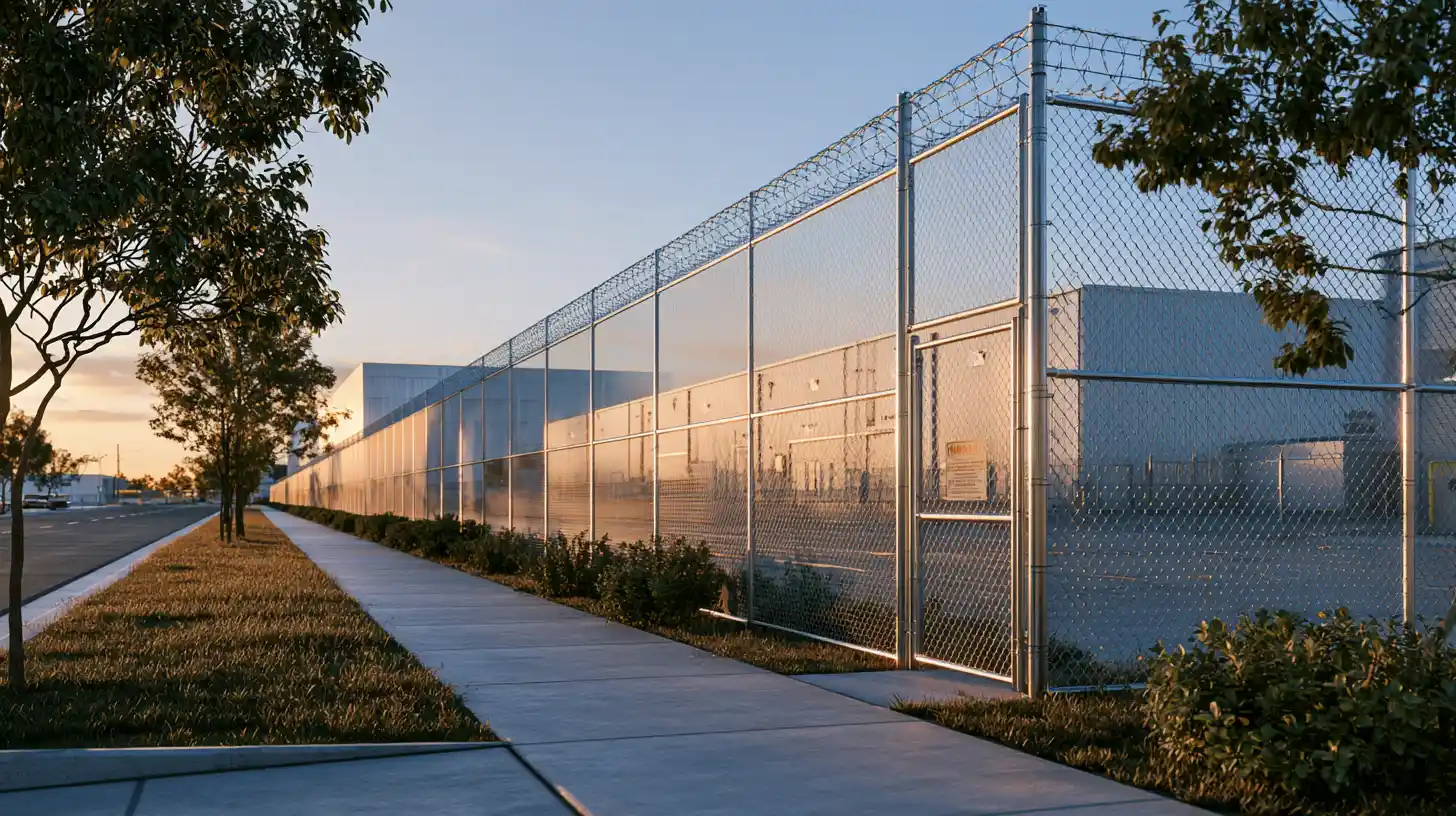
Even where these materials are allowed, ordinances tend to control the same set of details. Expect regulations around:
- Property and zoning type
- Overall fence height
- Height of the wire above grade
- Inward vs. outward angle of the top guard
- Setbacks from property lines
- Visibility from the street
- Proximity to residential uses
- Fire access and emergency egress
- Permits and inspections
- Required warning signage
Height rules are common, since they’re meant to keep the barbs out of accidental contact and protect public safety. Razor wire and concertina coils face tighter regulations than barbed wire because the injury risk is higher and the sharp edges are more dangerous to passersby. Wire that overhangs a public sidewalk or right-of-way can be treated as a public nuisance and draw fines. These are general patterns, not guarantees, so confirm the details for your jurisdiction. If your zoning code has a public comment window, that is often where the surrounding community and neighboring property owners weigh in on visible wire.
What Actually Works: Deterrence, Delay, and Detection
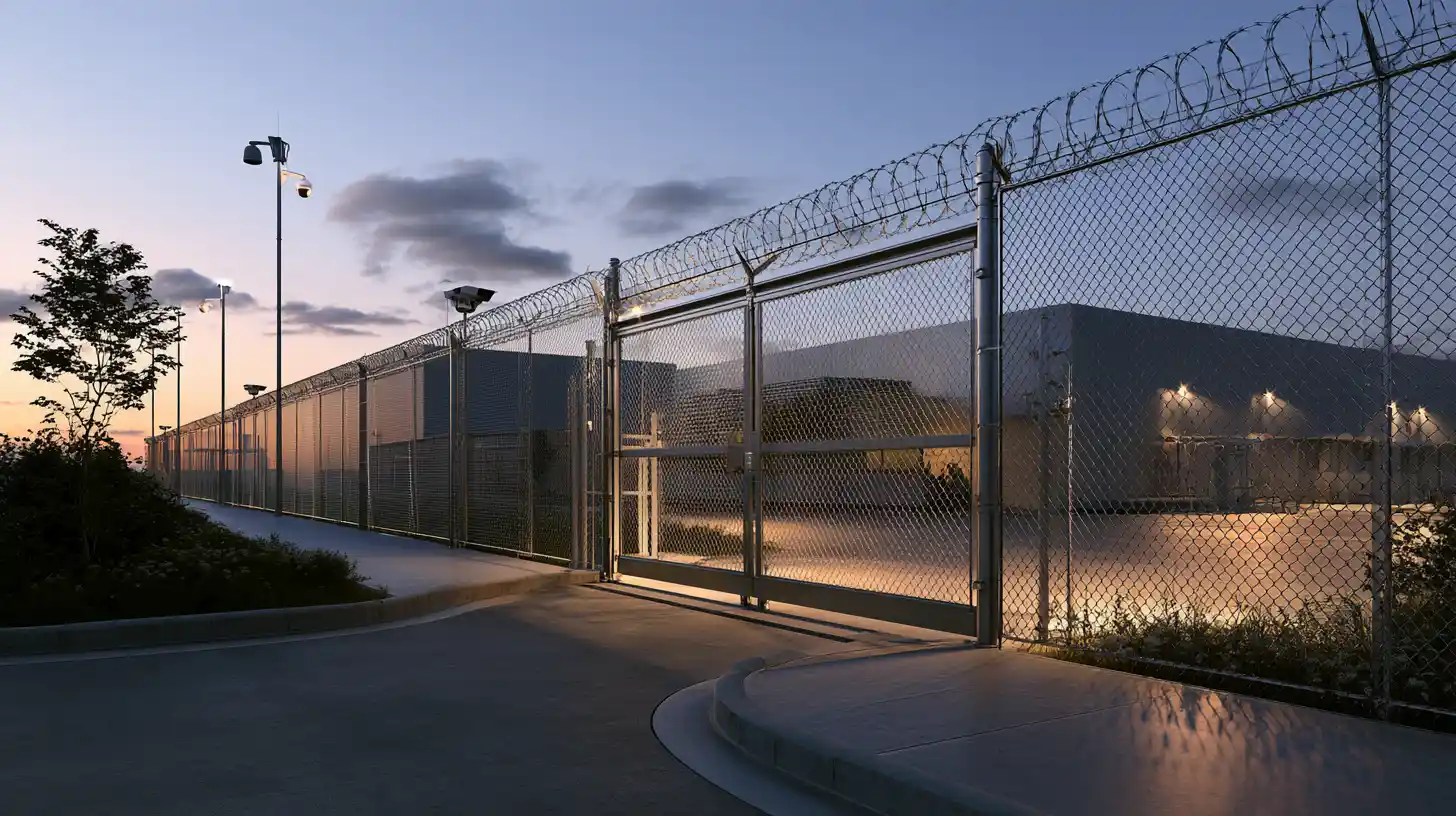
A security fence does more than block entry. Federal perimeter guidance describes its real jobs: mark the legal boundary, channel people and vehicles to controlled access points, support lighting, cameras, and sensors, deter casual intruders, and delay a determined one long enough to raise the odds of detection. Wire fits that last job. A concertina coil resists foot placement, and razor tape is built to slice and snag flesh, which buys you delay. Barbed wire works as a lower-security visible deterrent and for containing animals.
None of it replaces access control, surveillance, and properly built gates. Complete perimeter protection is rarely one barrier. DoD guidance sets a common baseline of 7 feet of fabric, 8 feet total height, with a top guard adding at least 12 inches. We approach a perimeter as a layered system, because a wire topper on a weak fence, or a strong fence with an unmonitored gate, still leaves you exposed. These security measures work only when they reinforce one another.
When Barbed Wire vs. Razor Wire and Razor Coils Make Sense
Match the deterrent to the risk. Overbuilding creates liability and appearance problems; underbuilding leaves gaps.
Where barbed wire fits
Barbed wire is the right call for Commercial Chain Link top guards, industrial yards, utility settings, active construction sites, and agricultural or livestock containment. It’s a moderate deterrent with a lower profile than razor wire or concertina, which makes it easier to permit in many commercial zones. It still needs proper barb arms fastened to the fence posts, correct tensioning, adequate height, and ongoing maintenance to hold up.
Where razor coils and high security wire fit
Razor wire and concertina coils suit higher-risk commercial and restricted perimeters: remote utility, storage, or critical-asset sites, and secured facilities like military bases, government installations, and high security prisons where public contact is low and AHJ approval is clear. For example, prisons rely on dense coils along walls and boundary barricades because the material is so hazardous. Since the barbs are more likely to trigger zoning, fire, and appearance restrictions, they don’t belong near public walkways, a border open to foot traffic, or residential-facing edges without explicit approval.
Design, Installation, and Handling Details That Matter
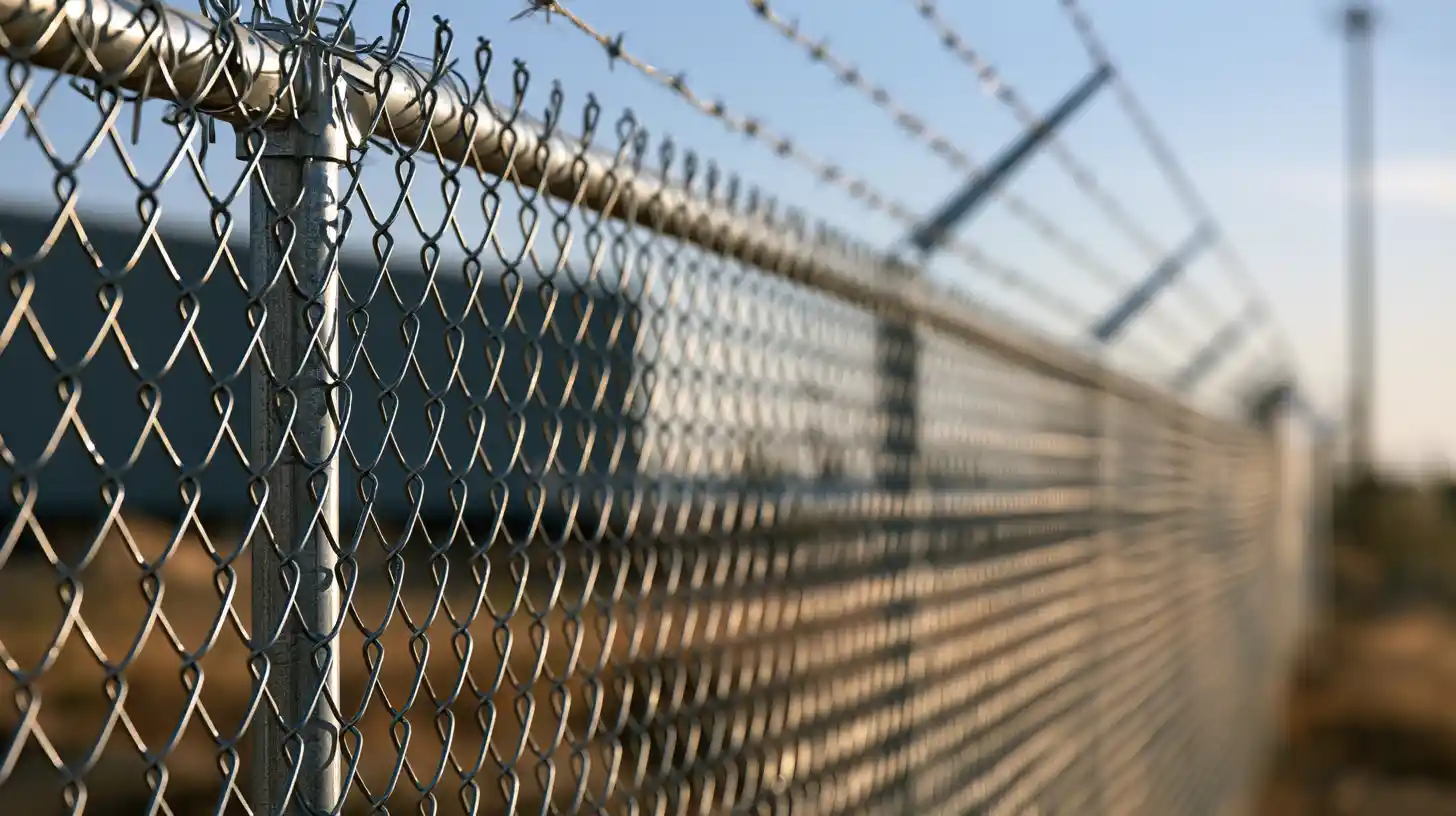
The design details decide whether a topper actually delays anyone. Top-guard outriggers are typically installed at 45 degrees on 18-inch support arms, and a fence requiring barbed wire uses a minimum of three strands stretched taut between arms. A concertina coil is attached to the fabric or top strand at intervals of at least 18 inches so no length of it hangs loose, and the gap between the bottom barbed wire and the top of the chain-link fabric should stay under 2 inches so no one can slip through. Ground clearance and anti-dig measures close the bottom of the perimeter and keep animals from working underneath.
Handling is its own hazard. Razor wire and concertina tape cut skin with almost no pressure, so it should be installed only by trained crews using heavy leather gloves, the right tools, and specialized fasteners, then stored securely and disposed of in metal waste bins. OSHA requires hand and eye protection where workers face cuts, lacerations, and punctures at those contact points. This is why we treat it as skilled craftsmanship rather than a weekend project. A rushed or improvised install fails inspection or, worse, injures someone.
Don’t Forget the Gates, and Their Alternatives to Wire
Gates are usually the weakest point in a perimeter. They sit on entrance roads, and their hinges and latches give an intruder something to work. A gate has to be as effective as the fence beside it, which usually means added hardening. Automated vehicular gates must comply with ASTM F2200, which classifies gates from Class I residential through Class IV guarded industrial, and with UL 325 for entrapment safety. Fire access and emergency entry have to be coordinated with the fire code official before the operator goes in. Gate installation and automation are a core part of what we do, and we plan them as part of the whole system.
When razor wire or concertina coils aren’t allowed or aren’t the right look, there are strong alternatives in security fencing. High Security Fencing, upgraded Commercial Chain Link, and Commercial Ornamental Iron all raise the difficulty of entry. Welded wire mesh and expanded metal have small openings and wide strands whose shape resists climbing and cutting better than standard chain link. Pair any of these with lighting and detection, and you often get the protection you need without the wire.
Pre-Installation Checklist and How to Get Started
Before anyone installs wire on your property, work through this:
- Identify your zoning district and property location
- Confirm local code, laws, and permit requirements
- Ask the fire code official about access and egress
- Check lease, HOA, or CC&R restrictions
- Confirm your insurance company’s position
- Define the threat level and your main objective (deter, delay, privacy, access control, or appearance)
- Evaluate the gates
- Plan required warning signage
- Plan maintenance and inspection
- Hire a qualified commercial fencing team
Inline Security Fence is family-owned and trusted since 2016, specializing in the installation and service of top-quality commercial fences and gates, including gate automation. We assess the site, plan the perimeter, and build it with the craftsmanship that keeps it compliant and effective. We carry an A+ BBB rating and back our work and materials. Get Started Today or Send A Request, or contact us at (206) 848-9565.