Key Takeaway
Lattice fences and lattice toppers add partial privacy by interrupting sightlines while letting sunlight and airflow pass through, making them a smart choice for patios, gardens, and courtyards. A lattice-top privacy fence with a solid lower section and open lattice band above is one of the most effective configurations. These designs have grown roughly 28% in popularity over three years but are decorative screening only, not security fencing.
Lattice fences and lattice toppers add partial privacy by interrupting sightlines while still letting sunlight and airflow pass through. They work as a semi-private design feature or a fence-height extension, not as a solid privacy wall or a high-security perimeter. If you want a brighter backyard, a screened patio, or light separation around a break area without the boxed-in feel of a solid barrier, lattice is worth a look. This guide covers when a lattice fence works, when it doesn’t, and how to plan it so the result holds up. We’re Inline Security Fence, a family-owned company trusted since 2016 for installation and service on residential and commercial projects.
What Is a Lattice Fence or Fence Topper?
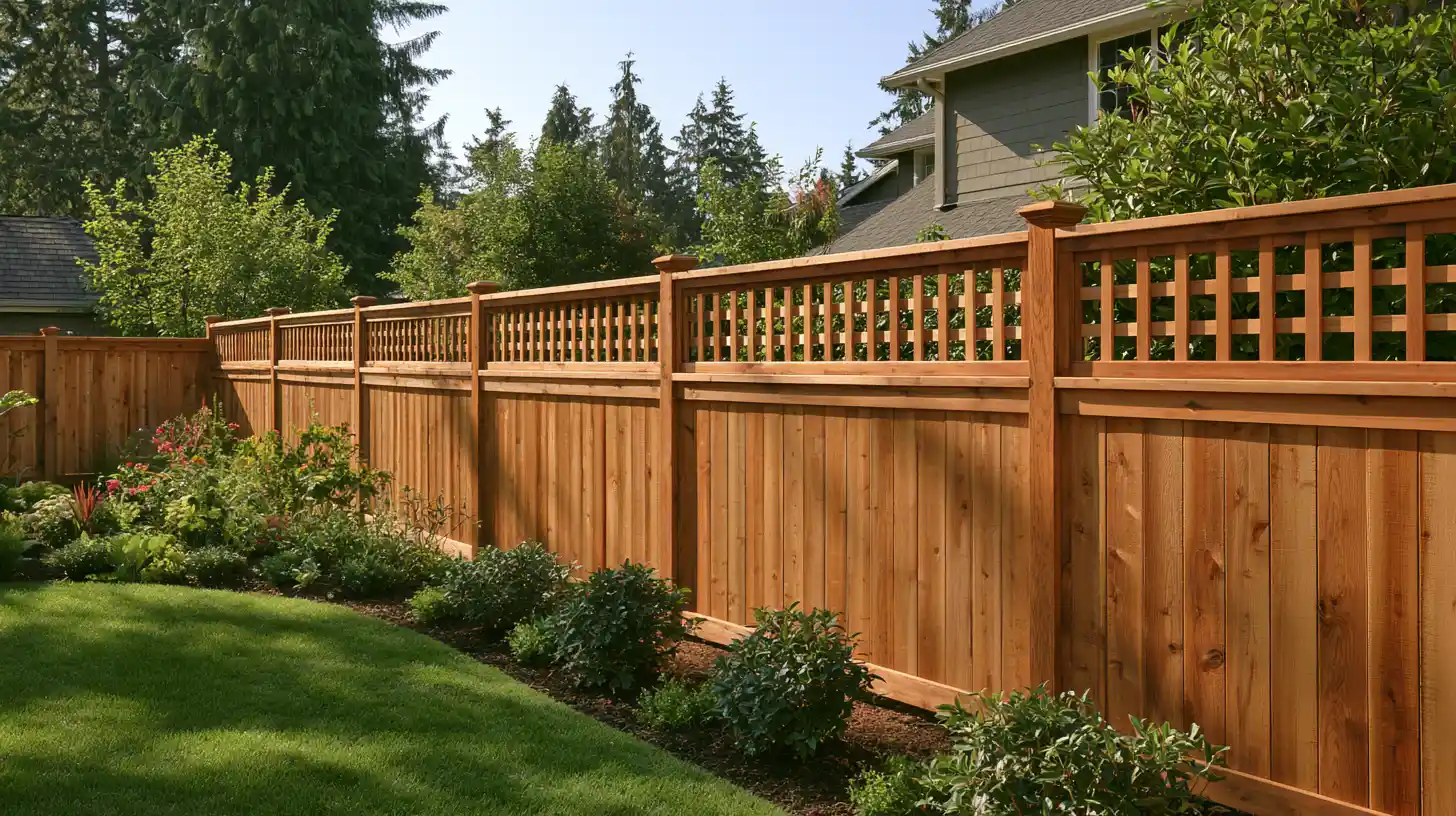
Lattice is a crisscross panel of wood, vinyl, or composite. You’ll see these panels in a few forms:
- Full lattice fence: lattice panels used as the fence itself, open enough to filter light while breaking up direct views.
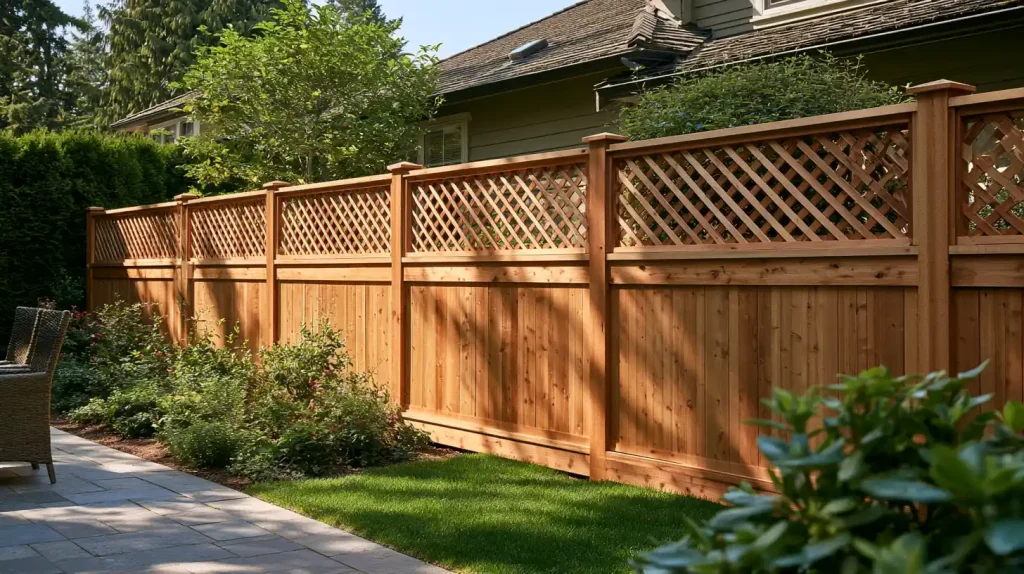
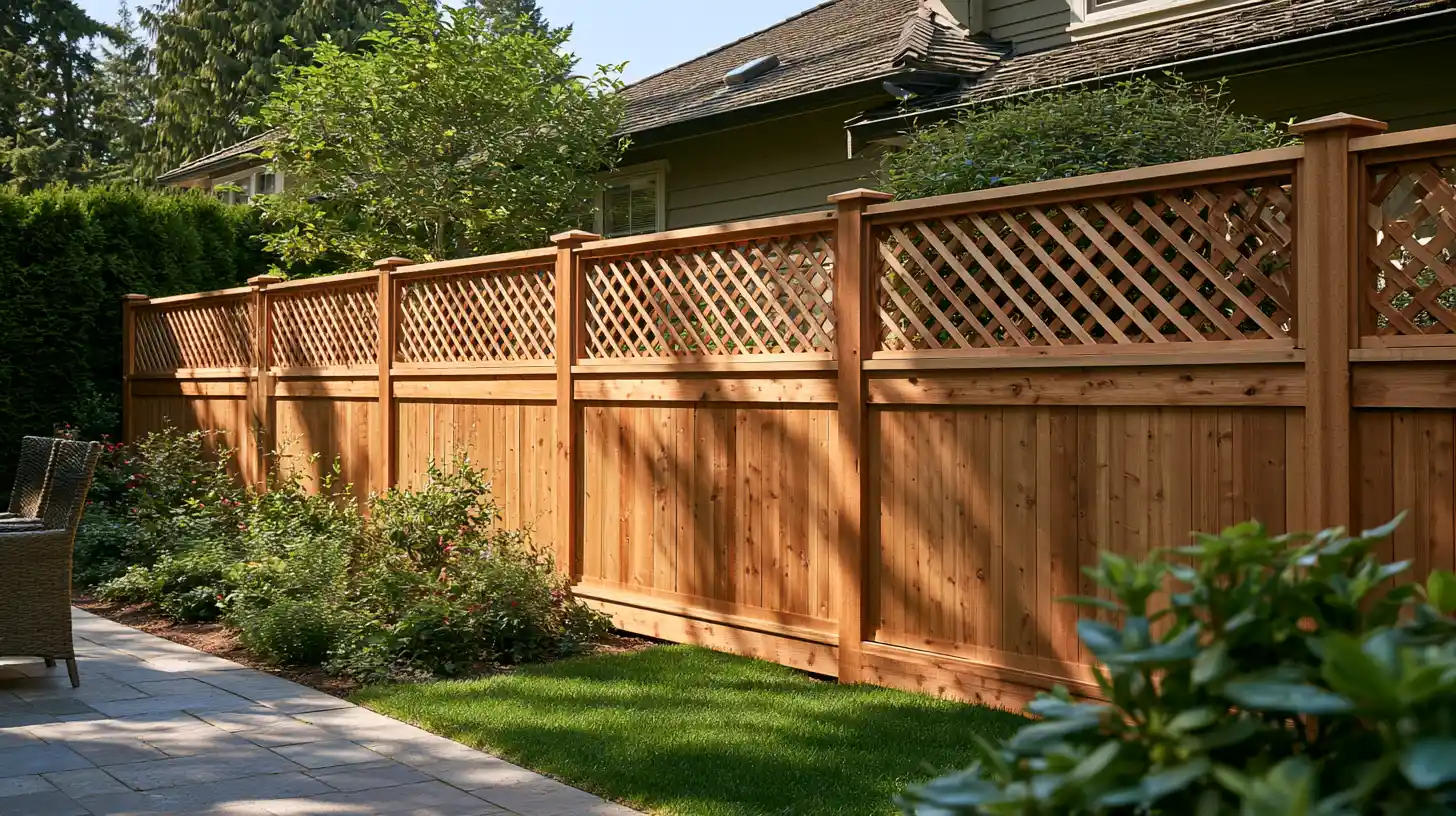
- Lattice-top privacy fence: a solid lower section with an open privacy lattice band above. This combination is one of the most effective styles, giving you seclusion at eye level and light up top.
- Lattice topper or fence extension: a fence topper added to the top of an existing fence to gain height and extra privacy.
- Wall-mounted lattice screen: lattice fixed to walls or an existing structure rather than set on its own posts.
Panels come in decorative panels with open patterns and tighter privacy lattice with smaller openings for more seclusion. The crisscross elements give a fence a timeless look that many homeowners want, and the effect reads as quiet elegance rather than bulk. A common stock size is 4 ft by 8 ft, and lattice panels can be cut to fit a specific opening or frame.
How Do Lattice Fences and Lattice Toppers Deliver Privacy Without Losing Light?
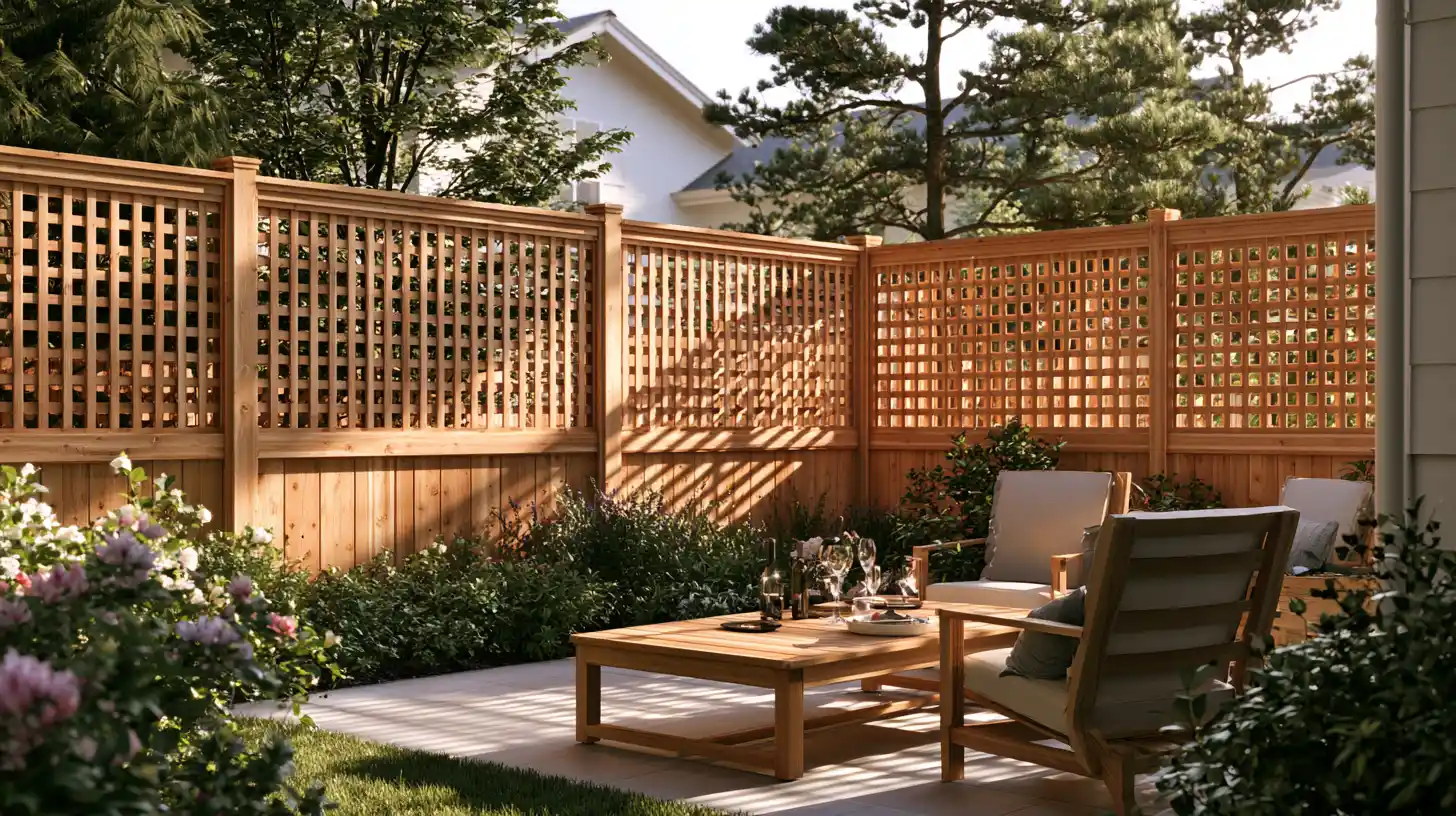
The crisscross pattern disrupts direct lines of sight rather than sealing them off. A person standing right at the fence sees more than someone across the backyard, so visual obstruction increases with distance. That’s the practical trade-off in creating privacy: tighter openings give you more seclusion, wider patterns give you more light and airflow.
Because light filters through the openings, lattice avoids the deep, dark shadow that solid walls cast. Your outdoor space stays brighter and feels more open. The same openings let breezes pass, which helps keep patios and courtyards cooler on warm days and lets you rest in comfort. Set expectations honestly here: this is partial privacy. If you need to fully block a view, lattice alone won’t do it, and a solid lower section with privacy lattice above is usually the better answer.
When Is Lattice a Great Option to Add Privacy?
Lattice fits well when you want to soften a sightline without closing off the space. Good ideas for using it include:
- Patios and decks that feel exposed to neighbors
- Gardens and residential side yards, where lattice pairs naturally with plants
- Courtyards and enclosed outdoor areas
- Light commercial screening around break areas or low-risk visual separation
A lattice topper can be added to a sound existing fence without a full rebuild, which is part of why these designs have grown in popularity, up roughly 28% over three years. The appeal is the balance: enough screening to feel private, enough openness to stay welcoming to neighbors. It’s a stylish, sleek way to gain more privacy without walling off the yard from the street. For commercial sites, treat lattice as screening only, not as a security measure.
When Lattice Is Not the Right Choice
An honest read on the limits saves you from a project that disappoints. Lattice isn’t the right call for:
- Full visual privacy. Choose solid wood or vinyl panels instead.
- Security perimeters. Lattice is decorative screening, not High Security Fencing.
- Weak existing fences. Added height needs sound posts and rails.
- High-wind exposure without proper post design.
- Pool barriers, unless openings and gates meet the applicable code.
- Wildfire-prone attachment points, where combustible wood lattice near a structure needs careful material selection.
On security specifically, FEMA guidance notes that fencing acts mainly as a deterrent and offers limited delay against a motivated intruder. Its example security specs, like chain-link with 9-gauge or heavier wire and mesh openings no larger than 2 inches, describe a different class of fence entirely. If protection is the goal, Commercial Chain Link, Ornamental Iron, or High Security Fencing is the right direction.
Lattice Topper vs. Full Fence Replacement and Height Restrictions
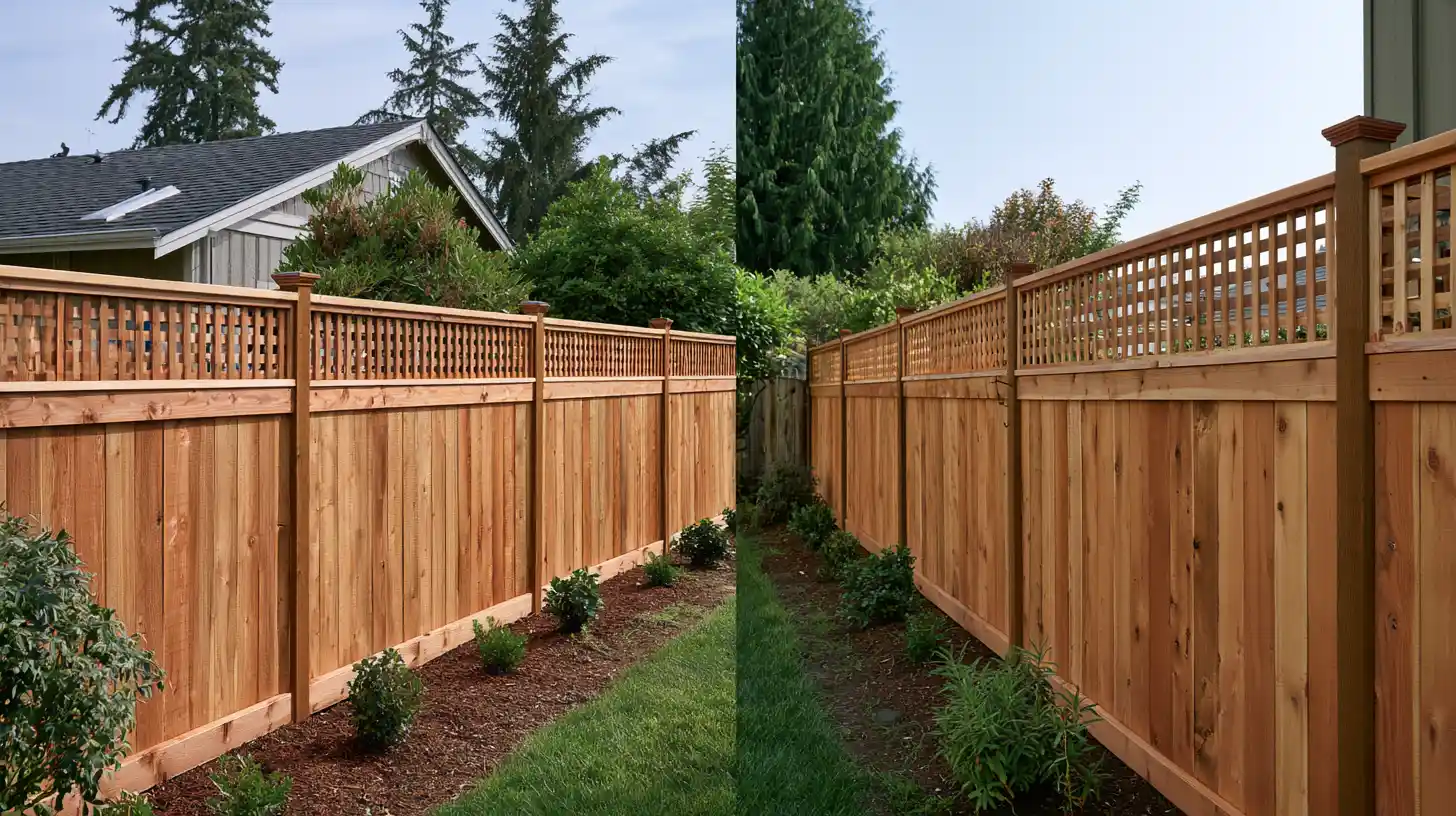
A lattice topper typically adds one to two feet of height for extra privacy when the existing backyard fence is still in good shape. It’s a smaller job than full replacement, but it’s not purely decorative. Adding height changes the wind load your posts carry, and height restrictions in your area may limit how far you can go.
Weigh these factors before deciding:
- Existing fence and post condition
- How much added height you actually need
- Whether local code height limits allow it
- Visual consistency with the current fence
- Long-term maintenance
Angling a topper slightly can block sightlines from higher vantage points, like a second-story window or a raised deck next door. One caution: some wall-topper kits are built to mount to walls and are not intended to stand alone in soil, so match the product to the application.
Material Options: Wood, Cedar, Vinyl, and Composite Lattice Panels
Material choice comes down to the look you want and how much upkeep you’ll take on while maintaining the fence over time. Weather resistant materials matter most where sun and rain hit the panels year-round.
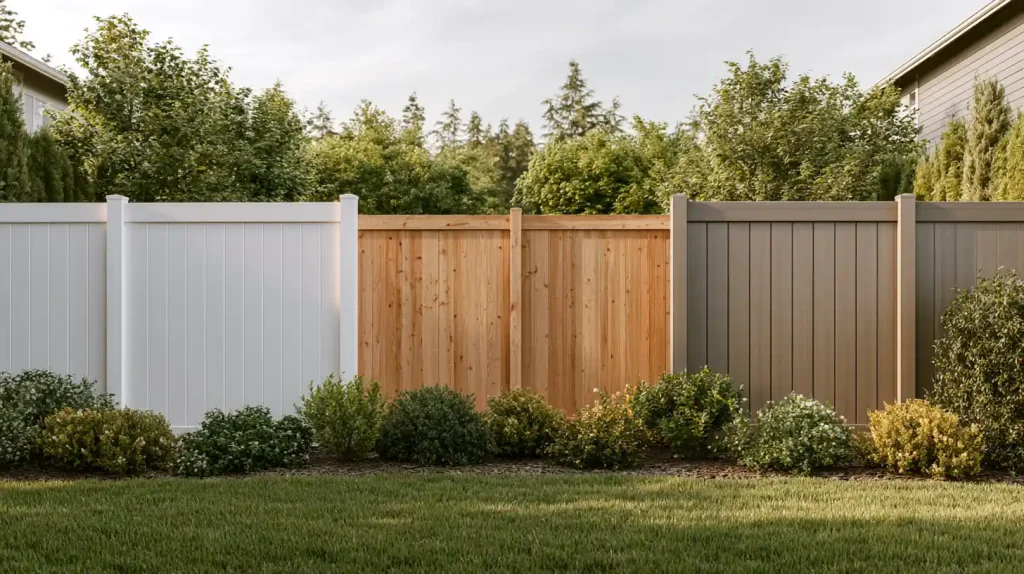
- Wood and Horizontal Cedar Wood: a warm, natural look that can be painted or stained. Left untreated, cedar weathers to a silvery-grey. Plan on resealing roughly every two to three years to hold color and protect the wood, and repaint painted panels as the finish fades.
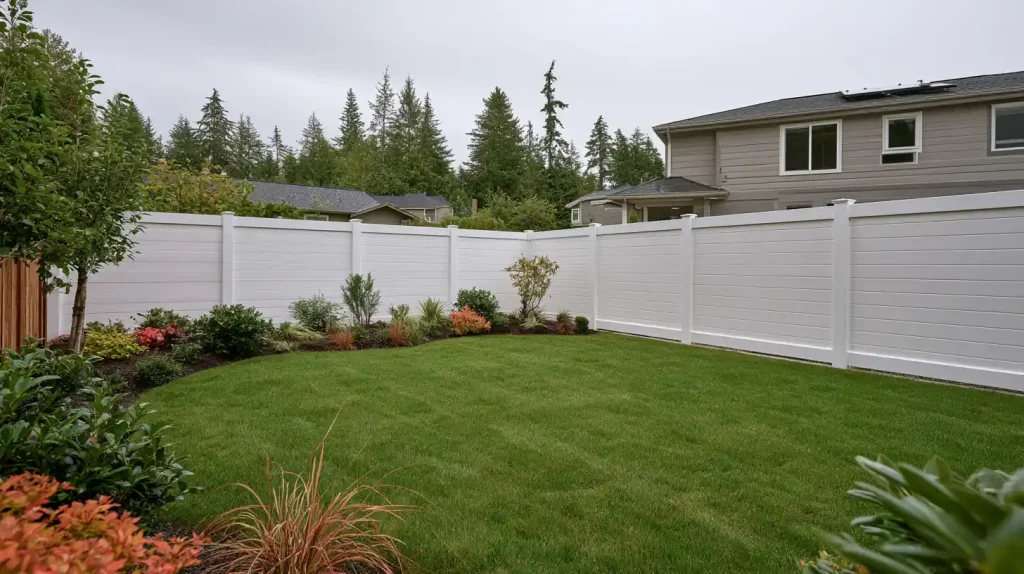
- Vinyl and Composite: low-maintenance and easy to clean with soap and water. Note that ASTM F964 recognizes rigid PVC profiles for fencing, but that standard covers the profile, not the installed structural or wind performance of the finished fence.
- Ornamental Iron and metal-framed accents: a durable option where a commercial setting calls for a stronger frame and a more finished appearance.
Match the material to the setting and to how much maintenance you’re willing to do. A cedar screen in a garden and a metal-framed panel at a commercial courtyard are solving different problems, and each can enhance the space in its own way.
Planning Checklist Before Adding Lattice
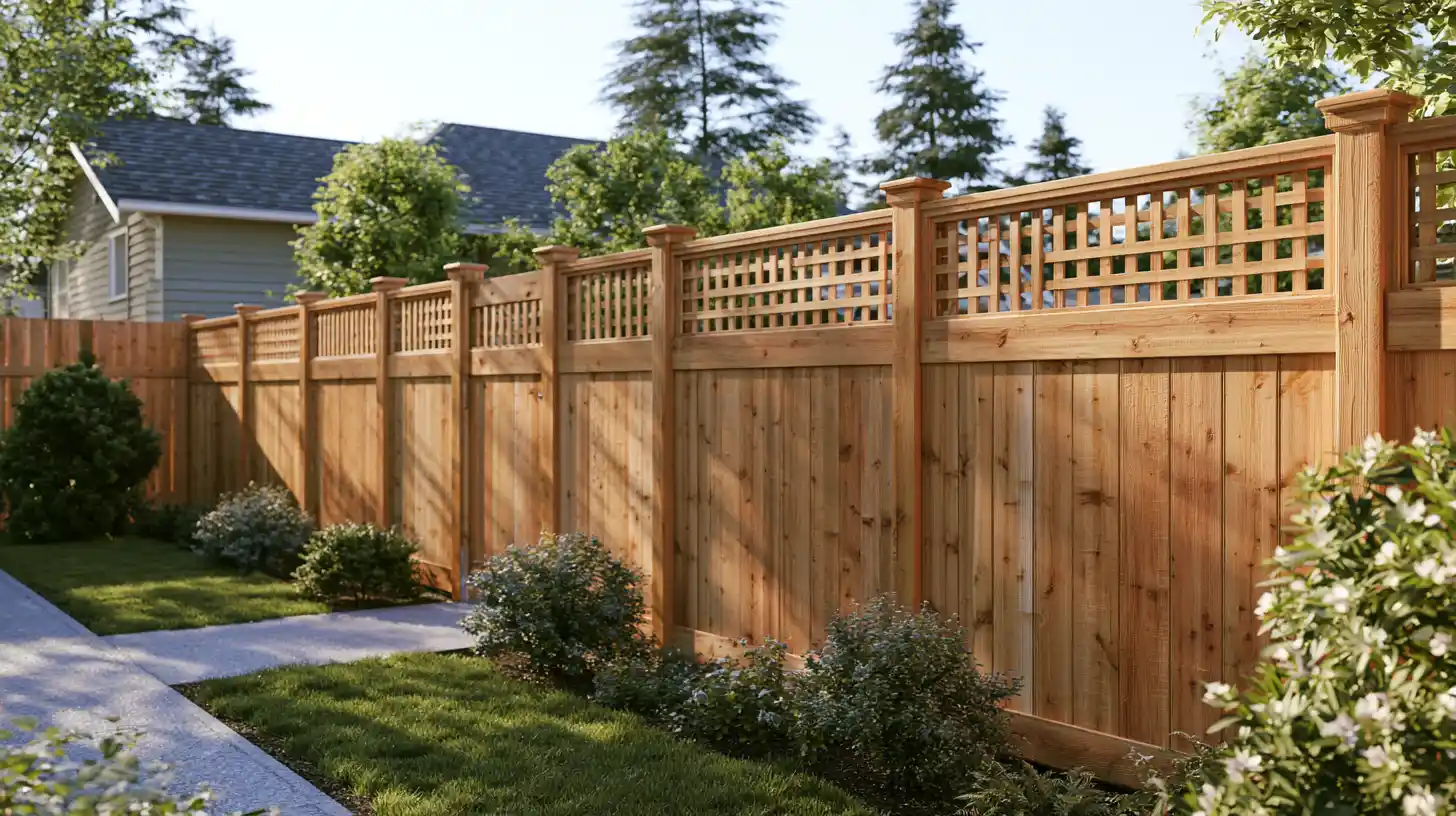
Good lattice starts with planning, not with the panels. Work through this before anything gets built:
- Identify the exact sightlines to block, including the height and angle a viewer looks from.
- Check local fence height limits. The 2024 IRC has a residential permit-exemption reference for fences not over 7 feet, but that’s a national model-code figure. Local zoning, setbacks, easements, and HOA rules can override it.
- Confirm HOA or property standards.
- Call 811 before you break dirt. This is the national Call Before You Dig line, and it’s required in most states for fence projects on your land.
- Confirm pool rules if the fence is near water.
- Review gate and access needs.
- Assess wind exposure and post support, especially if you’re adding height.
- If you plan to grow vines, match the plant weight to the strength of the frame and posts.
Lattice lets breezes pass and can carry climbing plants that fill in the pattern over a season, but a heavy vine on a light frame is a problem waiting to happen. Verify local rules with a qualified installer before you commit to a layout.
Lattice Near Pools and Commercial Access Points
Pool barriers follow stricter rules than an ordinary privacy fence. The 2024 ISPSC references a minimum barrier height of 4 feet, openings that won’t pass a 4-inch sphere, and for diagonal members like lattice a maximum opening of 1¾ inches. It also addresses horizontal-member spacing: when members are less than 45 inches apart, they must sit on the pool side so the fence can’t be climbed like a ladder.
At commercial access points, decorative panels can’t narrow the required path. ADA standards call for a 32-inch minimum clear opening at gates and doors on accessible routes. Whatever you build, it still has to meet the code and life-safety rules for its location, verified with the local authority having jurisdiction.
Why Installation Quality Matters
Lattice looks simple, but the details decide whether it lasts. A proper install controls the posts and rails sized for the added height and wind, clean framing around each panel, drainage and ground clearance, the right fasteners, fence boards and lattice that match the existing fence, and clean transitions at gates and corners.
We’re a hands-on, family-owned team with in-house estimators, a foreman, and a welder, and we plan the layout before a post goes in the ground. That planning gives you a real sense of what will get installed and how it will hold up, and it’s what keeps a lattice project from becoming a warranty problem later. Our work and materials are backed by a warranty. For sites that need more than screening, we also handle Commercial Chain Link, Ornamental Iron, High Security Fencing, Custom Fabrication, and Gate Installation including automation. If you want a properly planned installation, Get Started Today or contact us at (206) 848-9565.