Key Takeaway
Chain link fence parts include four systems working together: structural posts, horizontal rails or tension wire, woven chain link fabric, and the fittings that hold it all under tension. Terminal posts anchor the stretched fabric at ends, corners, and gates, while tension bars, tension bands, brace bands, rail ends, loop caps, and tie wires connect and secure every element. A fence that lasts depends on correct part sizing, proper spacing per CLFMI guidelines, and galvanized coatings throughout.
What Parts Make Up a Chain Link Fence?
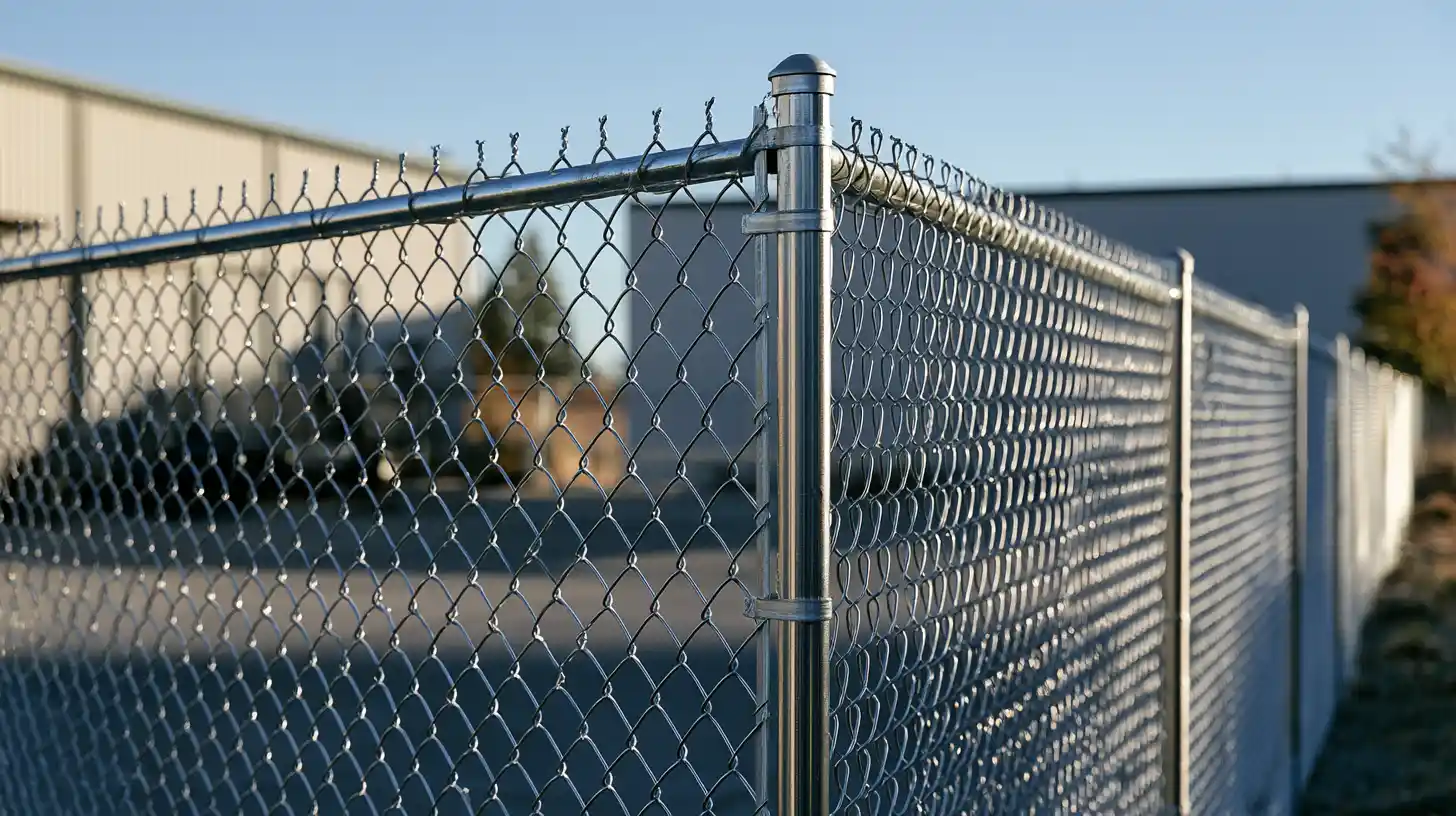
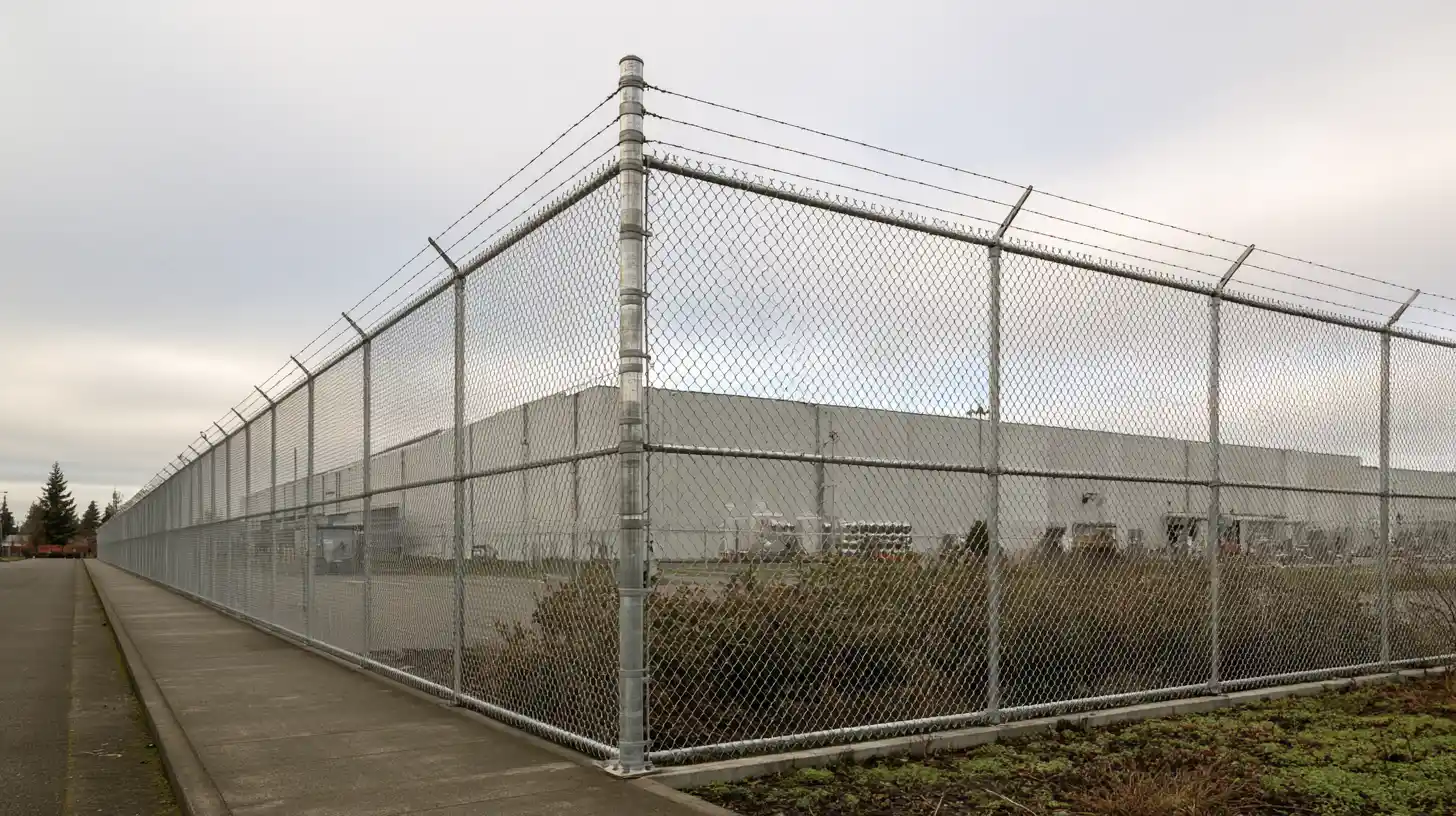
A chain link fence is built from four things working together: structural fence posts, horizontal rails or tension wire, the woven chain link fabric, and the fittings that hold it all under tension. The posts come in two kinds. Terminal posts (end, corner, gate, and pull posts) anchor the pulling stress of the stretched fabric. Line posts stand between them and carry the fabric across the run. The chain link fabric is tied to those posts and rails with hardware you may not know by name: tension bars, tension bands, brace bands, rail ends, loop caps, tie wires, and post caps.
The important idea is that a chain link fence is a tensioned fence system, not a loose pile of parts. Every piece does one job: it supports the framework, stretches the fence fabric, connects the rails, protects the posts, or operates the gate. When one part is missing, undersized, or spaced wrong, the fabric sags, the top rail bows, or the bottom gets pushed up. Whether you’re a property owner inspecting an aging chain link fence, a facility manager reviewing a quote, or a homeowner planning a replacement, knowing what each of these fence components does makes those decisions easier.
We’ve installed and serviced commercial chain link since 2016, and the small chain link fence parts are usually what separate a fence that lasts from one that fails early. A missing post cap or an undersized tension band rarely shows up on installation day. It shows up two winters later, when water has worked into a hollow post or the fabric has started to sag along a long run.
Quick Chain Link Fence Parts Table
Here’s the full anatomy at a glance: what each part is, where it lives, what it does, and what goes wrong when it’s absent or wrong.
| Part | Where it goes | What it does | If missing or wrong |
|---|---|---|---|
| Terminal post | Ends, corners, gates, pulls | Anchors fabric tension | Fence pulls loose or leans |
| Line post | Between terminal posts, max 10 ft apart | Carries fabric across the run | Fabric sags between supports |
| Top rail | Terminal to terminal, over line posts | Stabilizes the top, resists sag | Top of fence bows and dips |
| Tension wire | Top and/or bottom of fabric | Adds bottom security or replaces top rail | Fabric can be forced up or out |
| Chain link fabric | Across the framework | The mesh barrier itself | No fence |
| Tension bar | Woven through fabric at terminal posts | Grips the fabric edge for stretching | Fabric can’t be pulled tight |
| Tension band | Around terminal posts | Clamps the tension bar to the post | Loose fabric, sagging |
| Brace band | Around terminal posts | Holds rail ends, tension wire, arms | Rails and members won’t stay attached |
| Rail end | Terminal post, held by brace band | Cup that connects rail to post | Top rail disconnects |
| Loop cap | Top of line posts | Top rail passes through it | Rail loses support, sags |
| Post cap | Top of terminal posts | Seals post against water | Interior rust, post failure |
| Tie wire | Line posts (≤12 in) and rails (≤18 in) | Fastens fabric to framework | Fabric pulls away from posts |
| Hog ring | Along tension wire, ≤18 in apart | Secures fabric to tension wire | Bottom gaps open up |
| Top rail sleeve | Between rail sections | Splices rail lengths | Weak, misaligned rail joints |
| Carriage bolts | Through bands | Fasten bands to posts | Bands loosen and shift |
The Main Fence Structure: Fence Posts, Rails, and Chain Link Fabric
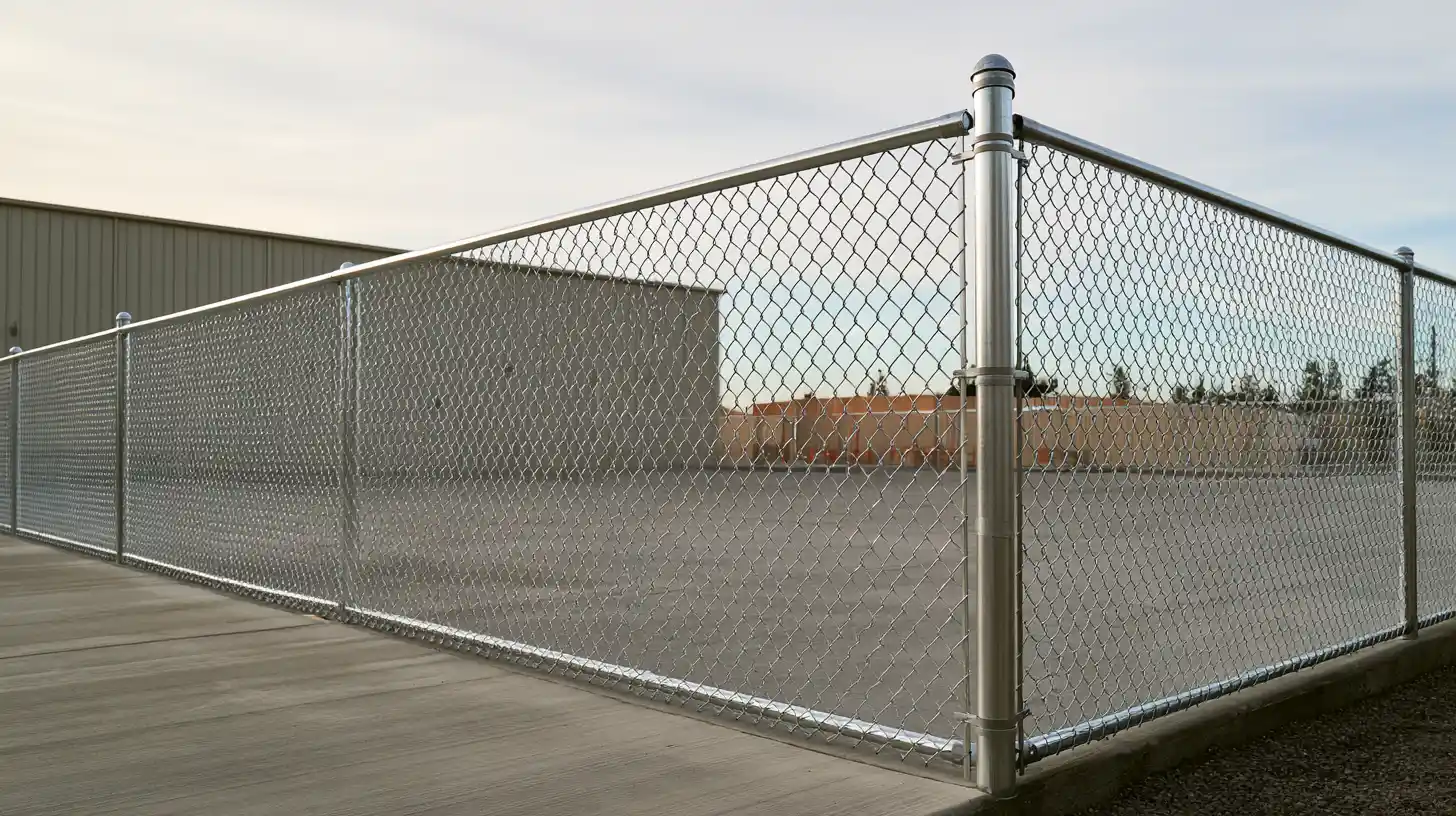
The framework is what everything else hangs on. Get the chain link fence posts and rails right and the chain link fabric stays tight for years. Get them wrong and no amount of good chain link fittings saves the fence.
Terminal posts vs. line posts
Terminal posts are the load-bearing posts where fabric is stretched to and from: end posts, corner posts, gate posts, and pull posts. They bear all the pulling stress, so they’re wider and set deeper than line posts. A heavier terminal post makes for a stronger chain link fence system, which is why commercial jobs use larger diameters than most residential runs. Corner posts take pull from two directions at once, so they carry more strain than a straight end post and are set with that extra load in mind. Corner and gate posts both handle concentrated loads, so they’re sized and set accordingly. Line posts are the intermediate posts between terminal posts. They don’t anchor tension, they support the fabric as it travels. Per CLFMI guidance, line posts are set no greater than 10 feet on center, and many commercial installs run them closer at 8 to 10 feet depending on height and wind exposure, so post spacing is a real spec, not a guess.
Top rail and horizontal rails
The top rail is one of the horizontal rails that run from terminal post to terminal post, passing over the tops of the line posts. This horizontal pipe stabilizes the top of the chain link fabric and keeps the run from sagging over time. On most fences it’s the visible line across the top, and when it starts to dip you usually have a rail, tension, or post problem underneath.
Bottom rail vs. tension wire
Both address the same weakness: the bottom of the fabric. A bottom rail is a rigid horizontal member near ground level. Bottom tension wire, sometimes a marcelled tension wire crimped for extra grip, does a similar job with less material. Either one keeps the chain link fabric from being pushed or pried up, which matters most on security and commercial sites. We’ll cover how tension wire gets tightened and placed in the tension section.
Chain link fabric and mesh
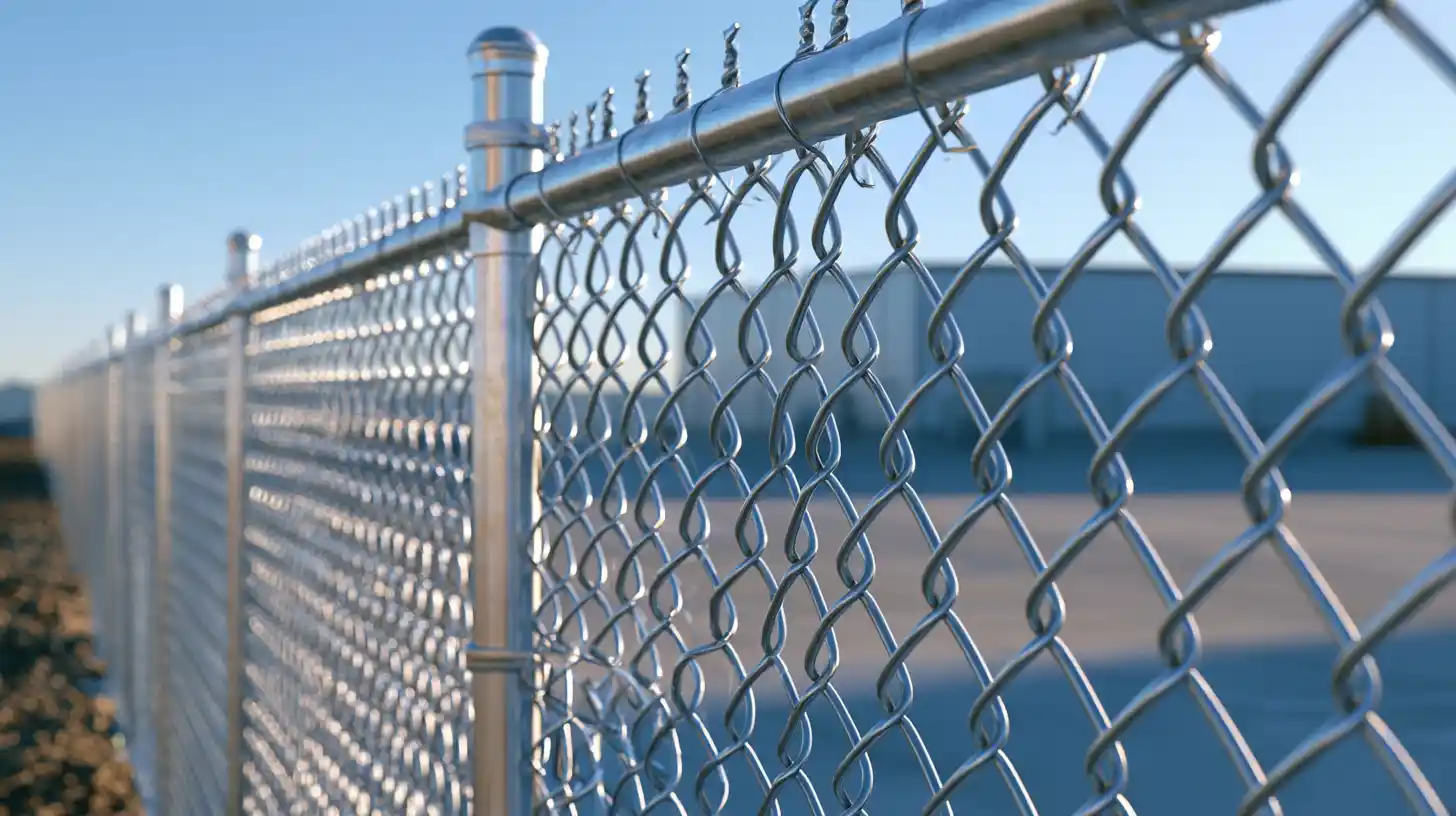
Chain link fabric is the woven wire mesh that forms the barrier, made from interwoven steel wires helically wound into a continuous chain link mesh. Two numbers describe the chain link fence fabric: gauge (wire thickness) and mesh size (the diamond pattern opening). Residential fabric is commonly 9 or 11 gauge. Fence height ranges from about 3 to 12 feet, with 4 feet being a common residential height and taller runs typical for commercial and security work. Heavier gauge and smaller mesh both cost more and both resist cutting and climbing better, which is why the fabric spec deserves attention on any commercial quote. When privacy is the goal rather than pure security, privacy slats can be woven through the chain link fabric to block sightlines and reduce wind flow, though slats add wind load that the posts and framework have to be sized for.
The Tension System: What Keeps the Fabric Tight?
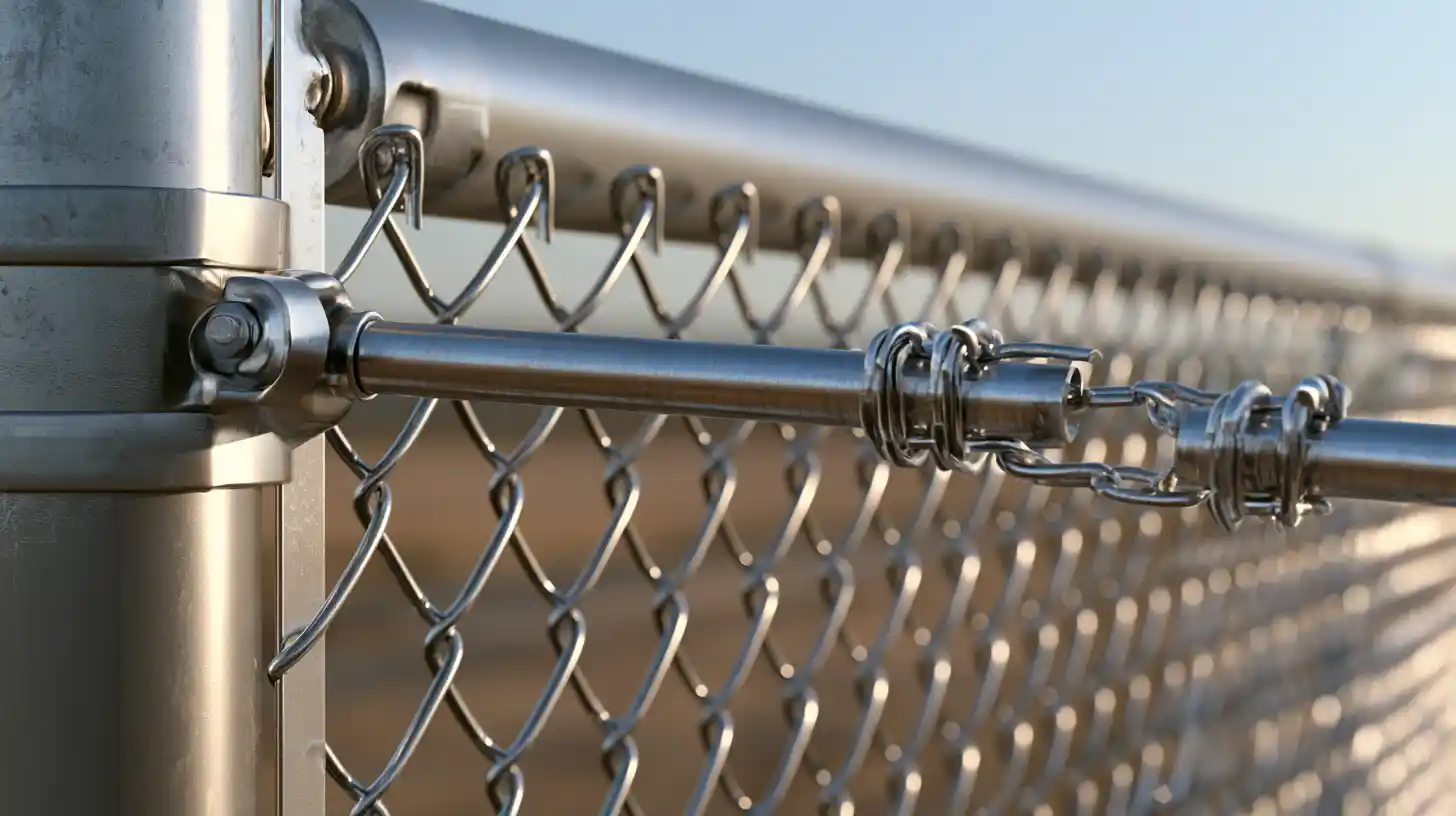
Fabric tension is the heart of a chain link fence. When you stretch the mesh, that force has to land somewhere solid. It transfers into the terminal posts through the tension bars and tension bands. Understand this chain and most of the fence system makes sense.
Tension bars
The tension bar is a straight vertical bar woven through the end of the fabric at a terminal post. Tension bars grab the whole edge of the mesh so the fabric can be pulled tight as a unit instead of tugging on individual wires. Per CLFMI commercial specs, the tension bar length equals the fabric height minus about 2 inches, so it runs nearly the full height without binding at top or bottom. Every terminal post that receives a stretched edge of chain link fabric needs its own tension bar, so a single opening between two end posts uses one at each end.
Tension bands
Tension bands are the offset metal bands that wrap the terminal post and clamp the tension bar against it using a carriage bolt and nut. This is what actually holds the stretched fabric to the post. The number of tension bands needed scales with fence height: a 4-foot fence typically uses three tension bands per terminal hook-up, and taller fences use more. CLFMI commercial guidance calls for tension bands spaced no greater than 12 inches on center at terminal posts, so the right count depends on height and specification rather than a single fixed number.
Fence ties and hog rings
Fence ties fasten the fabric to the line posts and top rail so it stays flat against the framework between terminal posts. CLFMI commercial specs call for tie wires no greater than 12 inches on center at line posts and no greater than 18 inches on center at rails. Hog rings do the same job along horizontal tension wire, spaced no greater than 18 inches apart. When these are missing or spread too far apart, the fabric ripples, pulls away from the posts, and starts to look and act loose long before the framework itself fails.
Rail Connection Parts: Brace Bands, Rail Ends, and Post Caps
This is where most people get confused, and it’s worth being precise. Tension bands hold the tension bar and fabric. Brace bands hold rails and other members. Same post, different jobs.
Brace bands
A brace band wraps around a terminal post and, with a carriage bolt and nut, attaches a rail end, brace rail end, truss rod tightener, tension wire, or barbed wire arm to that post. Think of it as the general-purpose clamp for structural members at terminals. It supports the rail connection but does not grip the chain link fabric.
Rail ends
The rail end is the cup-shaped fitting most people recognize by sight long before they know its name. It’s the small metal cup that receives the end of the top rail or brace rail and, held by a brace band, connects that rail to a terminal post. Every terminal post where a rail begins or ends needs one. If a rail end fails or was never installed, the top rail simply disconnects from the post and the top of the fence loses its support.
Post fittings: loop caps, line post caps, and sleeves
Post fittings sit at the top of every post and shape how the rail runs. At line posts, the top rail doesn’t connect with a cup. It passes straight through a loop cap, also called a line post cap, that sits on top of each line post, guiding and supporting the rail across the run. Terminal posts get sealed post caps, and some designs use rounded dome caps for a finished look at the outer edge of a run. So the rail terminates at terminal posts using a rail end and brace band, and passes through line posts using loop caps. Rail comes in lengths around 21 feet, and where two sections meet they’re joined with a top rail sleeve, with at least 6 inches of sleeve overlap per CLFMI. Some rail is swedged so one end nests into the next without a separate sleeve.
Caps, Bolts, and Small Steel Fittings That Protect the Fence
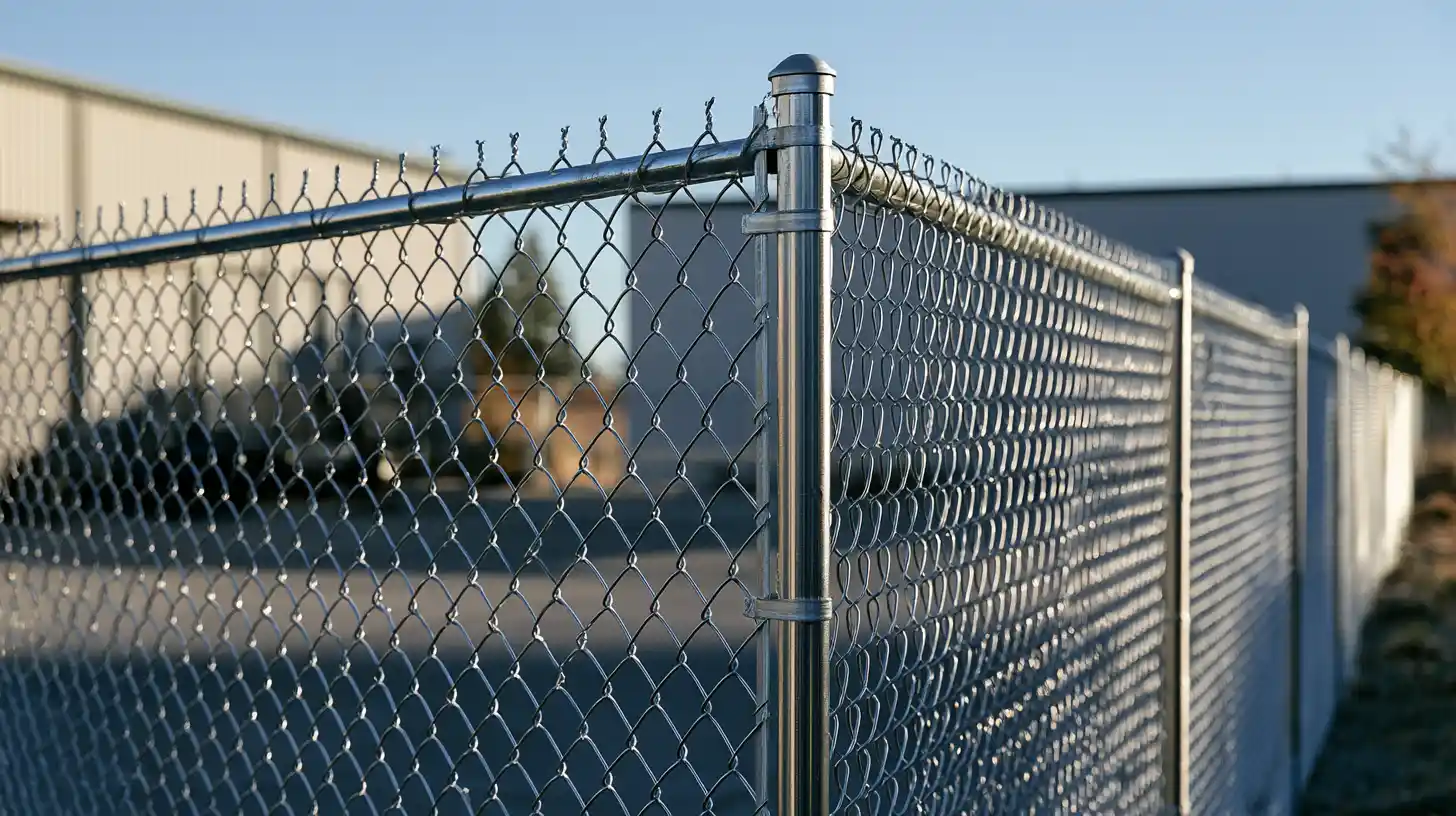
These are the fence components people forget on a materials list, and they cause the most avoidable long-term damage. A post cap sits on top of a tubular post to keep water out. Left open, a hollow post fills with rain, rusts from the inside, and eventually weakens where you can’t see it. That’s a durability function, not a finishing touch.
Carriage bolts and nuts fasten the bands to the posts, and bands typically come supplied with galvanized carriage bolts in 5/16 or 3/8 inch. The bolts and the bands should be galvanized steel or otherwise coated, because a fence is only as rust-resistant as its weakest fitting. One bare bolt or thin band becomes a rust point that spreads across nearby chain link fence parts.
Sizing matters too. These steel fittings are made to fit the outside diameter (OD) of the pipe framework, so a band, cap, or rail end sized for the wrong post OD won’t clamp correctly no matter how tight you crank the bolt. Small missing or mismatched link fence parts create outsized maintenance problems down the line, which is why we treat fitting selection as part of the craftsmanship, not an afterthought.
Chain Link Swing Gates and Sliding Gates: Posts, Frames, and Hardware
A gate is a fence section that has to move, so it needs a few chain link fence parts the fence line doesn’t. Gate posts are terminal posts sized for the extra load and the width of the gate opening. A wide gate or a heavy frame needs a larger, deeper-set gate post than a standard end post, because the whole weight of the gate swings or rolls off it. On a wide swing opening, undersized gate posts are the single most common reason a gate starts to droop within a year.
The gate frame is the welded pipe rectangle that holds its own panel of chain link fabric. Hinges connect a swing gate to the gate post and let it pivot. Latches hold it closed. On a double swing gate (two leaves meeting in the middle), you’ll also see a drop rod that pins one leaf into the ground and a center stop the leaves close against.
Swing gates pivot on hinges and need clearance to arc open. Sliding gates roll sideways along the fence line, which suits wide openings and tight sites where a swing arc won’t fit. Both depend on square, well-set gate posts, because a gate that starts out of plumb never latches cleanly. Chain link gates use the same fabric, tension bars, and fence ties as the fence line, so the panel inside the frame is stretched and tied the same way the rest of the run is.
Automated chain link gates are a different discipline. They involve operators, safety devices, and standards like ASTM F2200 and UL 325, and they deserve their own planning rather than a paragraph. We handle gate installation and automation as part of our commercial work, so if that’s on your project, it’s a conversation worth having up front.
Commercial Grade and High Security Chain Link Parts
On a security site, the parts you choose decide how well the chain link fence enclosure resists someone who wants through it. The framework is the same, but the fabric, the bottom, and the top all change.
Mesh size drives climbing and cutting resistance. Standard 2-inch mesh is easy to get a toehold in. Tighter 1-inch and 3/8-inch mesh is much harder to climb or cut, which is why high-security runs use smaller openings. Wire gauge works the same way. Heavier wire takes more effort to cut: 11 gauge measures 0.120 inch with about 850 lbf breaking strength, 9 gauge is 0.148 inch at about 1,290 lbf, and 6 gauge is 0.192 inch at roughly 2,170 lbf. Each step up in the commercial grade chain link fence fabric buys real resistance.
The bottom of the fence is a common weak point. A bottom rail or a bottom tension wire, placed about 4 inches up from the bottom of the fabric, keeps the mesh from being forced up and crawled under. Installed fabric should sit no more than about 2 inches off the ground to close that gap. At the top, barb arms hold barbed wire where the site calls for it, and those arms bolt to the terminal and line posts through brace bands. Some security designs deliberately omit the top rail and run a heavy spring wire under the barbed wire instead, because a rail gives a climber a handhold at the top.
Corrosion resistance ties it all together. Galvanized fabric and fittings, and polymer coatings where specified, keep a fence intact in demanding settings. We’ve done this work for industrial and petroleum sites and healthcare campuses, where the fence has to mark the boundary, slow an intruder down, and keep standing through years of weather without becoming a maintenance drain.
How to Read a Chain Link Fence Quote or Repair Recommendation
A clear quote tells you exactly what you’re getting. A vague one hides the choices that matter. Before you approve anything, check that the document actually specifies the chain link fence components and fence materials, not just a length and a price. Here’s what a transparent chain link quote should show:
- Terminal posts and line posts specified separately. They aren’t the same part and shouldn’t be lumped together.
- Fitting sizes matched to post OD. Bands, caps, and rail ends should match the pipe they clamp to.
- Bottom security addressed. Is there a bottom rail or bottom tension wire, and what’s the ground clearance?
- Fence ties and tension hardware spacing. Look for tension band and tie wire spacing consistent with commercial guidance, not left unstated.
- Fabric gauge and mesh size identified. “Chain link” alone isn’t a spec. The gauge and mesh of the chain link fabric should be named.
- Coatings and galvanizing called out. Fence fabric and fittings should both be specified for corrosion resistance.
- Chain link gates itemized separately. Gate posts, gate frame, and hardware are their own line, apart from the fence line.
If a quote covers these, you can compare it fairly and know what’s going in the ground. If it doesn’t, ask. A contractor who’s confident in the work will happily put the details in writing, right down to the tension bars, post fittings, and gate hardware.
When to Call a Professional for Chain Link Installation and Service
Plenty of short residential runs get built by capable homeowners. But some jobs go wrong in ways that are expensive to fix, and those are worth handing to a crew that does this daily. Call a professional for a commercial fence project, gate installation or automation, long runs, corners, grade changes, and any real security requirement. Repair symptoms are their own signal: sagging fabric, leaning fence posts, lost tension, or a gate that won’t line up usually trace back to a footing, tension, or hardware problem that needs diagnosis, not just a patch.
The parts DIY installs get wrong are often the invisible ones. Proper installation starts underground, and permits are frequently required before work begins. Posts should be set no more than 10 feet apart, post holes need proper depth (roughly 30 inches, adjusted for fence height, frost, wind, and gate loads), and concrete needs at least 24 hours to cure before fabric goes on. A corner post or gate post that skimps on footing depth leans first, because it carries the most load. A missed footing depth or a rushed cure shows up months later as a leaning post that pulls the whole fence structure out of line. Residential replacements and pet containment count too, especially when the old fence never had a real bottom or the posts were never set deep enough. We handle both residential and commercial properties, so the same standard applies whether it’s a backyard run or a secured perimeter.
Get Started With Inline Security Fence
Inline Security Fence is a family-owned company, trusted since 2016 and built on quality craftsmanship, professionalism, and clear communication. We specialize in commercial chain link installation and service, along with Ornamental Iron, Hogwire, and gate installation including automation, serving residential and commercial clients across the greater Seattle-Tacoma area. Our in-house crew (estimators, foreman, welder, and field team) controls every stage, so the chain link fence system you’re quoted is the fence you get, backed by a warranty on work and materials. We build for commercial properties and homes alike. For commercial chain link fence installation and service, Send A Request or contact us at (206) 848-9565.