Key Takeaway
Welded wire vs. hog wire fencing comes down to this: welded wire is the broad material category, and hog wire is a heavier, rigid, open-grid subtype within it. Hog panels typically use thick-gauge steel, larger grid openings, and rigid construction, while standard welded wire comes in thinner gauges and flexible rolls. The right choice depends on gauge, opening size, coating, and your specific site requirements, not just the name.
Welded Wire vs. Hog Wire Fencing: The Short Answer
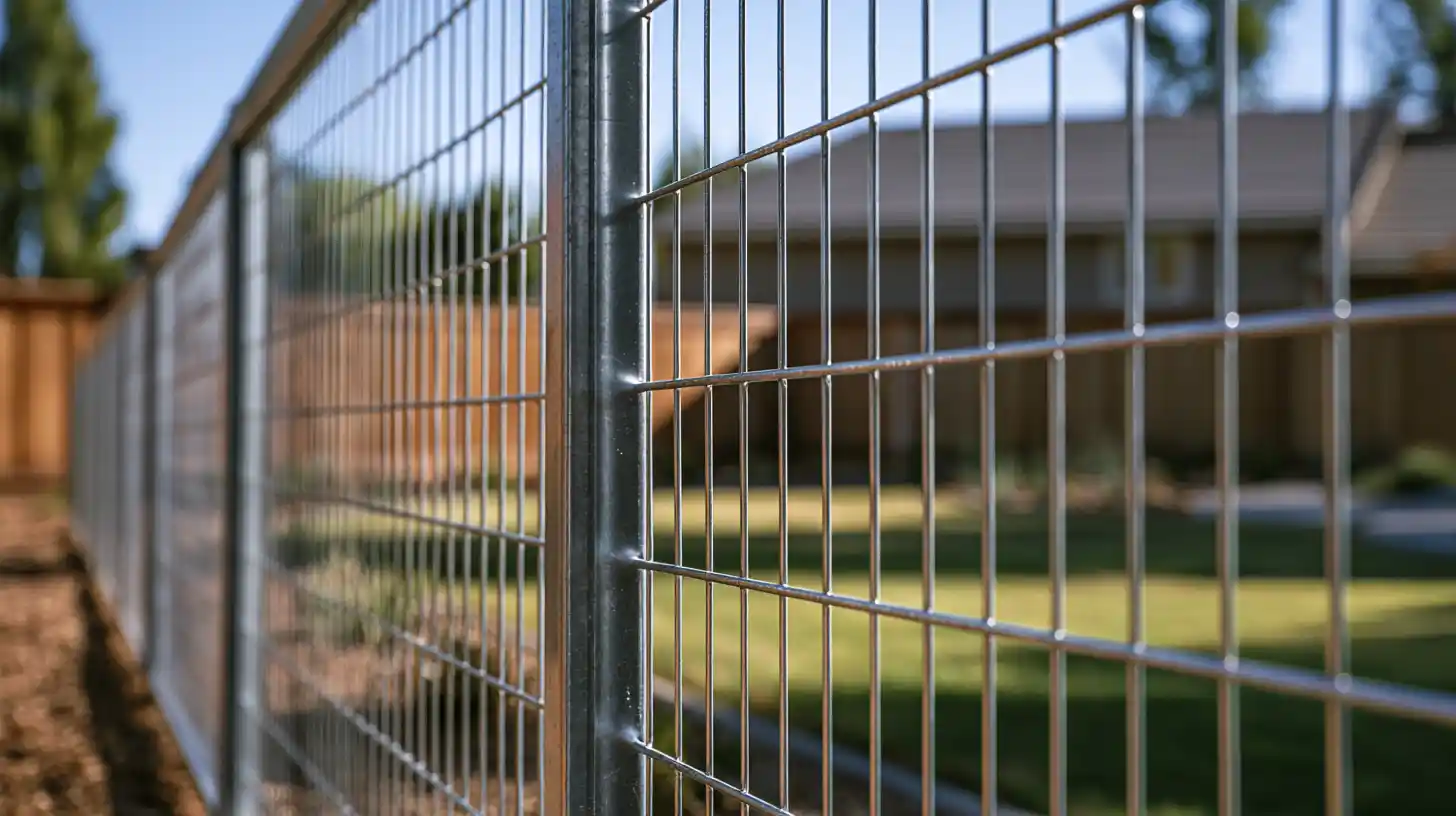
Hog wire is a type of welded wire fencing, but not all welded wire is hog wire. “Welded wire” is the broad category: a steel wire mesh with wires welded at each intersection. A hog wire fence is a heavier, rigid, open-grid subtype built from thick-gauge welded steel wire, originally made for livestock and now common as open-view fencing. If you are trying to decide what to ask a contractor for, whether you manage a commercial site or you’re fencing a yard, the practical takeaway is this: the right fencing is decided by specification, not the nickname. Two hog wire fence panels can both carry the same name and perform very differently depending on gauge, opening size, and how they’re framed.
Welded Wire vs Hog Wire Fencing: What’s the Difference at a Glance
Both are welded steel mesh, but they diverge on wire thickness, grid size, and form. A welded wire fence uses thinner wire and often comes in rolls, while a hog wire fence uses thick-gauge steel in rigid panels with larger grid openings. Neither should be confused with a woven wire fence, where the strands are woven and knotted rather than welded at each joint.
| Feature | Welded Wire | Hog Wire |
|---|---|---|
| Category | Broad material category | Heavy subtype of welded wire |
| Form | Rolls or panels | Rigid panels |
| Wire gauge | Thinner, wide range | Thick-gauge |
| Grid openings | Smaller openings | Larger grid openings |
| Rigidity | Varies; can sag in rolls | Stiff, holds shape |
| Appearance | Utility mesh | Clean, open-view grid |
| Common uses | Gardens, small animals | Livestock, modern fencing |
| Commercial security fit | Depends on spec | Not automatically high security |
What Is Welded Wire Fencing?
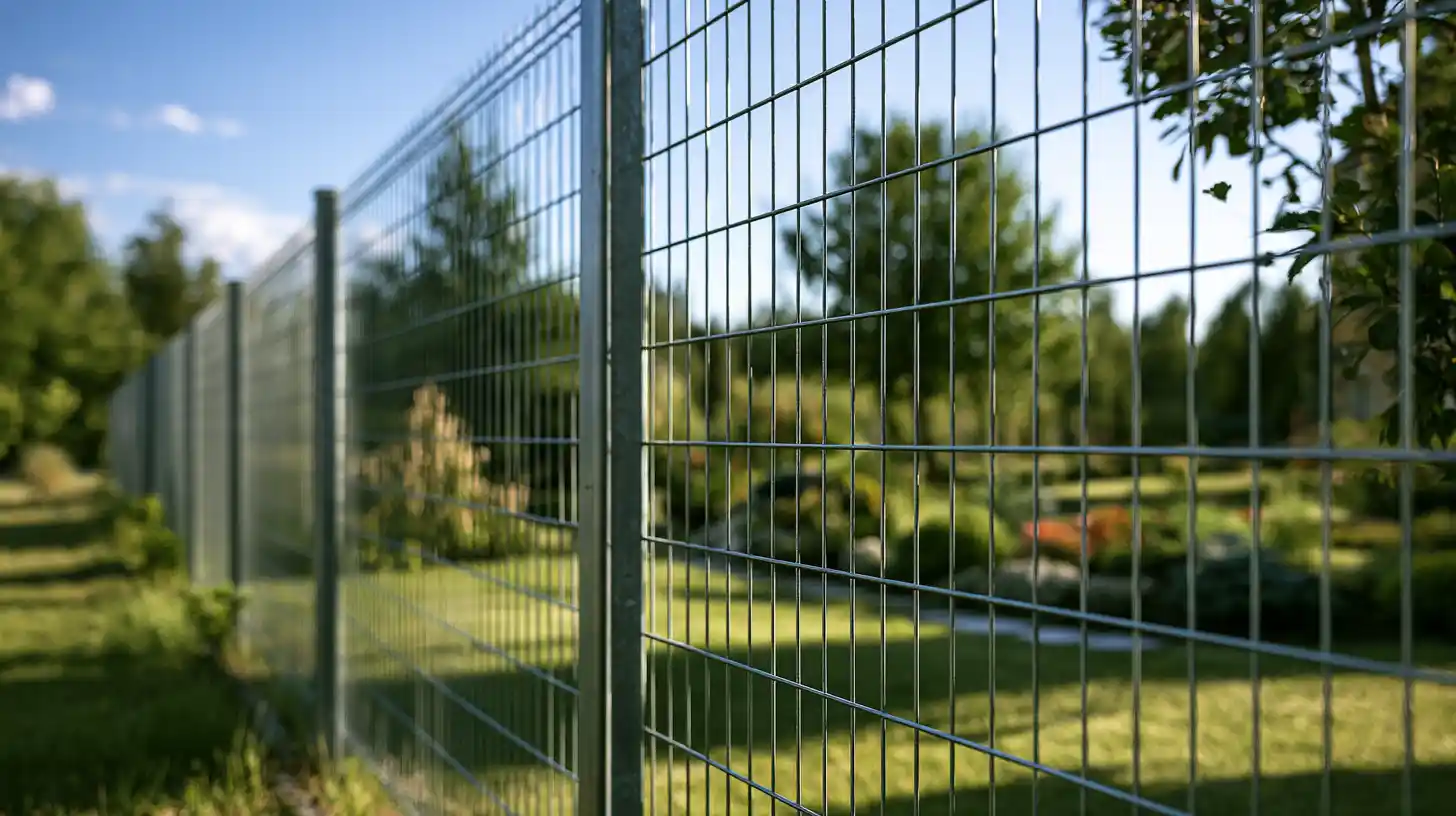
Welded wire fencing is made from steel wires welded together at every intersection, with horizontal strands crossing the vertical wires. That construction gives it a rigid structural integrity that resists deformation and, unlike woven wire, won’t unravel when a strand is cut. It comes in rolls or in flat panels, with mesh sizes and wire gauges that span a wide range depending on the job. Lighter welded wire suits small animal enclosures and garden fencing. A welded wire fence can sag, though, if it isn’t tensioned or supported properly, so posts and framing matter. This is a recognized material category, not a marketing term: ASTM standards cover welded wire mesh fence fabric, with F2453 addressing uniform meshes of 6 square inches or less and F2919 covering variable patterns or larger panel meshes. When you specify welded wire, you’re specifying a real, standardized product with measurable properties.
What Is a Hog Wire Fence? Cattle Panels, Hog Panels, and Vertical Wires
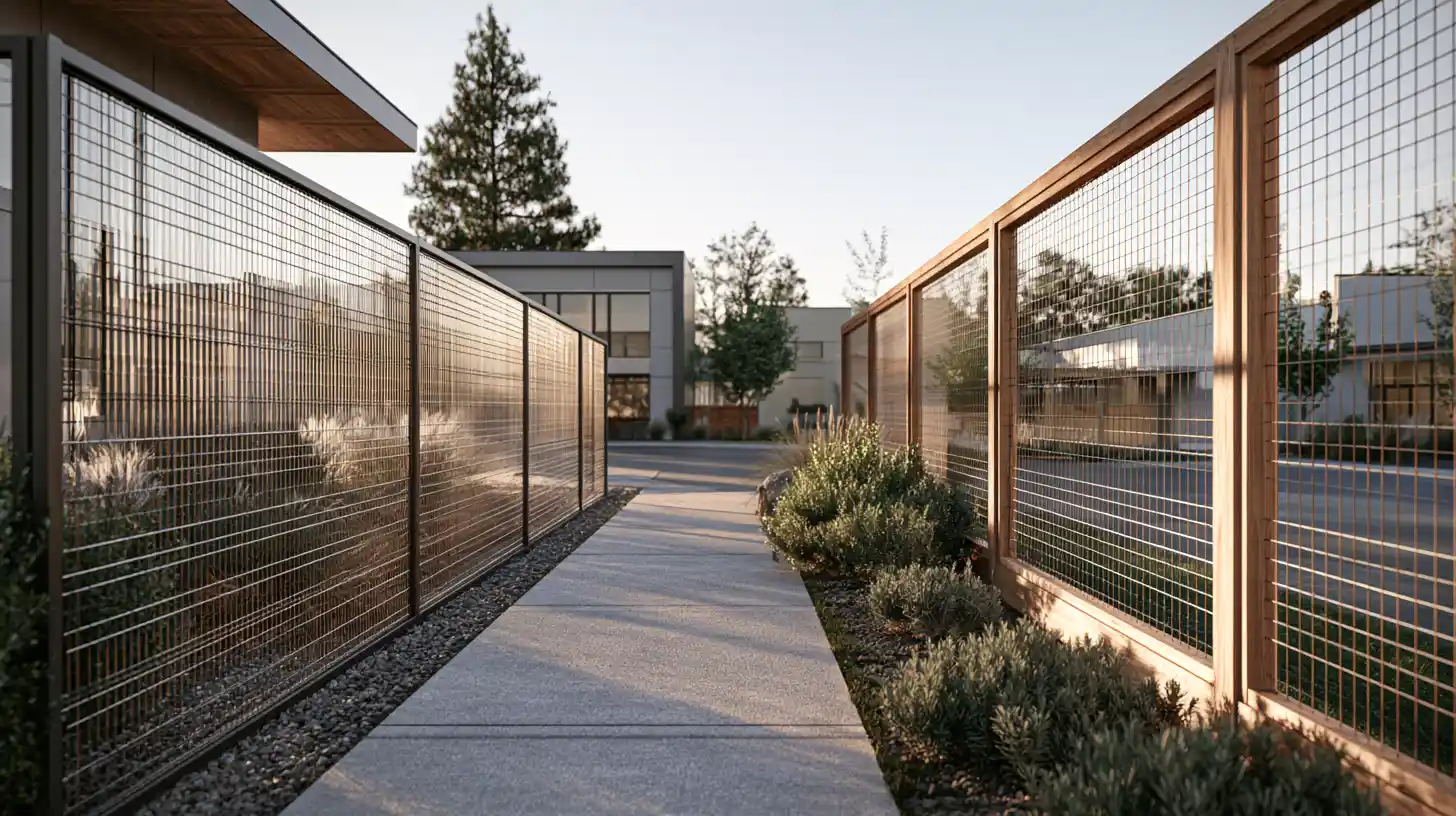
Hog wire started on the farm. These are rigid, heavy-gauge welded panels built to contain livestock, and their strength and stiffness set them apart from a lighter welded wire fence. Traditional hog panels have smaller openings near the bottom, to keep smaller animals in, and larger openings higher up. That heritage carried into modern design. Today many homeowners and light commercial sites frame hog wire fence panels in wood or metal for clean lines and open sightlines, pairing durability with a contemporary look. Panel dimensions vary by supplier, but as a rough guide, hog panels are commonly sold around 34 inches tall, cattle panels around 50 to 52 inches, and horse panels around 60 inches, often in 16-foot lengths. With proper coating and care, well-built hog wire panels can last decades because the welded joints keep the grid from shifting.
The Real Differences That Actually Matter
The name tells you very little. These specs tell you everything.
- Wire gauge. Smaller gauge number means thicker wire. For reference, 6 gauge is about 0.192 in., 9 gauge about 0.1483 in., 11 gauge about 0.1205 in., and 14 gauge about 0.080 in. A heavier gauge is stronger and more durable, but strength also depends on panel design and how well the posts and frame support the panels.
- Mesh opening size. Smaller openings resist climbing and contain smaller animals. Larger openings give visibility but less containment. On hog panels, the vertical wires are usually spaced wider than the horizontal ones, which sets a grid pattern well suited to large animals.
- Roll vs. rigid panel. Rolls are flexible and can sag without tension. A rigid panel is sturdy, holds its shape, and won’t bend under normal load.
- Coating. Galvanized-after-weld covers the weld points; pre-galvanized wire can leave weld spots less protected and more prone to rust. Vinyl or PVC dip coated finishes add another durable layer over the steel to fight corrosion. For outdoor and commercial work, post-weld or dip coated protection extends life.
- Framing and posts. The right post system and frame keep any welded wire fence straight and taut over time, and solid corners carry much of that load.
- Gates and access points. These are often the weak link if not planned with the rest of the fencing.
- Visibility vs. privacy. Neither a welded wire fence nor a hog wire fence offers privacy. Both are open by design, the opposite of a solid privacy panel.
Which Fencing Should You Choose?
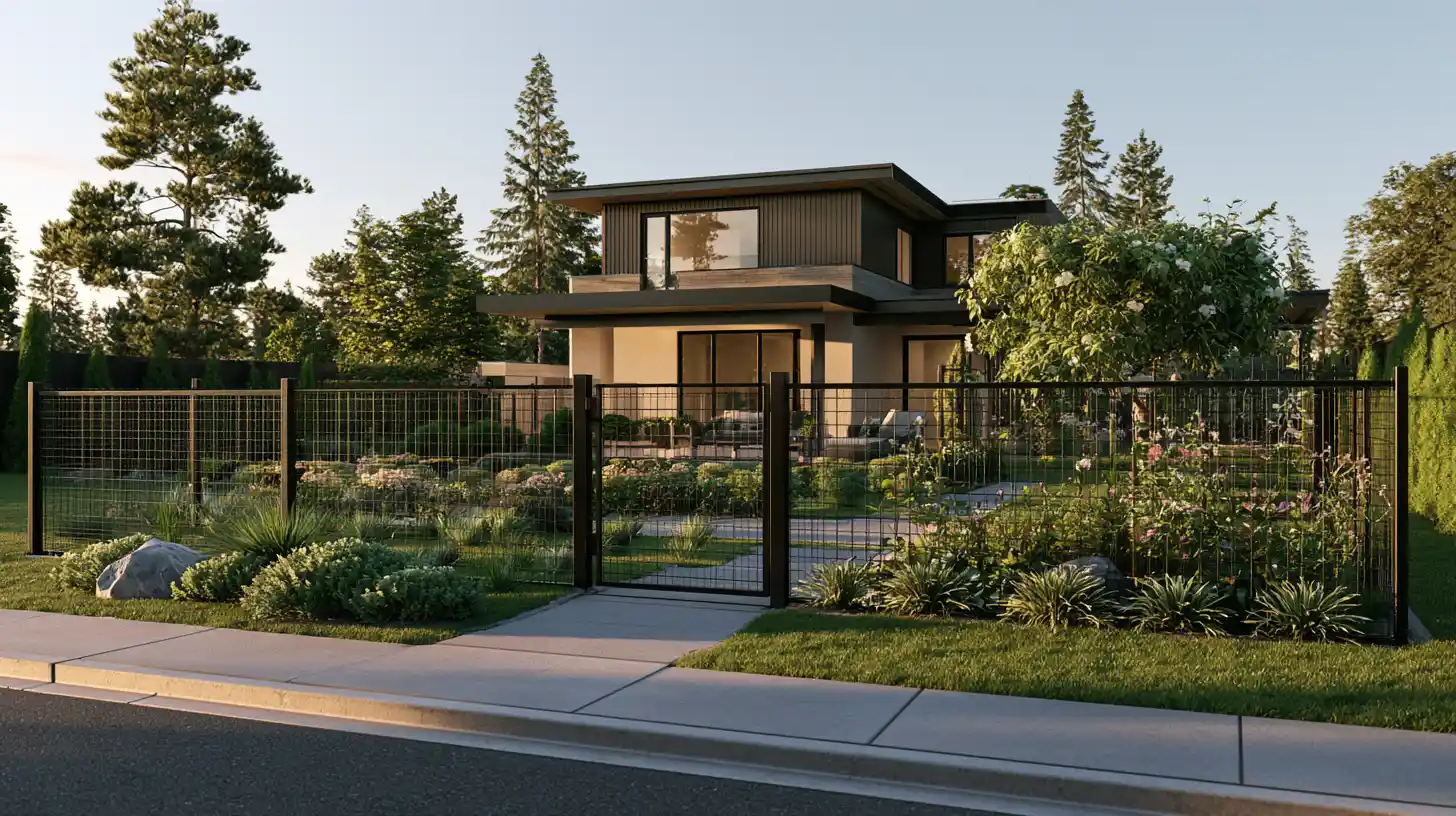
Match the fencing to the job:
- Commercial boundary definition: a welded wire fence or framed hog wire marks a perimeter cleanly while keeping sightlines open, a cost effective way to define a site.
- Higher-security sites: hog wire is not automatically a secure, high-security solution (more on that below).
- Residential open-view fencing: framed hog wire fence panels give clean sightlines and a modern look, adding real aesthetic appeal on residential properties.
- Dogs and gardens: smaller openings keep small animals in or out.
- Livestock containment: heavier hog panels and cattle panels handle pigs, goats, sheep, and poultry; a 4-foot hog panel is generally sufficient for pigs.
- Pool barriers or deck railing: verify code first, covered further down, since safety here is non-negotiable.
Hog Wire vs. High Security Welded Mesh (Commercial Note)
A large-grid decorative hog wire panel should not be treated as a High Security fencing solution. High-security applications use purpose-built welded mesh with much smaller openings between the vertical wires. Site-security guidance from FEMA references anti-climb wire mesh openings no larger than 2 inches per side in certain perimeter details, far tighter than a typical hog panel. Beyond the mesh, these secure barriers rely on engineered posts, gates, hardware, and access control. ASTM F3204 offers guidance for designing welded-wire physical security perimeter barriers, meant to help a security engineer choose components and materials for a specific site. If your project calls for that level of protection, our team can spec High Security fencing, Commercial Chain Link, Ornamental Iron, custom fabrication, gates, and gate automation to fit the site.
Pool Barriers, Deck Railing, and Code Cautions on Residential Properties
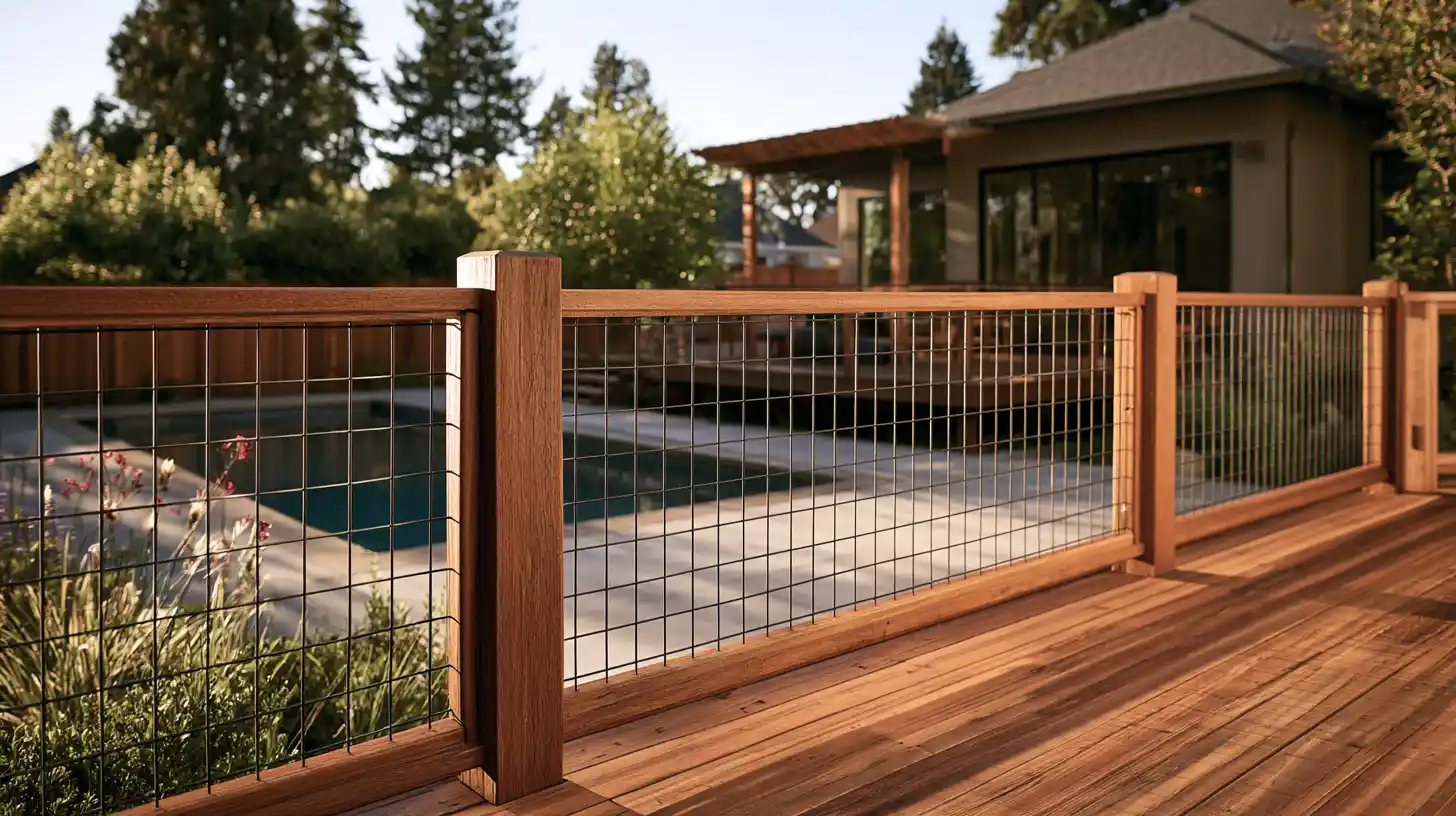
Homeowners often want a hog wire fence as pool fencing or deck railing infill, and its clean look makes it popular for modern deck railings. Code review comes first. National model codes give a sense of the requirements: pool barriers commonly require a top no less than 48 inches above grade with openings that won’t pass a 4-inch sphere (2024 ISPSC). Required guards and railing reference the same 4-inch sphere limitation (2024 IRC), and many commercial guard conditions reference 42 inches (2024 IBC). Local adoption and amendments vary, so verify with the authority having jurisdiction before using any wire grid as a barrier or railing. Standard hog wire panels do not automatically meet pool code.
How to Ask for the Right Fencing in an Estimate
“I want hog wire” isn’t enough to price or build correctly. To get the fencing you actually need, specify:
- Height
- Wire gauge
- Mesh opening size
- Coating (galvanized-after-weld or dip coated for outdoor or commercial work)
- Frame material
- Post system
- Terrain and grade
- Gates and hardware
- Gate automation needs
- Any applicable code constraints
You don’t have to arrive with every answer. Part of our job is translating your goals into the right spec and materials, then keeping communication clear from the estimate through the last post. Easy installation follows from clear specs, and a defined process keeps cost and timeline in line with the quote.
Common Mistakes to Avoid
- Assuming all welded wire is equally strong or equally durable.
- Calling every grid panel “hog wire.”
- Choosing openings too large for pets, pool barriers, or railing guards.
- Ignoring coating quality at the welds, where a woven wire fence and a welded one both rely on protection.
- Treating decorative hog wire panels as High Security fencing.
- Forgetting to plan gates and access control.
The Bottom Line
Welded wire is the category. A hog wire fence is a specific rigid, open-grid style within it. The difference comes down to the project spec, not the nickname, and that spec balances durability, cost effectiveness, and how the fence functions on your site. Inline Security Fence is family-owned and trusted since 2016, delivering top-quality installation and service for residential and commercial clients across the greater Seattle-Tacoma area, backed by a warranty on work and materials and BBB A+ accreditation. When you’re ready to spec the right fencing, Get Started Today or Send A Request. Contact us at (206) 848-9565.
Frequently Asked Questions
Can you use a welded wire fence for pigs?
Yes. Heavier hog-style welded panels are built for livestock like pigs, goats, and poultry, and a 4-foot hog panel is generally sufficient for pigs. Match the gauge and opening size to the animals you’re containing.
How long will a welded wire fence last?
With proper coating and support, a welded wire fence and hog wire panels can last up to 40 years. Galvanized-after-weld or dip coated finishes and correct posts and tensioning extend that life and keep a flexible roll or panel from starting to bend. Replacing worn sections is simpler when the framing was solid to begin with, so screws, brackets, and hardware are worth specifying up front.
Is hog wire cheaper than chain link?
Cost depends on gauge, coating, framing, and installation, so there’s no flat answer. Chain link uses a woven diamond mesh, while hog wire uses welded panels, and each carries its own cost drivers. The better question is which fencing is more suitable for your site’s security, visibility, and durability needs.
What type of wire fence is best?
There’s no single best. The right choice depends on purpose, whether that’s an open-view boundary, animal containment, or a secure high-security perimeter, plus gauge, opening size, coating, and code. A contractor-guided spec gets the materials and installation right.