Key Takeaway
No-dig fences use driven stakes, ground screws, or surface-mounted brackets instead of dug post holes and concrete footings, making them fast to install and easy on landscaping. However, no-dig fences fall short for security perimeters, privacy panels, sloped terrain, high-wind sites, pool barriers, gates, and containing large dogs. Professionally installed concrete-set posts typically last 20 to 30 years, while light-duty no-dig kits average 5 to 10 years.
A no dig fence is installed with driven stakes, sleeves, pipe anchors, ground screws, or surface-mounted brackets instead of dug post holes and concrete footings. It skips excavation, which makes it fast to put up and easy on the landscaping around it. For short decorative borders and some light-duty residential uses, a no dig fence can do the job.
But no dig fences are not a universal substitute for properly set fence posts. They often fall short for commercial security, privacy, slopes, high wind, gates, gate automation, pool barriers, and containing large animals. If you are a property owner or facility manager weighing convenience against long-term performance, the honest answer is that installation method should follow purpose, not the other way around.
No Dig Fences: What They Are and Where They Fall Short
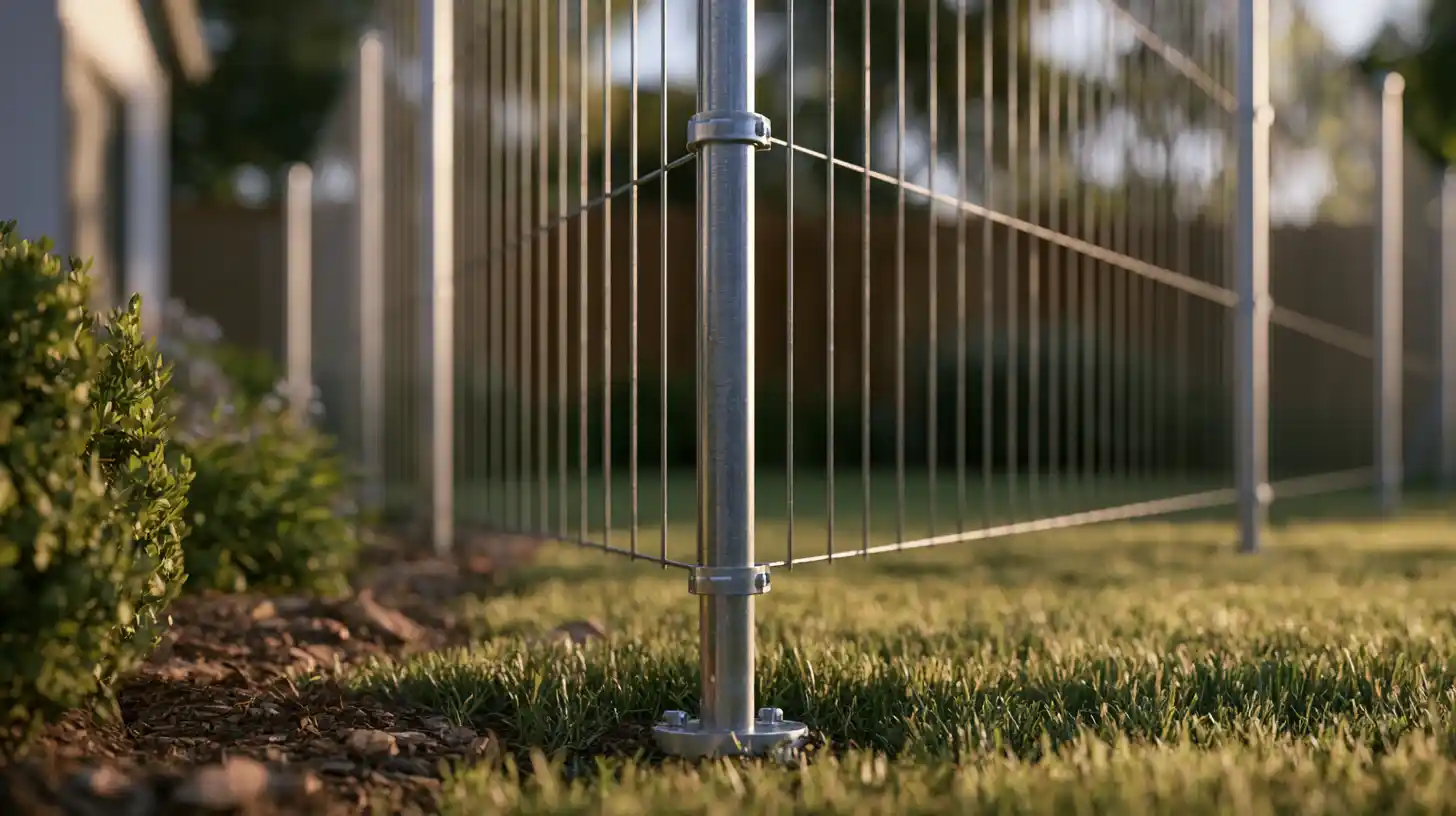
“No dig” describes how a fence is installed, not what it’s made of. The same term covers several very different systems, and their performance varies just as much.
- Driven stake-and-sleeve kits: a stake is driven into the ground, then posts slide through panel eyelets and connect to it. These are the simplest DIY fence panel systems.
- Driven pipe-anchor systems: heavier anchors are pounded deeper into the soil, which brings them closer to a professional driven-post method.
- Ground-screw systems: helical screws are turned into the ground to hold posts.
- Surface-mounted brackets: posts attach to existing hard surfaces with anchors.
Materials range from galvanized steel with powder-coated finishes to vinyl, aluminum, and wood. Most retail systems are built for light-duty use rather than heavy-duty perimeters. The key point to carry through the rest of this article: no dig is a range, not one performance category. A simple picket fence panel and a deep driven-pipe system share a name but not the same strength. That distinction is exactly what generic “pros and cons” content tends to blur, and it matters to customers who expect a sturdy result.
How No Dig Fences Are Installed
The steps are consistent even though the hardware differs. From the beginning you lay out the line, mark buried utilities, drive the stakes or anchors, set the posts, and attach the panels one fence section at a time. Gates get planned into the run where access is needed.
Light panel kits are driven with a rubber mallet, hammer, or small sledgehammer, which is part of their appeal. Heavier driven-pipe systems are a different job. Some manufacturers spec post pounders weighing 18 lb or 30 lb to drive anchors deep enough to hold. That’s a meaningful clue: when a system needs that kind of equipment, it’s leaning toward professional driven-post territory, not a weekend project.
The bigger reason to slow down is that “no dig” does not mean “no planning.” Even a driven stake enters the soil, and where it lands still matters. Layout, utility marking, and matching the system to the site all happen before the first anchor goes in. Skip that and the speed advantage evaporates when the fence sways, leans, or needs to come back out. A bit of upfront care saves money and rework later.
Where a No Dig Fence Can Make Sense
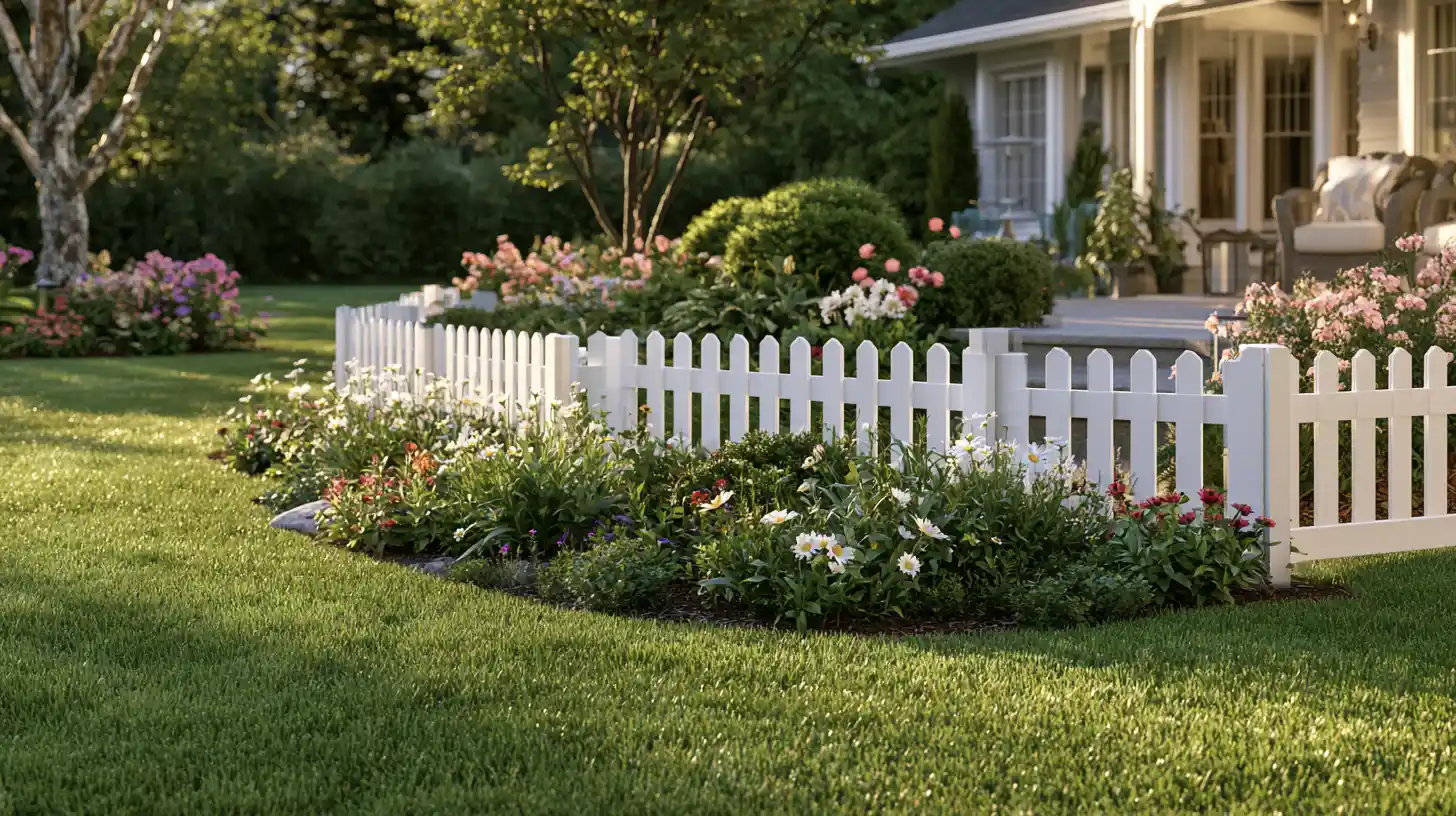
No dig fences have real strengths, and it’s worth being straight about them. Because there’s no digging, you save on labor and equipment, and you avoid tearing up topsoil, roots, and existing landscaping. In hard or rocky soil where augering a post hole is a fight, a driven system can go in faster. And when the product is designed for it, many no dig fences can be pulled and relocated with minimal effort.
Those upsides fit specific jobs well:
- A decorative garden fence or planting-bed boundary along a lawn.
- Short front-yard accent fencing where local rules allow it.
- Temporary or semi-permanent residential boundaries, or a low run near a patio.
- Light-duty containment when the product is rated for that use.
- Flat or gently sloped sites.
- Areas where visual definition matters more than security.
If your goal is to mark a line and add curb appeal on level ground, a no dig fence can be a sensible choice. It can trace the edge of a yard or wrap a small garden without disturbing the beds you already planted. The trouble starts when it gets asked to do more.
Where No Dig Fences Fall Short
This is where purpose and installation method collide. The taller and more solid a fence gets, the more force it has to resist, and shallow anchors have a hard time keeping up.
Security
A fence held by driven stakes is easier to pull, pry, or push over than a post set in concrete. It takes little force to knock a light panel loose or open a gap to the other side. Light-duty panels offer limited anti-climb value and low resistance to a determined intruder. For a real security perimeter, that’s a poor trade.
Privacy fence needs
Many no dig systems are open picket or spaced-bar designs that don’t block sightlines. Build them into a privacy fence with a solid panel and you also catch far more wind, which loads the shallow footing even harder. A tall solid barrier is precisely the case where a driven kit struggles most, and a flimsy one shows it quickly.
Wind
Wind is where shallow anchoring shows its limits. The Chain Link Fence Manufacturers Institute’s wind-load guidance, built on ASCE 7-22 criteria, shows that fence height, fabric style, post material, post spacing, and soil all drive how much wind a fence can take. Its tables run from 105 mph through 210 mph. A driven anchor is not automatically equal to an engineered concrete footing, and most consumer content flattens all of this to “may not hold up in wind.”
Soil and clay soil
Soft, sandy, waterlogged, rocky, or recently disturbed soil reduces how well an anchor grips. Ground packed with small rocks can also deflect a stake off angle as it drives. In freezing climates, frost heave can lift shallow stakes over the seasons. Clay soil behaves differently again, expanding when wet and shrinking when dry, which works a shallow stake loose over time. Soil condition is a major variable, and light kits rarely account for it.
Slopes
Fixed-shape panels often can’t rack to follow grade changes. On a slope, that leaves gaps under the fence or forces a stepped install that opens the same gaps. Most no dig systems work best on flat or gently sloping ground, and some panels simply can’t be installed on an incline at all.
Keeping dogs and large pets contained
Light-duty products may not contain a strong or reactive animal. Keeping a dog and other pets behind a shallow-set panel is a real test: a big dog that leans, jumps, or digs can loosen or clear a panel that was never rated for that load. If keeping dogs safely in the yard is the goal, the posts need to be set for it. A determined dog will find the weak point, and a driven stake in soft ground is often that point.
Gates
Gates concentrate stress. Hinge and latch posts need real stability and precise alignment to swing true and latch reliably. Shallow anchors tend to shift under a gate’s repeated load, and a gate that sags or drags is a daily reminder that the posts weren’t set for the job.
Cost and Lifespan: No Dig vs Concrete-Set Fencing
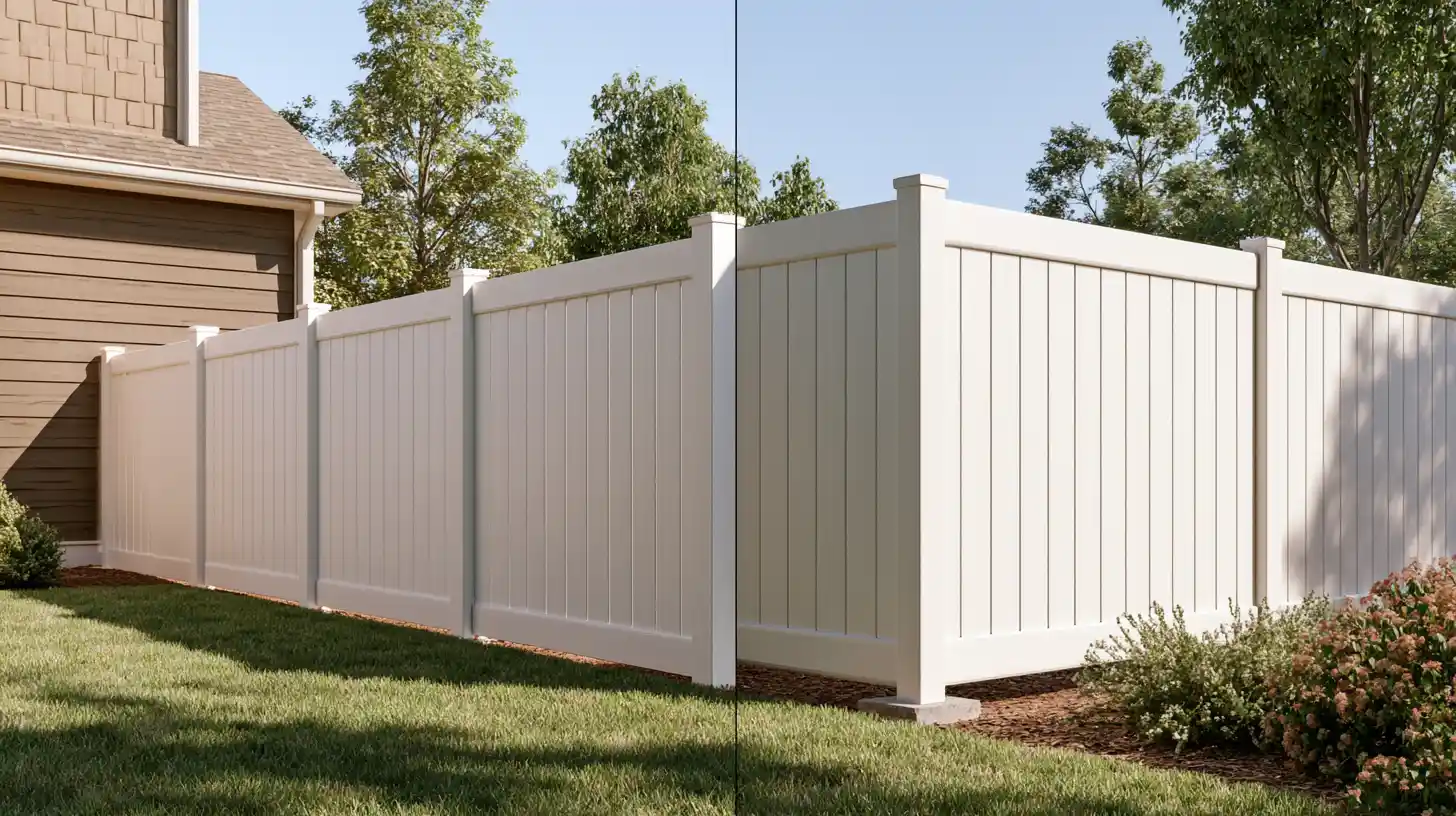
Speed and lower upfront cost are the honest draws of no dig. What you trade is durability. A shallow foundation lasts a shorter time than a professionally installed concrete-set perimeter built to hold for decades. The figures below are general market ranges to frame the comparison, not Inline Security Fence pricing.
| Factor | No Dig (DIY kit) | Concrete-Set (professionally installed) |
|---|---|---|
| Install method | Driven stakes / anchors | Dug holes with concrete footings |
| Typical cost range | ~$15–$30 per foot | ~$40–$70 per foot |
| Typical lifespan | ~5–10 years before repairs | ~20–30 years or longer |
| Best use | Light-duty, decorative, temporary | Security, privacy, gates, long-term perimeters |
The right way to read this table isn’t “cheaper wins.” It’s whether the value matches the job. A short-lived decorative border and a perimeter you expect to stand for decades are two different investments, and the money you save on a light kit can turn into a repair bill when it fails early. Homeowners who compare only the boxes on a store shelf often miss that difference.
No Dig Fencing and Pool Safety: A Life-Safety Exception
A pool barrier is a life-safety system, and a light-duty no dig panel rarely qualifies as one. The U.S. Consumer Product Safety Commission publishes widely cited pool-barrier guidance: barriers at least 48 in. high, with 5 feet or higher preferable; no opening large enough to pass a 4 in. sphere; bottom clearance no more than 4 in. over solid surfaces or 2 in. over grass or gravel; and gates that open outward, self-close, and self-latch.
CPSC guidance is not mandatory national law, so local code governs. The 2024 IBC transition materials also removed the permit exemption for fences up to 7 feet when they serve as pool barriers, because these are life-safety structures. The stakes are real: CPSC’s 2026 report found an average of 376 fatal pool- or spa-related drownings a year among children under 15, and 77% of those involved children under 5. Check your local authority before treating any fence as a pool barrier.
No Dig Still Isn’t No-Risk: Utilities and Underground Lines
Driven stakes, pipe anchors, and ground screws all penetrate the soil, which means they can strike a buried line just like a shovel or a shallow hole can. The 811 “call or click before you dig” program applies nationwide, and having utilities marked with paint or flags before you drive anything is basic responsible planning.
The risk isn’t theoretical. The Common Ground Alliance’s 2024 DIRT Report analyzed 196,977 reported underground utility damages, with telecommunications and natural gas the leading facilities hit at 49% and 39%. OSHA guidance likewise calls for locating utilities before excavation. No dig lowers how much you disturb the ground. It doesn’t remove what’s under it, and the posts still make holes in the soil, sometimes several inches deep.
Professional Driven Fence Posts vs Retail No Dig Panels
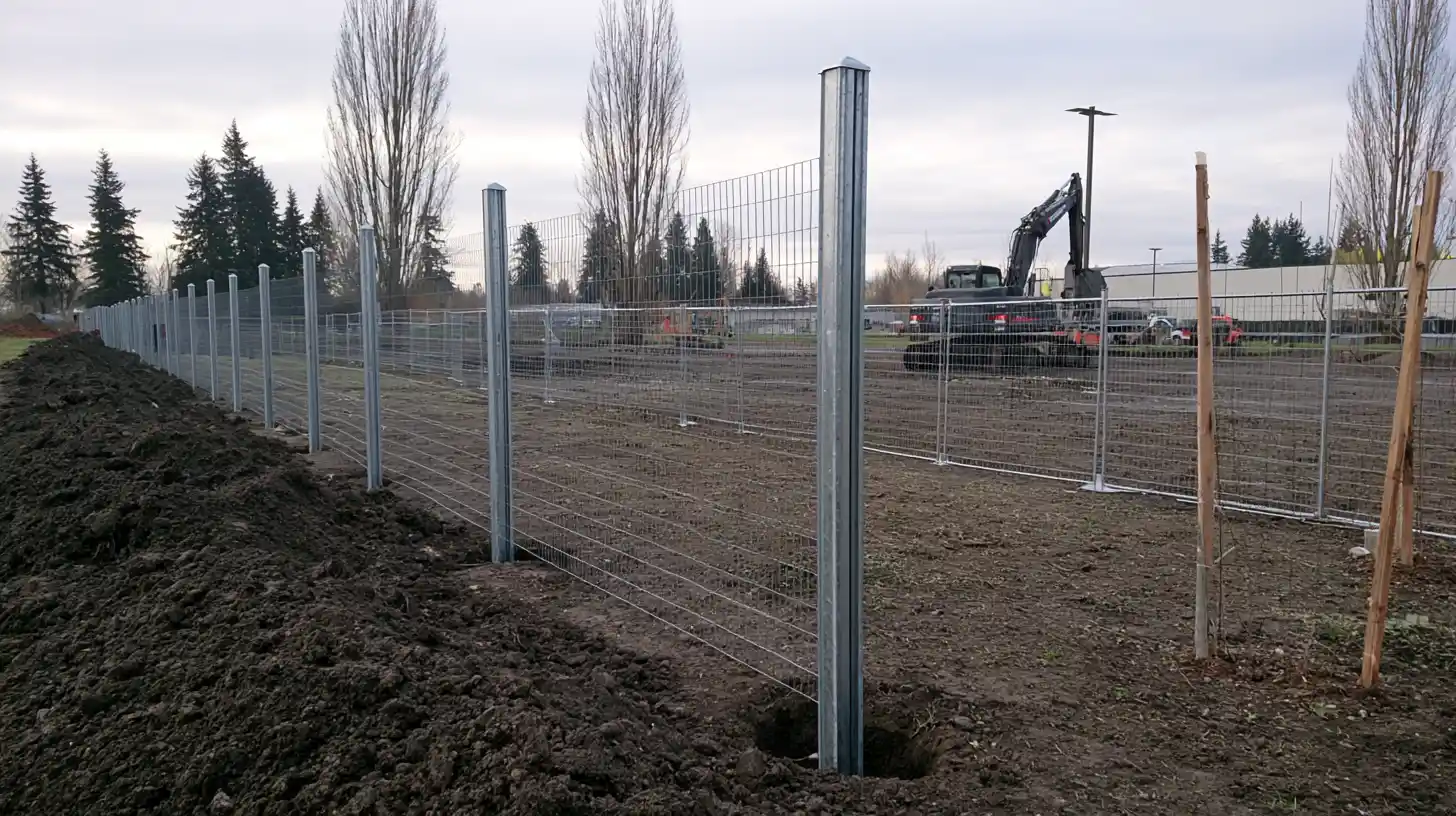
Not every driven-post method is a light-duty shortcut. ASTM F567, the standard practice for chain-link fence installation, allows mechanical post setting only when the in-ground strength equals or exceeds what a concrete footing would provide. Under that standard, drive posts are set mechanically to a minimum depth of 36 in., or 6 in. deeper than the called-for depth, with embedment adjusted for unstable soil or rock.
That’s a different world from a mallet-driven picket kit. Professional fence design accounts for soil, wind, height, post spacing, and load, and it uses the right tools, including a heavy driver and, for surface mounts, a drill and the correct bit. The CLFMI/ASTM footing baseline for concrete-set posts is 24 in. plus 3 in. for every foot of height over 4 feet, using at least 2,500 psi concrete. The holes are dug deeper for taller runs, which is what keeps steel posts sturdy under years of wind and use. Automated gates raise the bar further, requiring ASTM F2200 compliance across Class I through Class IV gates and UL 325 compliance, including two independent entrapment protection devices active in each entrapment zone.
This planning is what Inline Security Fence does before work begins. Family-owned and trusted since 2016, with dedicated commercial estimators, we match the system and the materials to the site rather than to the easiest install.
How to Decide, and Better Options When No Dig Isn’t Enough
Run through these questions to decide before you order any panels:
- What is the fence actually supposed to do?
- How tall is it, and is the panel open or solid?
- Is the site flat, sloped, rocky, soft, or exposed to wind?
- Will it carry a gate, and will that gate be automated?
- Is it near a pool, or does it need to keep a dog in the yard?
- Is it protecting a commercial property?
- What style suits it, and what does the manufacturer allow?
- What do local rules require?
When the answers push past light-duty, a properly set system serves you better. For durable, visible commercial perimeters, Commercial Chain Link holds up. Ornamental Iron pairs security with curb appeal, and High Security fencing suits risk-sensitive sites. Custom Fabrication handles gates and special openings, gate automation adds access control, and Hogwire works where you want an open look with real structure. We install and service all of these for residential and commercial clients across the greater Seattle-Tacoma area.
Frequently Asked Questions
How long will a no dig fence last?
Are no dig fences any good?
Can a no dig fence handle wind?
What is the best no dig fence?
Do you still need to call 811 for a no dig fence?
Match the Fence to the Job, Talk to a Trusted Partner
The right fence is chosen by purpose, site conditions, and expected load, not by the easiest way to put it in the ground. No dig fencing isn’t wrong. It’s just often asked to do work it was never built for, whether that’s securing a property, adding privacy, or keeping dogs safely in the yard. If you’re weighing a no dig option against a more permanent perimeter, Inline Security Fence can evaluate the site, the purpose, and the installation method before any work begins. We put craftsmanship and clear communication first, which is why our customers trust us to set posts that hold. Contact us at (206) 848-9565 or send a request to get started.